
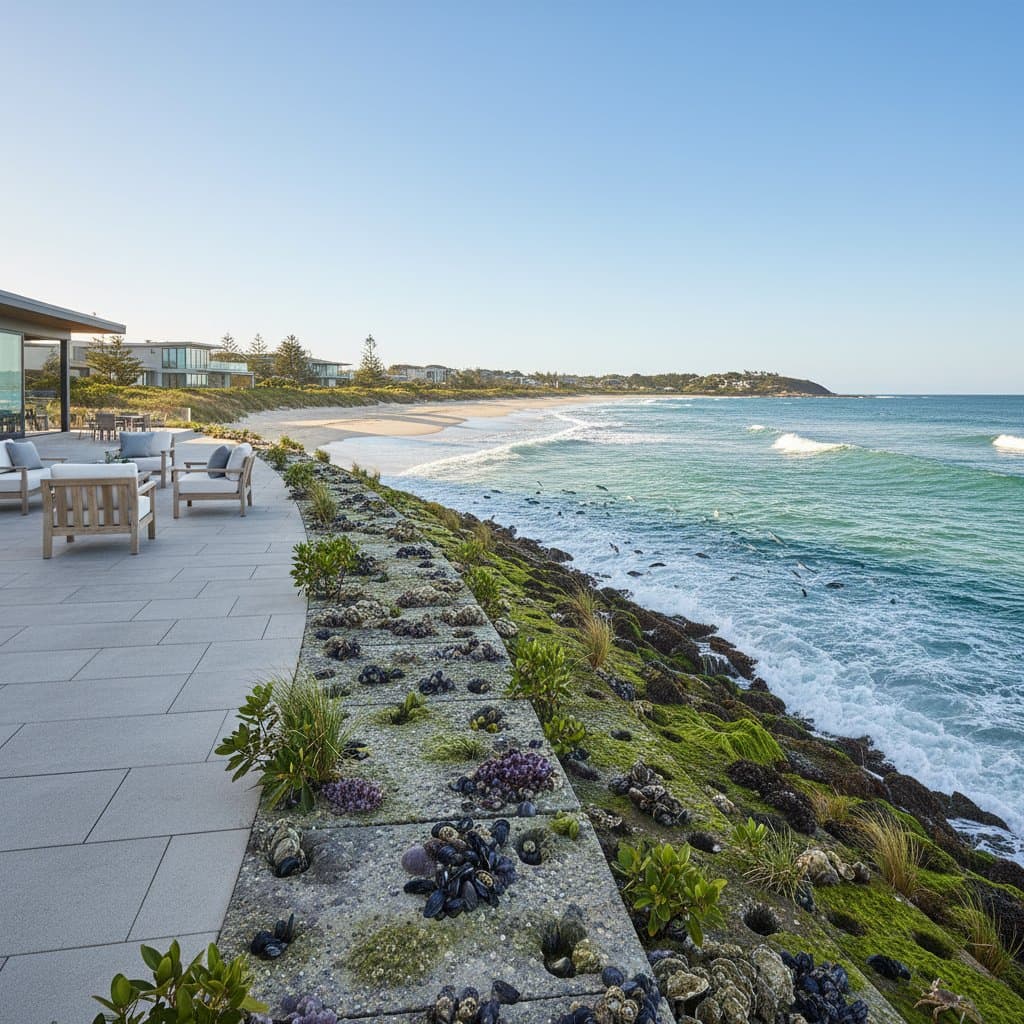
Living Seawalls: A Sustainable Solution for Coastal Erosion
Envision a coastline battered by a recent storm. Waves crash against rigid concrete barriers, sending spray high into the air while vibrant tide pools vanish. Conventional seawalls safeguard structures, yet they frequently eliminate marine habitats and intensify erosion in adjacent areas. Consider an alternative vision: the same barrier reconstructed with textured surfaces, oyster clusters, and indigenous plants that moderate wave force and foster abundant life. This represents the essence of living seawalls, an innovative method that harmonizes coastal defense with environmental stewardship.
Living seawalls integrate structural engineering and ecological principles to reinforce shorelines and rehabilitate natural environments. Engineers craft these barriers to dissipate wave energy, stimulate marine colonization, and preserve ecosystem balance instead of isolating it. Property owners along coastlines gain reassurance alongside tangible ecological advantages. Typical installations range from $250 to $1,200 per linear foot, influenced by materials, design intricacy, and location specifics. An average undertaking for a standard shoreline property approximates $45,000.
For those seeking to defend assets without ecological detriment, living seawalls present a viable option. In challenging terrains or zones with intense wave action, obtain estimates from qualified marine contractors experienced in sustainable shoreline engineering.
Key Cost Considerations
Constructing a living seawall generally incurs expenses of $250 to $1,200 per linear foot, with variations based on design elements, regulatory demands, and material selections. Distinct from basic concrete barriers, these incorporate biological components that may elevate or moderate overall expenditures according to the implementation strategy.
Primary cost elements encompass:
- Materials: Precast concrete panels featuring textured finishes or prefabricated modules from recycled polymers.
- Labor: Expert marine contractors bill $90 to $200 hourly, scaled to project demands and site accessibility.
- Ecological Enhancements: Integration of oysters, mussels, mangroves, or salt-resistant flora adds $5,000 to $15,000 to the budget.
- Design and Regulatory Processes: Coastal engineering evaluations, ecological assessments, and permitting procedures total $7,000 to $20,000.
- Site-Specific Challenges: Locations with rocky substrates or submerged depths necessitate robust machinery, potentially raising costs by 30 percent.
Small-scale residential endeavors typically span $25,000 to $80,000, whereas expansive public or harbor projects surpass $250,000. Such investments yield returns via diminished upkeep needs, elevated real estate worth, and revitalized natural systems.
Professional Installation Versus Homeowner Involvement
Erecting a living seawall seldom qualifies as a straightforward homeowner task. Individuals may contribute to upkeep of plantings or minor habitat additions, but foundational assembly requires professional expertise.
Scenarios Requiring Professional Expertise
- Projects in regions with elevated wave exposure or fluctuating tides demand thorough engineering reviews.
- Initiatives involving regulatory approvals or collaboration with conservation bodies necessitate specialist oversight.
- Properties exhibiting prior erosion damage or structural vulnerabilities require expert intervention.
- Incorporations of prefabricated panels or oyster habitats call for accurate positioning by trained personnel.
Specialized crews deploy marine vessels, subaquatic tools, and licensed divers to guarantee precise execution. They confirm adherence to regional guidelines for shoreline integrity.
Opportunities for Homeowner Participation
Homeowners can engage in planting indigenous vegetation along elevated shore sections, overseeing water drainage channels, or deploying compact wave-absorbing fabrics. These activities suit dedicated individuals and amplify the efficacy of a core structure installed by professionals.
Essential Planning Factors
Prior to proceeding, assess these elements to align the seawall with property characteristics and objectives.
- Wave Dynamics: Energetic coastal settings require fortified designs with energy-dispersing contours.
- Ongoing Upkeep: Biological systems involve periodic debris removal, vegetation renewal, and observation of aquatic development.
- Regional Ecology: Select compatible flora and substrates to prevent introduction of non-native species.
- Governing Rules: Coastal districts often mandate authorizations for work below mean high tide levels.
- Visual Integration: These barriers introduce organic textures and can harmonize with surrounding gardens or recreational areas.
Meticulous preparation secures both defensive functionality and aesthetic harmony.
Ecological Advantages
Beyond property defense, living seawalls contribute to ecosystem renewal and water purity enhancement.
Principal advantages comprise:
- Habitat Creation: Roughened exteriors and plantings offer refuges for fish, crustaceans, and shellfish.
- Water Purification: Shellfish and greenery strain contaminants, mitigating excess nutrients.
- Wave Energy Mitigation: Irregular and permeable forms capture forces, curbing adjacent scouring.
- Carbon Sequestration: Greened components accumulate carbon via photosynthesis and calcification.
- Enhanced Appeal: The organic appearance elevates waterfront allure and asset valuation.
These attributes position living seawalls as a progressive strategy for durable coastal resilience.
Frequently Asked Questions
How long does installation of a living seawall require?
Residential efforts span 3 to 6 weeks, contingent on tidal patterns and supply logistics. Elaborate configurations extend timelines due to ecological alignments.
Do living seawalls necessitate unique permits?
Yes, coastal jurisdictions typically demand approvals from municipal and state entities to verify compliance with ecological and structural criteria.
Is retrofitting an existing seawall feasible?
Yes, modular additions attach to legacy concrete surfaces, incorporating biological elements without comprehensive removal.
Does a living seawall achieve a natural appearance immediately?
Initially, it presents a constructed profile, yet algae, encrustations, and flora emerge within months, refining the visage and enriching diversity.
How does durability of living seawalls compare to conventional types?
Properly constructed, they match strength levels and occasionally endure longer as biological layers buffer direct wave assaults.
Steps to Implement Your Living Seawall
Living seawalls unite technical precision with natural processes to preserve assets and rejuvenate shore environments. Regardless of whether your location borders a serene inlet or a wave-swept edge, this methodology provides an enduring, responsible alternative. Select sustainable components, partner with seasoned marine specialists, and tend to your coastal features diligently to realize security and elegance over generations.