
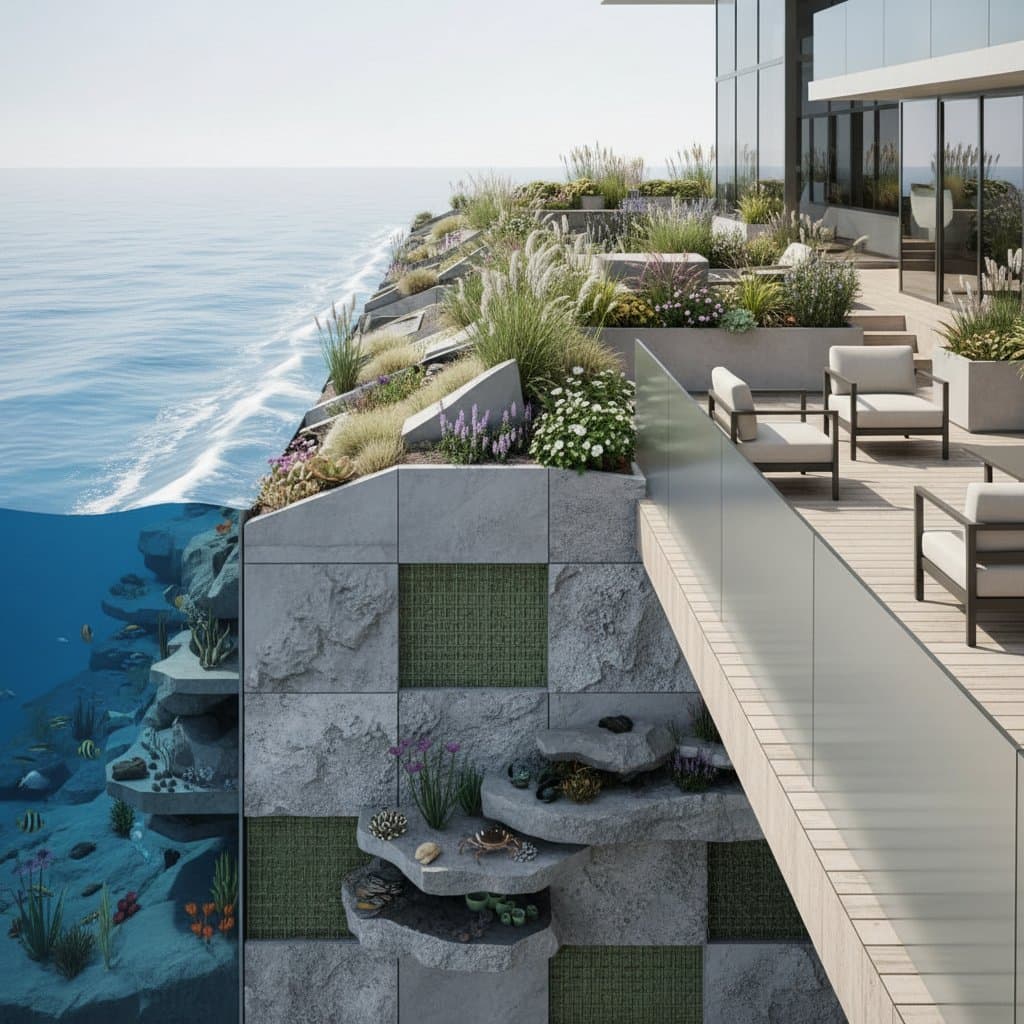
Living Seawalls: Protecting Coasts and Nurturing Marine Life
Coastal erosion threatens communities that cherish their seaside settings, yet fear the loss of land and property to encroaching waters. Traditional seawalls, constructed from concrete or rock, mitigate erosion but frequently damage marine ecosystems and reflect wave energy instead of dissipating it. Living seawalls provide an innovative, sustainable alternative. These structures integrate advanced engineering with natural elements to safeguard shorelines while fostering marine biodiversity.
This article explores the mechanics of living seawalls, their environmental and economic advantages, and essential considerations for homeowners and coastal managers. For those residing near bluffs or overseeing waterfront properties, this knowledge supports the preservation of shorelines and adjacent ecosystems.
What Is a Living Seawall?
A living seawall functions as a hybrid coastal defense that merges conventional materials with biological features such as marine plants, oysters, and corals. Rather than employing flat, smooth concrete surfaces, these seawalls incorporate textured panels or modular blocks that replicate the intricate profiles of natural shorelines. Such designs draw in marine species, which establish a biological coating that reinforces the structure and enhances water quality.
How Living Seawalls Function
Living seawalls curb erosion by dissipating wave energy through a synergy of structural features and organic development. This integration stabilizes the shoreline over time. Marine species, including barnacles, mussels, and algae, accumulate on the surfaces, heightening friction and diminishing wave impact. Consequently, the seawall evolves into a vibrant habitat that promotes species diversity.
Essential Components
Typical living seawalls comprise:
- Textured panels or blocks that offer surfaces for marine attachment.
- Native vegetation, such as salt-resistant grasses or mangroves, positioned adjacent to capture sediments.
- Permeable materials that permit water passage, thereby alleviating pressure on the structure.
These components collaborate to form an adaptive, self-regulating system responsive to site-specific conditions.
Advantages of Living Seawalls
Environmental Gains
Living seawalls cultivate environments conducive to fish, shellfish, and marine flora. They serve as microhabitats that enable species proliferation, surpassing the ecological value of barren artificial barriers. Additional benefits include:
- Natural filtration and purification of water via biological mechanisms.
- Decreased thermal absorption in adjacent waters.
- Enhanced sediment retention and nutrient circulation.
Economic and Social Value
Although initial expenses exceed those of basic concrete installations, living seawalls yield enduring financial benefits. Their capacity for natural repair and reduced upkeep demands result in cost efficiencies. Moreover, they elevate the aesthetic quality of waterfront areas, potentially increasing property valuations and drawing environmentally aware tourists.
Adaptation to Climate Challenges
Conventional seawalls often succumb to escalating sea levels and intensified storms. In contrast, living seawalls incorporate adaptability into their design. As attached organisms proliferate and extend, they fortify the framework organically, yielding a resilient and pliable protective measure.
Steps for Planning and Installation
Step 1: Evaluate the Site
Initiate the process by analyzing shoreline attributes, including soil composition, tidal rhythms, and wave intensity. Engage a coastal engineer or marine biologist to determine the appropriateness of a living seawall for the location.
Step 2: Develop the Design
Collaborate with specialists to craft a structure aligned with site requirements. The blueprint must harmonize protective efficacy with ecological enhancement. Select robust, non-toxic, textured materials to stimulate marine colonization.
Step 3: Secure Permits
Projects impacting coastal environments necessitate local or regional approvals. Review all pertinent regulations prior to commencing construction.
Step 4: Construct and Integrate Vegetation
Proceed with installation under professional supervision to guarantee structural soundness. Subsequently, introduce native plants and encourage initial marine settlement through targeted seeding or placement of pioneer species like oysters.
Step 5: Observe and Sustain
Conduct routine assessments to track ecological progress and structural integrity. Address any issues promptly, such as clearing debris or controlling invasive growth, to ensure long-term performance.
Common Questions About Living Seawalls
How does a living seawall differ from a traditional seawall?
A living seawall employs textured surfaces and integrated habitats to nurture marine species, whereas traditional seawalls remain smooth and ecologically inert. The living design fosters biodiversity and superior shoreline durability.
What are the costs associated with a living seawall?
Expenses fluctuate based on materials, dimensions, and specifications. Initial outlays typically surpass those for concrete alternatives, yet long-term savings arise from diminished maintenance needs. Regional factors and project scale influence pricing.
Can living seawalls eliminate erosion entirely?
These structures substantially lessen erosion by dissipating wave energy and securing sediments. Complete prevention of natural coastal shifts remains unattainable.
Are living seawalls appropriate for every shoreline?
They perform optimally in areas with moderate wave action or protected inlets. Exposed, high-energy coasts may demand supplementary reinforcements or combined approaches.
How soon does marine life establish on the wall?
Settlement commences within weeks, though comprehensive ecological maturation requires months, contingent on water conditions and available species.
What maintenance do living seawalls require?
Upkeep proves minimal relative to concrete counterparts. Periodic inspections and elimination of invasive organisms suffice in most cases.
Is professional installation essential for homeowners?
Due to technical and regulatory complexities, expert involvement ensures compliance and reliability. Self-installation poses risks to both structure and environment.
Sustaining Long-Term Coastal Harmony
A living seawall transcends mere defense; it embodies a collaboration between human ingenuity and natural processes. Homeowners who opt for this method safeguard assets while rehabilitating marine habitats diminished by conventional practices. Through vigilant oversight and targeted interventions, these systems deliver enduring protection and ecological vitality.