
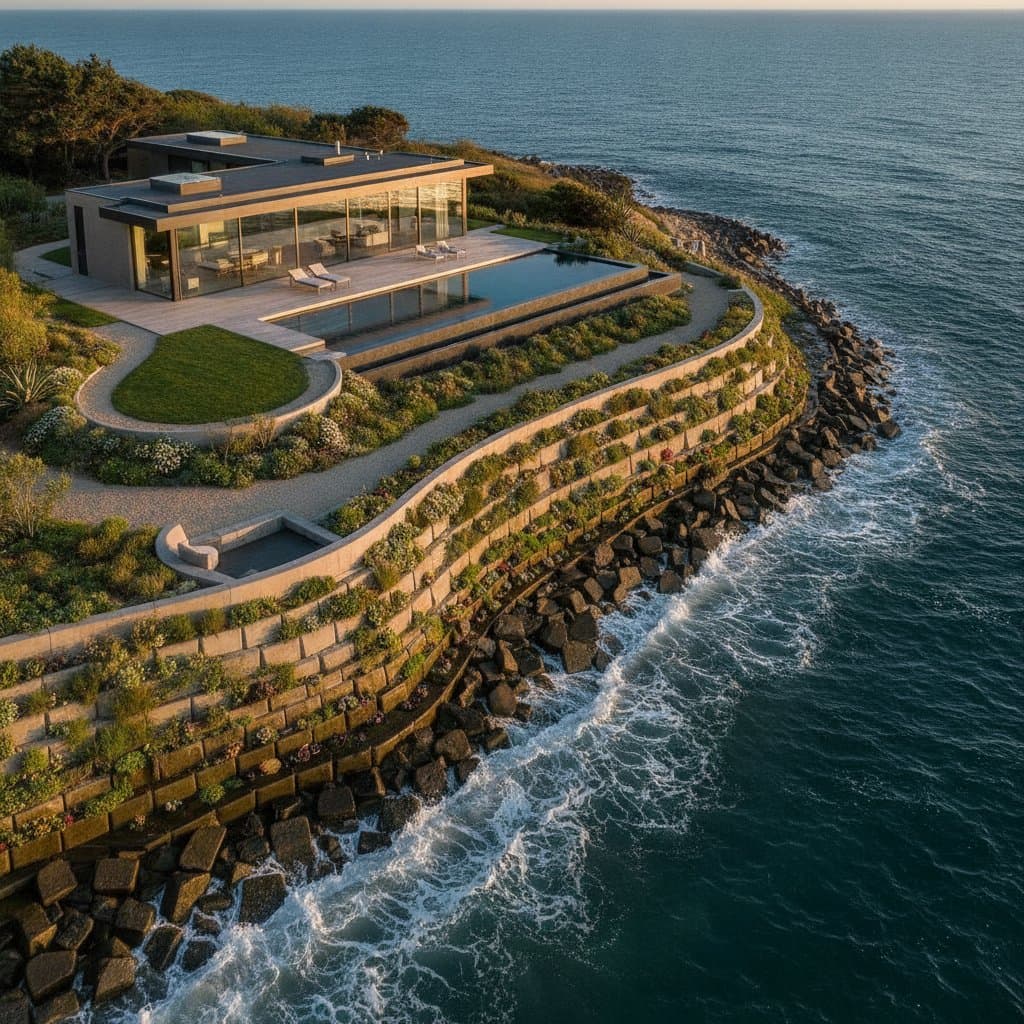
Living Seawalls Deliver Natural Coastal Erosion Protection
Coastal erosion threatens property owners and communities along shorelines. Traditional concrete seawalls block waves yet often harm marine ecosystems and alter sediment movement. Living seawalls combine structural strength with ecological features to defend land and support marine habitats.
What Is a Living Seawall
A living seawall integrates engineered durability with habitat elements. Textured panels and modular units replace flat concrete. Native plants and marine organisms colonize the surfaces and strengthen the structure.
Key Components of a Living Seawall
- Modular panels made from eco-friendly concrete or recycled materials
- Textured surfaces that copy natural rock formations
- Designated zones for salt-tolerant vegetation
- Drainage systems that control runoff
- Anchoring methods suited to tidal shifts
The finished wall protects property and restores coastal processes at the same time.
Average Costs and Installation Overview
Costs depend on site length, materials, and design. Initial expenses exceed those of standard concrete walls, yet reduced upkeep and added benefits frequently justify the difference.
| Seawall Type | Average Cost per Linear Foot | Maintenance Level | Ecological Benefit |
|---|---|---|---|
| Traditional Concrete | $400 - $800 | Moderate to High | Low |
| Hybrid (Concrete + Habitat Panels) | $600 - $1,200 | Low to Moderate | Medium |
| Fully Bioengineered Living Seawall | $1,000 - $1,800 | Low | High |
A typical residential project ranges from $60,000 to $150,000. Grants sometimes offset expenses when habitat improvement is documented.
How Living Seawalls Protect Against Erosion
Waves remove sand and soil when energy reaches the shore unchecked. Conventional walls reflect that energy and scour the seabed. Living seawalls absorb and spread wave force through irregular shapes and living surfaces.
How the Protection Works
- Textured surfaces and plants slow water flow and lessen direct impact.
- Roots and attached organisms hold sediment in place.
- Curved and porous sections distribute energy across the structure.
- Colonizing marine life adds mass and stability over time.
Environmental and Property Value Benefits
Living seawalls supply measurable gains beyond erosion control.
Ecological Advantages
- Sheltered surfaces attract fish, mollusks, and crustaceans.
- Filter feeders improve water clarity by removing nutrients.
- Vegetation and shellfish store carbon.
- Connected habitat patches support species movement.
Property and Community Advantages
- Natural textures improve visual fit with the shoreline.
- Biological activity lowers routine maintenance needs.
- Sediment stabilization extends service life.
- Sustainable design can raise resale appeal.
Factors That Influence Cost and Performance
Site slope, sediment type, and tidal range determine foundation depth. Material selection affects lifespan and colonization rates. Local permits may require habitat reviews. Wave exposure dictates reinforcement levels. Periodic inspections keep vegetation and panels functional.
Planning and Budgeting Tips
- Assess erosion patterns and tides before design begins.
- Engage a coastal engineer familiar with bioengineered systems.
- Allocate funds for monitoring after installation.
- Select native plants matched to local salinity.
- Allow sections to be adjusted if conditions shift.
DIY and Modular Living Seawall Options
Prefabricated panels suit smaller properties with gentle slopes. Owners can attach units to existing walls or install them directly on calm shorelines. These kits reduce equipment needs and create habitat quickly. Strong wave sites still require professional engineering.
FAQs About Living Seawalls
| Question | Answer |
|---|---|
| Do living seawalls last as long as concrete walls? | Yes. Natural reinforcement allows comparable or longer service life. |
| Can they be added to existing seawalls? | Many systems attach habitat panels without full removal. |
| Do they require special maintenance? | Routine inspections and occasional trimming suffice. |
| Are living seawalls suitable for all shorelines? | Moderate wave settings work best; exposed sites need added reinforcement. |
| Will they attract unwanted marine growth? | Growth strengthens the wall and forms part of normal function. |
Maintaining Your Investment
Regular checks confirm that panels remain secure and vegetation stays healthy. Marine growth gradually increases structural integrity. Owners gain durable protection that also improves the surrounding marine environment.