
Living Seawalls: An Ecological Approach to Coastal Protection in 2026
Coastal regions present a unique blend of scenic allure and inherent vulnerabilities. Rising sea levels and escalating storm frequencies expose the shortcomings of conventional concrete seawalls. Living seawalls emerge as a forward-thinking alternative, integrating structural engineering with natural elements to defend shorelines and nurture marine ecosystems. This evolution reshapes erosion management strategies and promotes environmental responsibility in coastal areas.
Key Benefits:
- Erosion reduction paired with enhanced biodiversity support
- Replication of natural features such as reefs and mangrove systems
- Installation expenses on par with standard seawalls
- Decreased long-term maintenance through sustainable practices
- Suitability for urban coastal settings pursuing nature-integrated defenses
Understanding Living Seawalls
A living seawall functions as a protective coastal structure engineered to promote biological activity. Rather than smooth, impermeable concrete surfaces, these installations incorporate roughened panels, integrated rock pools, and intentional crevices that replicate irregular natural coastlines. This design not only withstands wave forces but also attracts and sustains species like oysters, barnacles, algae, and small fish, transforming the barrier into a thriving habitat.
For instance, in areas with high tidal fluctuations, designers embed modular units that allow for species-specific niches, such as shaded ledges for anemones or sun-exposed ridges for algae growth. These features draw from biomimicry principles, drawing inspiration from successful natural analogs worldwide.
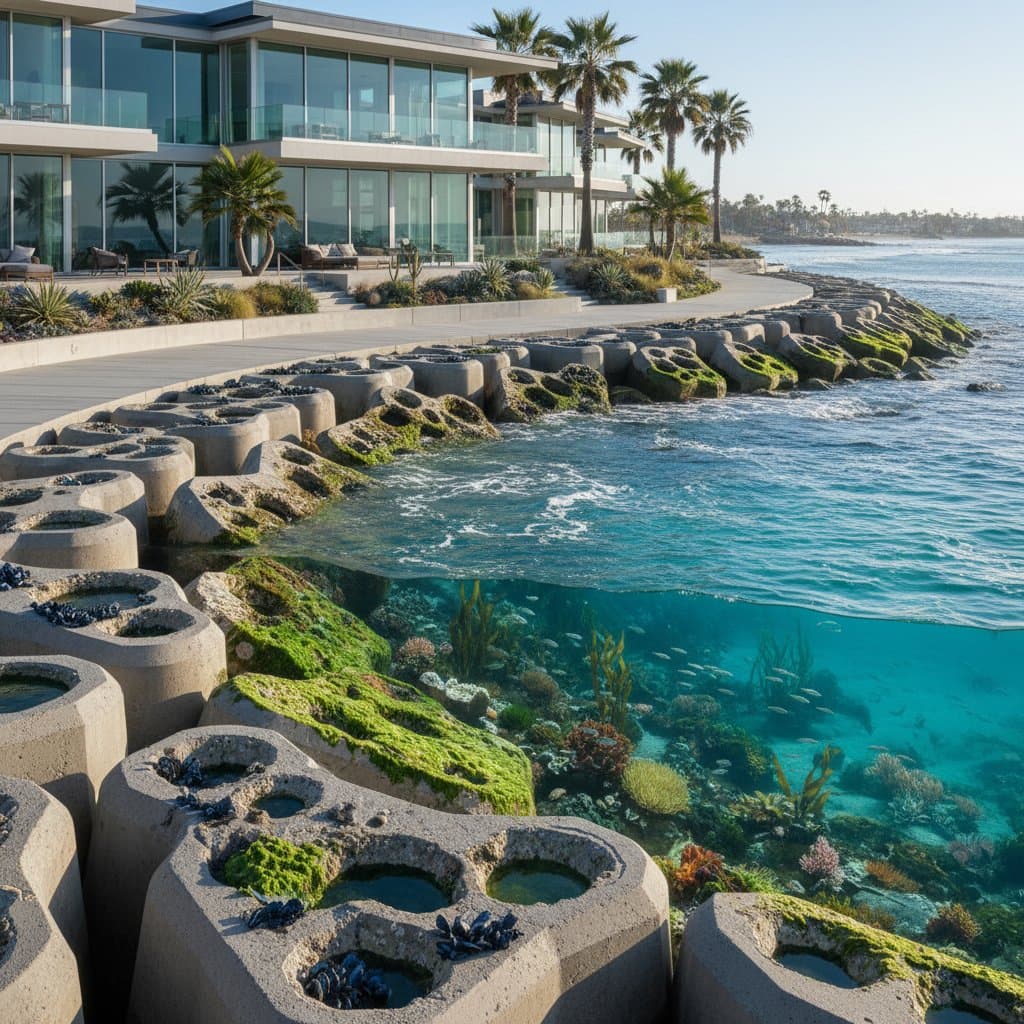
Photo: Textured concrete panels on a seawall teeming with attached marine organisms, including colorful algae and clustered shellfish.
Mechanisms of Operation
Living seawalls achieve dual purposes through their hybrid construction. The textured surfaces dissipate wave energy more effectively than flat barriers, reducing scour at the base and minimizing structural wear. As marine organisms colonize the wall, they contribute to its durability; shellfish shells add protective layers, while root-like holdfasts from seaweeds bind sediment and prevent undermining.
This symbiotic process extends to water quality enhancement, as filter-feeding species like mussels remove pollutants and excess nutrients from surrounding waters. Over time, the seawall evolves into a self-reinforcing system, where ecological growth bolsters physical integrity.
Practical Guidance: Select materials featuring diverse surface topographies to accommodate a broad range of species, thereby optimizing both protective and ecological outcomes.
Living Seawalls Versus Traditional Barriers
Traditional seawalls prioritize singular erosion defense, often at the expense of surrounding ecosystems. Living seawalls, by contrast, deliver multifaceted benefits without compromising strength. The following comparison highlights these distinctions.
| Feature | Living Seawall | Traditional Seawall |
|---|---|---|
| Core Purpose | Erosion mitigation plus habitat development | Erosion mitigation exclusively |
| Construction Materials | Sustainable concrete, recycled shellfish, and natural aggregates | Standard reinforced concrete |
| Ecological Impact | Substantial promotion of marine diversity | Minimal to none |
| Upkeep Requirements | Periodic cleaning and ecological monitoring | Regular patching of cracks and erosion |
| Visual Quality | Organic appearance enhanced by biological cover | Stark, utilitarian design |
In practice, living seawalls demonstrate superior performance in dynamic coastal environments. Studies of pilot installations reveal up to 30 percent greater wave energy absorption due to biofouling layers, which also correlate with increased fish populations and improved sediment stability.
The Appeal for Coastal Communities
Forward-looking communities increasingly adopt living seawalls to address both immediate threats and long-term ecological goals. These structures safeguard infrastructure and private properties while purifying coastal waters and bolstering local fisheries through habitat provision. In regions like San Diego, where urban development meets sensitive marine zones, such innovations foster resilience without sacrificing natural beauty.
Homeowners and developers appreciate the reduced risk of storm damage, coupled with elevated property values from aesthetically pleasing shorelines. Public spaces benefit similarly, with enhanced recreational opportunities amid revitalized ecosystems.
Principal Benefits
- Environmentally Harmonious Defense: Wave attenuation occurs alongside preservation of aquatic life, avoiding the habitat disruption common with rigid barriers.
- Extended Durability: Biological colonization provides ongoing reinforcement, potentially extending service life by decades.
- Enhanced Visual Integration: The organic patina of marine growth creates inviting landscapes that harmonize with surrounding seascapes.
- Broader Societal Gains: These installations draw eco-tourists, support educational initiatives, and contribute to community-wide sustainability efforts.
Photo: A pedestrian path bordering a living seawall, featuring accessible tidal pools populated with local flora and fauna.
Steps for Implementing a Living Seawall
Successful projects begin with a thorough evaluation of site-specific factors, including wave patterns, sediment types, and existing biodiversity. Collaborate with marine engineers and ecologists to select resilient materials and customized designs that align with local regulations. For cost efficiency, consider phased approaches, such as attaching prefabricated eco-modules to aging seawalls rather than full replacements.
Budgeting typically involves initial assessments costing 5 to 10 percent of total expenses, with modular systems allowing scalability for residential or municipal scales. Permits may require environmental impact reviews, but approvals often accelerate for projects demonstrating clear ecological upsides.
Implementation Advice: Incorporate indigenous plants along the seawall base to reinforce soil integrity and facilitate natural drainage during heavy rains.
Fostering Sustainable Coastal Futures
Living seawalls transcend temporary fixes, embodying a philosophy of coexistence with marine forces. In San Diego and comparable locales, they deliver pristine waters, abundant wildlife, and fortified residences. By investing in these solutions, communities secure enduring protection that evolves alongside the environment, ensuring vibrant shorelines for generations ahead.