
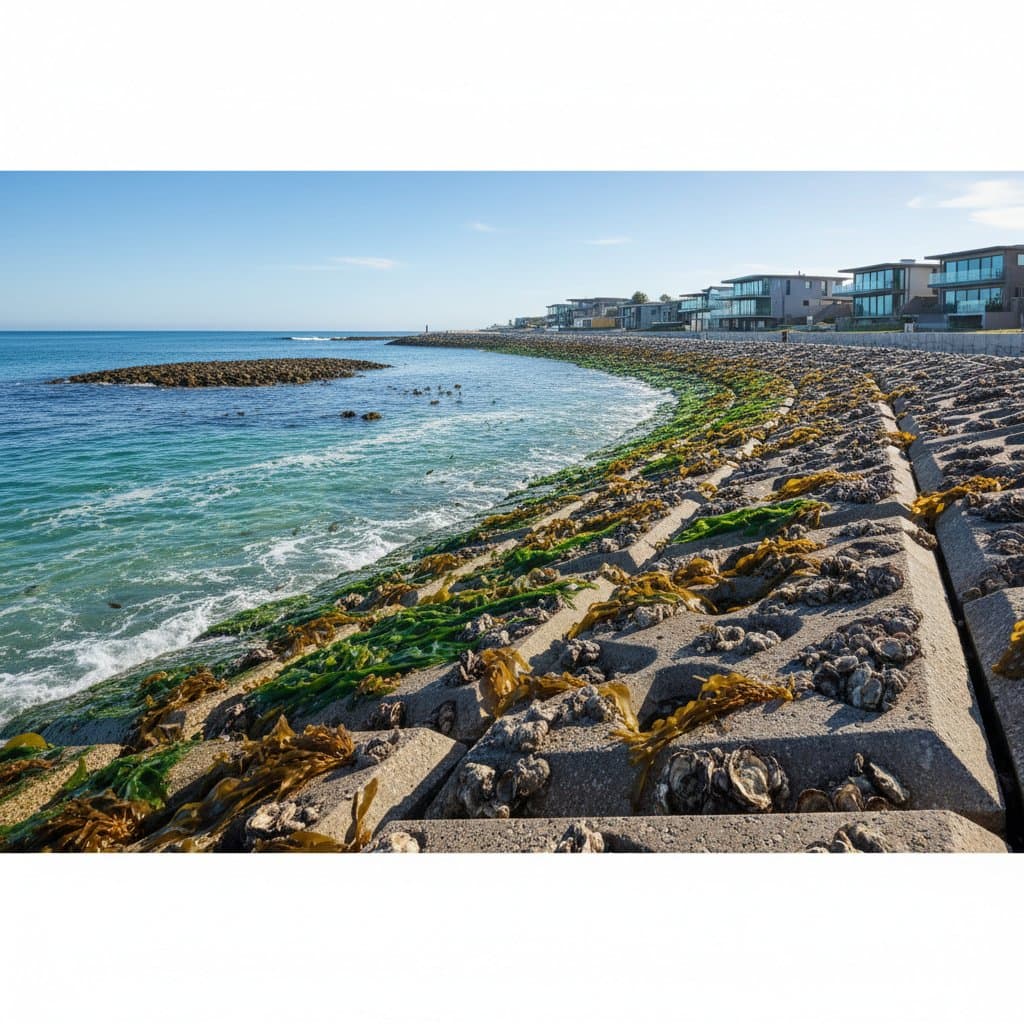
Living Seawalls: Defending Coasts While Reviving Marine Ecosystems
Waves relentlessly shape shorelines, prompting coastal communities to seek reliable defenses. In areas like San Diego, where urban development meets the ocean, traditional concrete seawalls have long served as primary barriers. However, living seawalls emerge as a superior alternative, merging engineering with ecology to shield coastlines and rejuvenate marine environments. These innovative structures welcome biodiversity rather than repelling it, fostering a harmonious balance between human needs and natural resilience.
Living seawalls employ textured surfaces and natural materials to dissipate wave energy effectively. They create habitats for organisms that, in turn, reinforce the structure over time. This approach not only prevents erosion but also enhances water quality and supports local fisheries, demonstrating a multifaceted solution to coastal challenges.
What Is a Living Seawall?
A living seawall functions as a hybrid coastal defense that combats erosion while bolstering marine ecosystems. Engineers design these structures to replicate natural features, such as rocky outcrops or oyster beds, using materials like textured concrete panels or modular units embedded with crevices and ledges. These elements provide attachment points for algae, barnacles, and shellfish, transforming a once-sterile barrier into a vibrant ecological hub.
How It Works
The design of a living seawall relies on irregular surfaces to fragment and redirect wave energy, minimizing the impact on adjacent shorelines. Sediments accumulate in calmer waters behind the structure, promoting beach stability. Marine species colonize the panels gradually; for instance, mussels and oysters secrete calcium carbonate layers that add density and durability. As these organisms proliferate, the seawall gains biological armor, adapting to environmental stresses like storms and rising sea levels.
This self-sustaining process contrasts sharply with static defenses. Over years, the integration of flora and fauna creates a layered system that filters pollutants and stabilizes the foundation, ensuring long-term efficacy.
Living Seawalls vs. Traditional Concrete Walls
To appreciate the advantages of living seawalls, consider their performance against conventional concrete barriers. The table below outlines key differences, highlighting how ecological integration elevates coastal protection.
| Feature | Living Seawalls | Concrete Seawalls |
|---|---|---|
| Erosion Control | Absorbs and dissipates wave energy | Deflects waves, leading to scour |
| Marine Life Support | Promotes biodiversity and habitat growth | Results in barren, lifeless zones |
| Aesthetics | Blends naturally with surroundings | Appears industrial and uninviting |
| Maintenance | Benefits from biological self-repair | Demands regular, costly interventions |
| Longevity | Enhances with ecological establishment | Deteriorates under constant exposure |
Concrete seawalls provide immediate strength but often exacerbate erosion downstream through wave reflection. Living seawalls, by contrast, evolve dynamically, inviting nature to contribute to their fortitude and creating a more adaptive defense.
The Role of Oysters in Coastal Engineering
Oysters play a pivotal role in the success of living seawalls, acting as natural architects of resilience. These bivalves form dense clusters that function as wave attenuators, similar to living breakwaters. Each mature oyster filters up to 50 gallons of water per day, removing sediments and toxins to clarify coastal waters and support broader ecosystem health.
When incorporated into seawall designs, oyster larvae settle on provided substrates, growing into reefs that interlock with the structure. This symbiosis not only fortifies the wall but also attracts juvenile fish and invertebrates, establishing food webs that benefit commercial and recreational fishing.
Benefits of Oyster Reefs in Living Seawalls
- Wave Reduction: Compact oyster formations break up incoming swells, reducing energy transfer to the shore by up to 50 percent in some studies.
- Water Filtration: Enhanced clarity fosters seagrass beds and coral health, amplifying overall marine productivity.
- Habitat Creation: Sheltered nooks within reefs serve as nurseries for diverse species, boosting local biodiversity.
- Structural Reinforcement: Secreted shells and root-like holdfasts from attached algae bind panels, resisting cracks and shifts.
Engineers often seed panels with oyster spat to accelerate colonization, ensuring rapid integration in nutrient-rich waters.
Cost and Practical Considerations
Initial installation costs for living seawalls range from 20 to 50 percent higher than standard concrete due to specialized materials and design. Factors such as project scale, site-specific wave patterns, and material choices influence expenses; for example, prefabricated panels streamline labor in urban settings. Yet, long-term savings materialize through diminished repair needs, as biological growth mitigates wear from salt corrosion and biofouling.
Municipalities report payback periods of five to ten years, factoring in ecosystem services like improved water quality that reduce treatment costs for harbors. Homeowners benefit similarly, with modular kits available for private docks that comply with local regulations.
Consult a certified coastal engineer to assess soil composition, tidal ranges, and native species compatibility. Site surveys ensure the design aligns with regional conditions, maximizing both protective and restorative outcomes.
Implementing Living Seawalls
Coastal residents and businesses can initiate living seawall projects through partnerships with environmental organizations or engineering firms. Start by evaluating existing infrastructure; retrofitting options allow seamless upgrades to aging concrete without full replacement. Modular systems, installed in phases, minimize disruption and enable scalability for marinas or residential properties.
Local incentives, such as grants for green infrastructure, often offset upfront investments. Collaborate with marine biologists to select species-appropriate features, ensuring the structure supports endemic flora and fauna. Successful installations in San Diego harbors demonstrate that even small-scale efforts contribute to larger watershed health.
Building Resilient Coasts Together
Adopting living seawalls shifts coastal management from confrontation to collaboration with the sea. These structures not only safeguard properties against erosion but also cultivate thriving marine communities that enhance recreational value and ecological balance. Communities that embrace this approach secure a legacy of sustainable shorelines, where human ingenuity amplifies nature's own defenses for enduring vitality.