
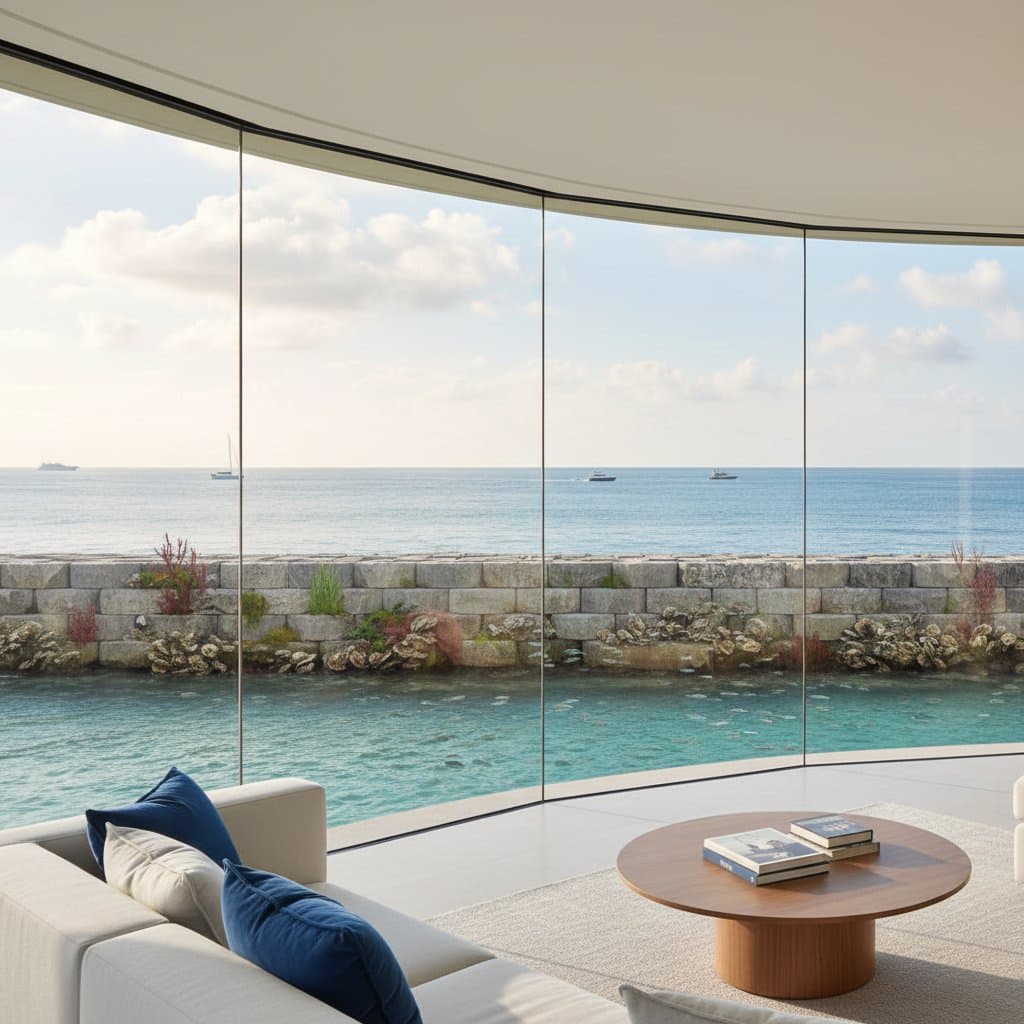
Why Living Seawalls Outperform Concrete for Coastal Properties
Envision the dawn light illuminating your waterfront home, with waves softly meeting the shore and seabirds wheeling overhead. Contrast this serene scene with the stark presence of a concrete barrier. Concrete seawalls have served as standard erosion defenses for decades, yet living seawalls emerge as a superior option, integrating scientific principles, innovative design, and ecological benefits to safeguard properties while revitalizing marine environments.
For residents along the San Diego coast or similar erosion-prone areas, living seawalls merit close consideration. These structures range in cost from $300 to $1,200 per linear foot, varying by design intricacy and materials. They function dually as barriers and ecosystems that naturally reinforce shorelines. Property owners seeking seamless implementation should obtain estimates from experienced marine contractors focused on sustainable erosion solutions.
Article Overview
- Cost considerations
- Design varieties and selections
- Installation: DIY versus professional
- Strategies for cost reduction
- Frequently asked questions
Design Varieties and Selections for Living Seawalls
Living seawalls manifest in diverse forms, each tailored to specific shoreline characteristics, financial parameters, and ecological objectives. Options accommodate varying conditions, from intense wave action to subtle tidal shifts or progressive erosion.
Textured Modular Panels
These units feature molded surfaces that promote attachment of barnacles, oysters, and algae. Gradually, this growth develops into a protective layer that mitigates wave impact.
Ideal for: Compact urban waterfronts and residential retaining structures.
Advantages: Straightforward retrofitting, minimal upkeep, exceptional durability.
Drawbacks: Demands accurate positioning and sufficient tidal submersion.
Oyster Reef Integration
This approach incorporates oyster shells or synthetic reefs at the base. Oysters purify water, bolster the foundation, and provide refuge for juvenile fish.
Ideal for: Protected bays, estuaries, and tranquil waters.
Advantages: Autonomous operation, enhanced water transparency, decreased sediment suspension.
Drawbacks: Extended initial colonization period, reliance on appropriate salinity levels.
Vegetated Terraces
These designs pair fortified tiers with salt-resistant plants like cordgrass. The foliage dissipates wave force, captures particles, and anchors the terrain.
Ideal for: Mild inclines or low-impact wave zones.
Advantages: Visually harmonious, promotes avian and invertebrate populations.
Drawbacks: Necessitates occasional replanting and watering in early stages.
Hybrid Configurations
Hybrid models fuse concrete bases with ecological panels or reef elements. They ensure robust defense alongside biodiversity enhancement.
Ideal for: Dynamic coastlines or regions with substantial vessel activity.
Advantages: Superior resilience, flexible customization, extended service life.
Drawbacks: Elevated upfront investment, intricate approval procedures.
Essential Considerations Prior to Construction
Shoreline Characteristics
Factors such as wave vigor, soil composition, and tidal patterns dictate optimal designs. Robust hybrids suit exposed shores, whereas oyster integrations excel in sheltered coves.
Upkeep Requirements
Concrete structures demand major overhauls periodically. Living seawalls involve routine inspections and ecological oversight, yet they typically fortify themselves over years.
Regulatory Compliance
These installations, by fostering habitats, often receive expedited approvals relative to impervious concrete. Consult regional coastal agencies for verification.
Enduring Benefits
Unlike concrete, which loses value, living seawalls gain appreciation through habitat creation, water improvement, and elevated property appeal.
Visual Integration
Living seawalls harmonize with surroundings, evolving to resemble organic shorelines and fostering tranquil, inviting spaces.
Strategies to Reduce Project Expenses
-
Opt for Prefabricated Modules
Standardized eco-panels incur lower costs than bespoke fabrications and accelerate deployment. -
Integrate with Current Infrastructure
Stable legacy walls can underpin new ecological additions, avoiding full removal expenses. -
Participate in Collective Initiatives
Coastal preservation organizations frequently subsidize or facilitate community-driven projects to offset labor. -
Incorporate Regional Resources
Sourcing indigenous stone, reclaimed shells, and proximate flora cuts shipping fees and boosts site adaptation. -
Schedule in Off-Peak Periods
Builders extend discounts during quieter seasons beyond high summer demand.
These tactics can lower overall outlays by 10 to 30 percent, preserving ecological integrity.
Upkeep Practices for Sustained Performance
Living seawalls demand consistent yet undemanding attention to thrive. Follow these steps:
-
Conduct Yearly Evaluations
Examine for deterioration, dislodged components, or sediment accumulation. Prompt intervention averts extensive repairs. -
Foster Ecological Growth
Refrain from removing attached organisms except in safety-critical cases. Such elements reinforce integrity and balance. -
Sustain Plant Cover
Substitute perished or displaced greenery with resilient varieties. Vigorous growth amplifies energy deflection and soil hold. -
Assess Water Parameters
Employ basic kits to measure salinity and acidity. Consistent conditions accelerate biological settlement. -
Collaborate with Specialists
Engage marine experts or conservationists for periodic reviews. Their insights secure enduring efficacy.
With diligent care, these systems achieve self-reliance, demanding minimal input while bolstering coastal defenses.
Frequently Asked Questions
How durable are living seawalls?
A well-tended living seawall endures 50 years or longer. Biological reinforcements often surpass concrete longevity.
Are permits necessary for living seawalls?
Yes, they adhere to standard coastal codes, although eco-variants may benefit from accelerated processing in certain locales.
Is retrofitting possible for concrete walls?
Yes, modular eco-elements adhere to sound concrete, transforming it into a bioactive system without demolition.
Do living seawalls withstand severe weather?
Professional setups match conventional barriers in protection. Textures absorb rather than rebound waves, minimizing scour.
What maintenance do they entail?
Yearly checks, plant tending, and sediment control suffice. Established biota largely self-perpetuate.
Steps to Implement Your Living Seawall
Living seawalls demonstrate the synergy of defense and habitat renewal. Select this method to secure your property, nurture ocean ecosystems, purify waters, and cultivate an authentic coastal vista.