
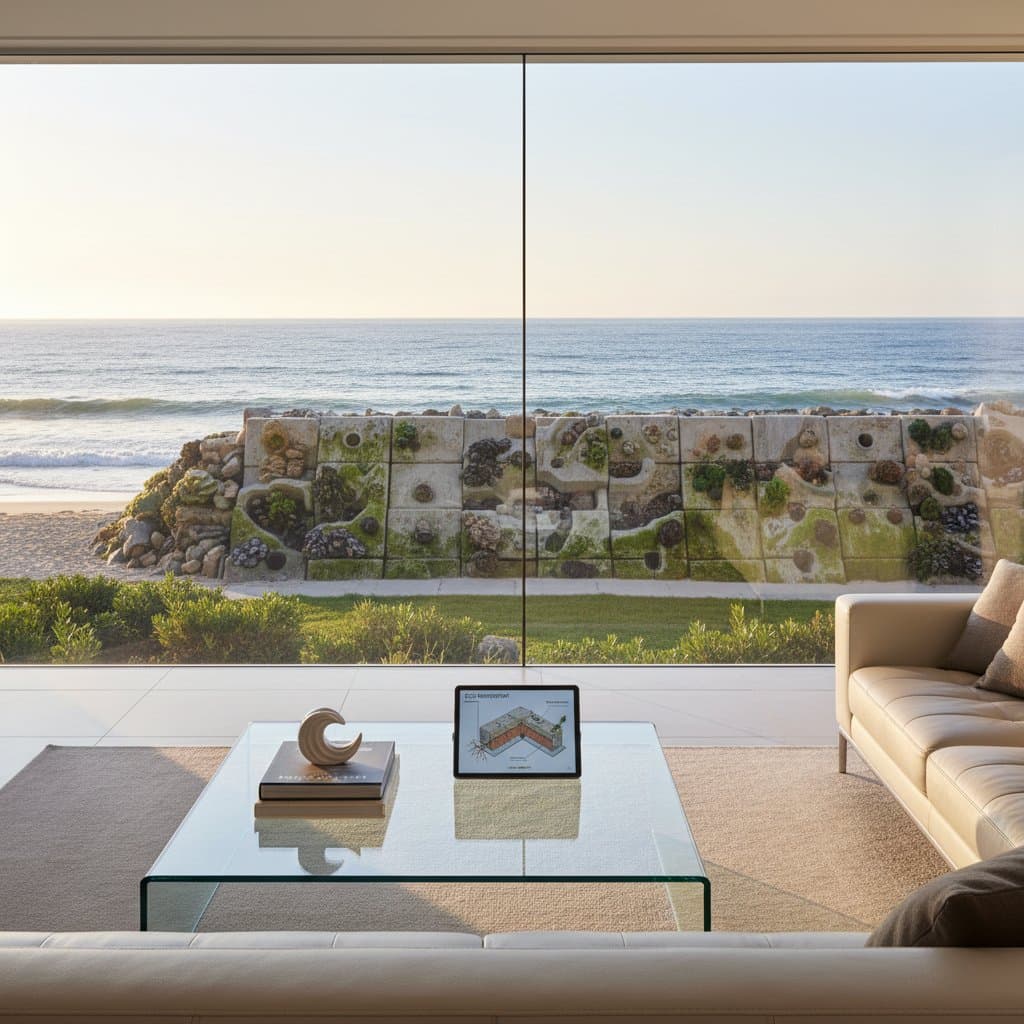
Living Seawalls: An Eco-Friendly Solution for Coastal Erosion
Coastal property owners face accelerating shoreline retreat due to rising sea levels and intensified storms. Traditional concrete seawalls have served as primary barriers, yet they frequently exacerbate erosion by reflecting wave energy back toward the shore. Living seawalls provide an innovative alternative that integrates structural integrity with natural elements to safeguard land while enhancing local ecosystems.
This article details the mechanics of living seawalls, their pricing structure, comparisons to conventional options, and strategies for cost efficiency. Readers gain insights into implementation and upkeep to make informed decisions for resilient coastal protection.
Understanding Living Seawalls
A living seawall merges robust engineering with biological components. Rather than smooth concrete surfaces, these structures incorporate rough-textured panels, crevices for marine organisms, and plantings of native species. Such designs draw in fish, shellfish, and algae, which in turn dampen wave impacts and promote sediment accumulation.
These installations replicate natural rocky coasts, fostering habitats that support diverse wildlife. Property protection occurs alongside ecological restoration, creating multifunctional barriers that adapt to environmental changes over decades.
Pricing Overview for Living Seawalls
Installation costs for living seawalls generally fall between $700 and $1,200 per linear foot, influenced by location-specific factors and chosen materials. For a 50-foot residential segment, expect expenditures from $35,000 to $60,000. Extensive commercial or public projects often surpass $200,000, reflecting scale and complexity.
In contrast, standard concrete seawalls range from $500 to $1,000 per linear foot. While cheaper upfront, they lack habitat support and demand frequent repairs from wave-induced wear, such as undermining foundations or surface degradation.
Detailed Cost Components
| Component | Cost per Linear Foot | Key Elements |
|---|---|---|
| Structural foundation | $200 - $400 | Deep pilings or reinforced slabs for stability |
| Eco-panel system | $250 - $450 | Modular tiles with grooves for organism attachment |
| Vegetation and substrate | $100 - $200 | Salt-tolerant plants, gravel bases, and shellfish seeding |
| Labor and permitting | $150 - $300 | Expert installation, site surveys, and regulatory compliance |
These figures account for quality materials that ensure longevity, with variations based on regional labor rates and supply availability.
Key Factors Affecting Expenses
Project costs fluctuate due to environmental and logistical variables. High wave exposure necessitates taller structures with additional anchoring, elevating material needs. Unstable substrates, like loose sand, demand extensive excavation and stabilization techniques.
Site accessibility plays a role; remote locations require specialized transport, increasing logistics fees. Jurisdictional rules, particularly in ecologically sensitive zones, involve detailed assessments that extend timelines and budgets. Opting for sustainable materials, such as reclaimed aggregates or bio-based composites, can either raise or lower costs depending on sourcing.
Living Seawalls Versus Traditional Concrete Barriers
| Aspect | Living Seawall | Concrete Seawall |
|---|---|---|
| Cost per linear foot | $700 - $1,200 | $500 - $1,000 |
| Expected lifespan | 30+ years, with ecological self-repair | 25-40 years, prone to cracking |
| Maintenance demands | Moderate: periodic biological checks | High: repairs for erosion damage |
| Environmental impact | Enhances biodiversity and water quality | Harms habitats through scour |
| Visual integration | Blends with natural surroundings | Appears stark and obtrusive |
Living seawalls excel in sustainability, offering superior erosion control through energy dissipation and root reinforcement. Initial investments yield savings via incentives like tax credits for green infrastructure and decreased repair frequency.
Strategies to Reduce Living Seawall Costs
- Incorporate hybrid designs by layering seawalls with offshore breakwaters or beach nourishment to minimize wall length.
- Select prefabricated components, such as interlocking habitat modules, which streamline assembly and cut on-site time.
- Explore funding from conservation agencies; programs in coastal states provide rebates for projects that advance habitat restoration.
- Adopt incremental builds, completing sections over years to align with budget cycles and observe performance adjustments.
These approaches maintain effectiveness while optimizing financial outlay, often recouping expenses through enhanced property resilience.
Professional Installation or DIY Options
Homeowners with basic skills might undertake minor enhancements, such as affixing habitat tiles to stable existing walls or seeding native grasses along edges. Such efforts suit low-risk, above-waterline modifications.
Full-scale projects, including subsurface work or tidal zone alterations, require licensed marine engineers and contractors. Hourly rates for these specialists range from $85 to $120, covering design consultations, compliance filings, and precise execution to avoid structural failures.
Common Questions on Living Seawalls
Are Permits Required for Installation?
Coastal authorities mandate approvals for any shoreline alteration. Applications include hydrodynamic modeling to verify minimal disruption to currents and affirmation of net-positive effects on local species.
What Is the Typical Timeline for Construction?
Modest residential setups conclude within two to four weeks, factoring in favorable weather windows. Ambitious endeavors span three to six months, coordinating with tidal schedules and supply chains.
Is Retrofitting Existing Structures Feasible?
Absolutely. Surface attachments like textured overlays or vertical gardens transform plain walls into living ones, preserving original foundations while adding ecological value.
What Upkeep Does a Living Seawall Involve?
Annual tasks encompass clearing debris, replenishing plantings, and assessing habitat health. Engage experts biannually for underwater inspections to ensure structural and biological integrity.
Do Living Seawalls Enhance Property Worth?
Sustainable features appeal to environmentally aware buyers, potentially increasing values by 5-10% in coastal markets. They signal proactive risk management against climate threats.
Sustaining Long-Term Performance
Regular monitoring forms the cornerstone of a living seawall's success. Track sediment levels and organism colonization to adapt as needed, ensuring the structure evolves with its environment. This proactive care not only extends durability but also amplifies ecological contributions, securing shorelines for future generations.