
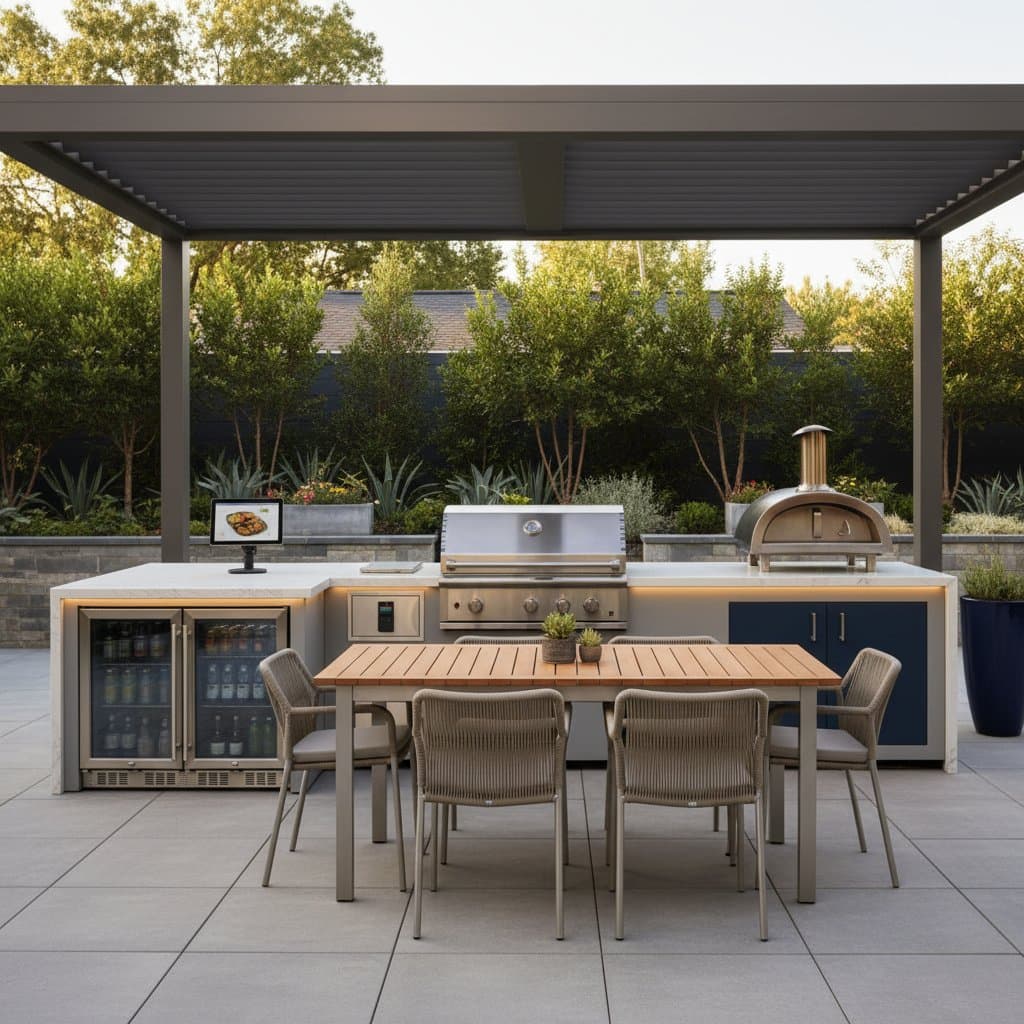
Seven Practical Modular Swaps to Refresh Your Outdoor Kitchen
Outdoor living spaces extend the home beyond interior walls, serving as venues for cooking, entertaining, and relaxation. Modular outdoor kitchens offer inherent flexibility, allowing adaptations to shifting needs and preferences. As design trends progress, targeted swaps of modular components maintain freshness, functionality, and aesthetic appeal without necessitating complete overhauls.
Consider the desire to align an outdoor kitchen with seasonal changes or emerging ideas. Modular systems facilitate straightforward replacements or rearrangements to support evolving entertaining objectives. Options range from enhancing seating capacity and modernizing appliances to optimizing layouts for expanded gatherings. The following outlines seven effective strategies to sustain trend relevance in outdoor cooking areas.
Essential Upgrades for Enhanced Functionality
1. Modernize the Cooking Station
The grill or cooktop anchors any outdoor kitchen setup. With culinary preferences advancing, select a modular replacement featuring precise heat regulation or integrated smoking capabilities. These systems support seamless transitions, such as moving from a basic gas model to a versatile hybrid unit, minimizing disruption.
Practical Advice: Opt for stainless steel construction or powder-coated surfaces to withstand exposure in humid or salty environments. Verify compatibility with existing framework dimensions before installation to ensure a smooth integration.
2. Revamp Countertop Surfaces
Countertops endure heavy use in outdoor settings, demanding materials that resist weather and wear. Swap aging surfaces for durable alternatives like quartz composites or recycled stone, which provide ample prep space while elevating visual interest. Such updates enhance workflow efficiency during meal preparation and serving.
Practical Advice: Select light-colored stones to reflect sunlight and reduce heat buildup. Incorporate integrated sinks or cutting boards within the modular design for added convenience in compact areas.
3. Reconfigure the Layout for Optimal Flow
Efficient layouts promote seamless movement between cooking, serving, and socializing zones. Rearrange modular cabinets and appliances to create a more intuitive workflow, perhaps positioning the grill closer to dining areas for larger events. This adjustment accommodates varying group sizes without permanent alterations.
Practical Advice: Employ the work triangle principle, positioning sink, stove, and refrigerator within reachable distances. Test the new arrangement with temporary markers before committing to hardware changes.
4. Install a Dedicated Beverage Center
Beverage stations streamline hosting by centralizing drink preparation and storage. Add a modular unit equipped with a mini-fridge, ice maker, and sink to keep refreshments accessible. This addition reduces trips indoors and fosters a self-contained entertaining hub.
Practical Advice: Choose weather-resistant models with UV-protected glass doors to prevent fading. Position the center near seating to encourage guest interaction and minimize clutter on main counters.
5. Expand Seating Integration
Comfortable seating transforms an outdoor kitchen into a true gathering spot. Incorporate modular benches or bar stools that attach directly to cabinetry, providing stable options for casual meals. These elements maximize space utilization while promoting inclusivity for family and friends.
Practical Advice: Select cushioned, all-weather fabrics in neutral tones for easy maintenance. Ensure adjustable heights align with counter levels to support ergonomic use during extended gatherings.
Advanced Enhancements for Contemporary Appeal
6. Incorporate Intelligent Technology
Technological integrations elevate outdoor experiences through convenience and efficiency. Replace legacy modules with components supporting app-controlled lighting, climate monitoring, or automated appliances. These features align spaces with modern lifestyles, optimizing energy use and user control.
Practical Advice: Prioritize weatherproof smart hubs compatible with voice assistants for hands-free operation. Begin with basic sensors to monitor humidity and temperature, expanding as needs dictate.
7. Renew Storage and Aesthetic Details
Storage solutions and decorative finishes define the overall character of an outdoor kitchen. Update cabinetry faces, drawer pulls, or paneling to incorporate prevailing styles, such as earthy tones, sleek metallics, or textured woods. Introduce open shelving for herbs, lanterns, or artisanal pieces to infuse warmth and personalization.
Practical Advice: Use modular inserts for customizable organization, like pull-out spice racks or utensil dividers. Balance enclosed storage with display areas to create visual depth and functionality.
Implementing Changes for Lasting Adaptability
Modular designs excel in their capacity for incremental evolution. Focus on targeted component exchanges to preserve budgets, timelines, and structural integrity while synchronizing with design shifts. Initiate with high-impact modifications that address immediate priorities, then refine progressively to mirror lifestyle developments. This approach ensures an outdoor kitchen remains vibrant, practical, and primed for memorable occasions.