
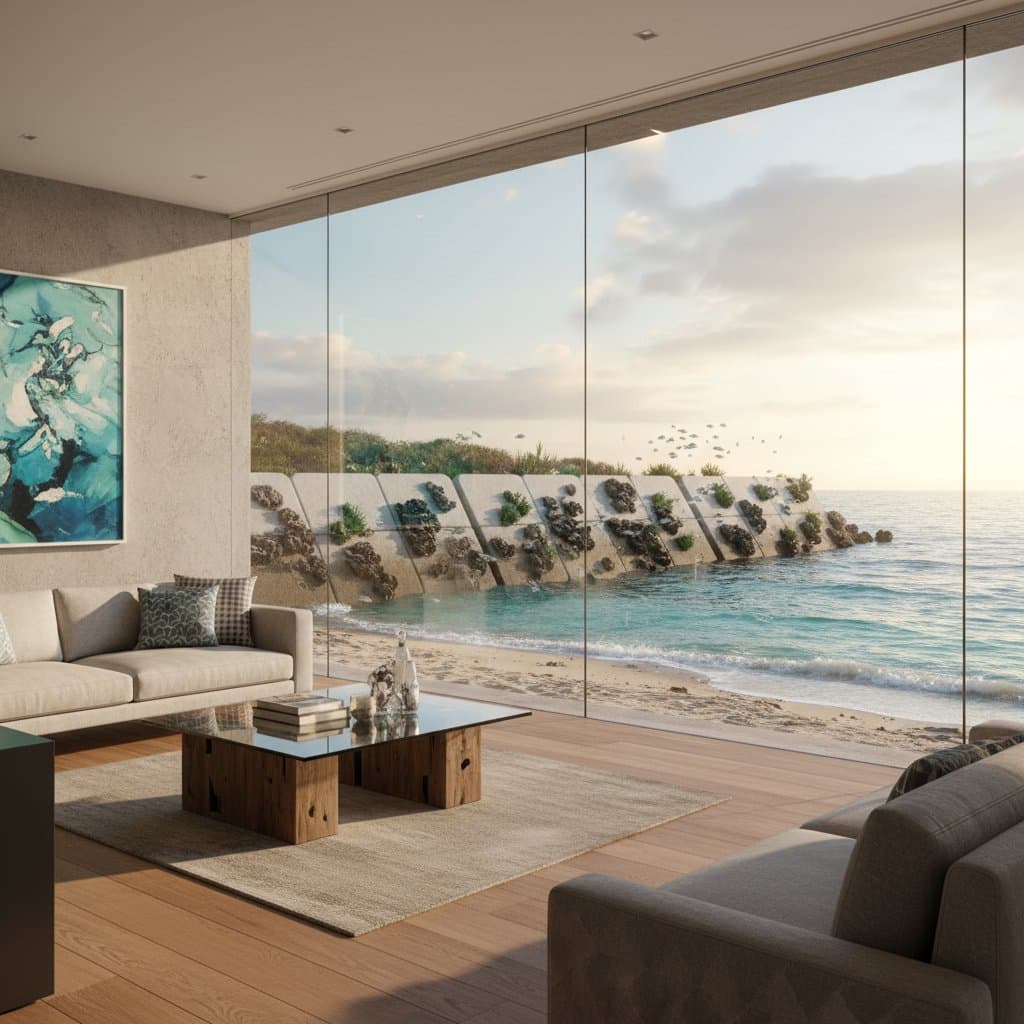
Living Seawalls: Transforming Coastal Remodels with Ecology and Engineering
Coastal property owners increasingly prioritize sustainable solutions for shoreline defense as environmental concerns rise. Living seawalls represent a forward-thinking alternative to conventional barriers, providing erosion control while creating habitats for marine species. This integration of engineering and ecology redefines coastal remodeling, offering protection that evolves with the environment.
Understanding Living Seawalls
A living seawall consists of a sturdy framework embedded with features that replicate natural coastal elements. These structures use roughened surfaces, attached reef modules, and areas for vegetation to dissipate wave energy effectively. In contrast to smooth concrete walls that intensify wave rebound, living seawalls reduce impact and encourage settlement by organisms such as barnacles, algae, and juvenile fish.
For residents in vulnerable coastal areas, these installations deliver dual benefits: reliable property safeguarding and enhanced biodiversity. Over time, the seawall becomes an active component of the local ecosystem, supporting food webs and water quality improvement.
Breaking Down the Costs of Living Seawalls
Installation costs for living seawalls generally fall between $350 and $1,200 per linear foot, influenced by project scale, location specifics, and customization level. A basic setup for a residential property covering 100 feet might range from $45,000 to $80,000. More elaborate versions, incorporating advanced engineering, often surpass $150,000.
Key expense categories include the following:
| Component | Cost Range per Linear Foot | Description |
|---|---|---|
| Foundation and concrete base | $150–$400 | Forms the primary structural support against water forces |
| Eco-friendly panels or reefs | $100–$300 | Provides surfaces for marine attachment and wave energy absorption |
| Reinforcement materials | $50–$150 | Utilizes corrosion-resistant options like galvanized steel or polymers |
| Habitat establishment | $25–$75 | Involves seeding with native plants, shellfish, or algae |
| Engineering and permits | $3,000–$10,000 total | Covers site assessments, designs, and regulatory approvals |
Costs Based on Project Size
Project expenses scale with length and complexity:
- Small-scale residential (up to 100 feet): $35,000 to $70,000, suitable for modest waterfront lots.
- Medium installations (100 to 250 feet): $70,000 to $150,000, ideal for larger estates with varied terrain.
- Extensive or bespoke projects (over 250 feet): $150,000 to $300,000 or more, often for commercial or high-risk sites.
Factors such as exposure to storms, subsurface geology, and integration with existing features drive these differences. New constructions typically cost more than retrofits due to excavation needs.
Labor and Expertise Expenses
Labor accounts for 40 to 60 percent of overall budgets, involving skilled teams like marine builders, underwater specialists, and biologists. Hourly rates for these experts range from $80 to $150, with premiums for offshore operations or hazardous conditions. Permitting processes add time and fees, extending timelines by several months.
Engaging a licensed coastal engineer proves essential for accurate assessments of hydraulic forces, sediment dynamics, and biological compatibility. Such expertise minimizes risks of failure, ensuring the structure withstands decades of tidal fluctuations and storms.
Key Influences on Pricing
Multiple site-specific elements determine final expenditures:
- Intensity of wave action and tidal ranges, requiring reinforced designs in exposed areas.
- Ground composition and existing erosion patterns, which may necessitate deeper foundations.
- Material selections, from basic concrete to premium bio-composites.
- Site access for equipment, potentially increasing logistics costs in remote locations.
- Regulatory hurdles, including environmental impact studies.
- Desired ecological enhancements, such as specialized reefs for endangered species.
A comprehensive site evaluation early in planning optimizes costs while maximizing effectiveness.
Comparing Material Options
Different materials balance affordability, longevity, and environmental impact:
| Material | Cost per Linear Foot | Longevity | Biodiversity Support | Upkeep Requirements |
|---|---|---|---|---|
| Textured concrete panels | $300–$700 | 50+ years | Moderate | Minimal |
| Modular composite blocks | $400–$900 | 60+ years | High | Low |
| Natural stone hybrids | $250–$600 | 40+ years | Excellent | Periodic |
Concrete options offer straightforward installation, while composites provide superior resistance to saltwater corrosion. Stone variants excel in promoting natural colonization but demand careful sourcing to avoid ecological disruption.
Strategies to Reduce Expenses
Property owners can implement practical measures to control budgets:
- Retrofit existing seawalls with eco-additions rather than complete rebuilds, saving up to 30 percent.
- Source regional stones and native plants to minimize shipping and adapt to local conditions.
- Apply for grants from conservation agencies or resilience funds that offset green infrastructure costs.
- Bundle seawall work with complementary upgrades like beach nourishment or pathway construction to share setup expenses.
- Schedule installations during off-peak periods, such as winter, when contractor availability lowers rates.
These approaches maintain quality without compromising the project's sustainable goals.
DIY Approaches Versus Professional Installation
Attempting a DIY living seawall carries significant risks due to the technical demands of marine construction. Homeowners might handle minor habitat additions, such as planting seagrasses on stable surfaces, but core structural work requires professional oversight. Errors in alignment or material placement can lead to rapid deterioration and regulatory violations.
Professionals bring specialized tools, insurance, and knowledge of local codes, ensuring compliance and durability. For most projects, investing in a full-service contractor yields long-term savings through avoided repairs and enhanced performance. Consult experts for feasibility assessments before considering any self-managed elements.
Avoiding Pitfalls in Living Seawall Projects
Steer clear of these frequent oversights to protect investments:
- Neglecting detailed hydrodynamic studies, which can result in undersized structures vulnerable to surges.
- Introducing invasive species that harm native biodiversity and invite fines.
- Opting for untreated concrete, which erodes habitats rather than supporting them.
- Disregarding backfill drainage, leading to hydrostatic pressure and wall instability.
- Skipping post-installation monitoring, allowing debris buildup to stifle ecological growth.
Conduct thorough pre-project audits and follow-up care to sustain functionality.
Frequently Asked Questions
Does a living seawall require permits?
Permits are mandatory in nearly all coastal jurisdictions for altering shorelines. Applications typically involve coastal commissions and environmental agencies, with reviews focusing on habitat impacts and structural safety.
What is the expected lifespan of a living seawall?
Well-constructed units endure 40 to 75 years, varying by material and exposure. The biological layers often strengthen over time, bolstering resilience against erosion.
What ongoing care is needed?
Routine tasks encompass structural inspections for damage, removal of accumulated sediment, replenishment of seeded organisms, and trimming of overgrowth. Schedule professional evaluations annually to address issues promptly.
Can living seawalls enhance property worth?
Absolutely, as they demonstrate proactive environmental stewardship, appealing to eco-aware buyers and potentially lowering flood insurance premiums through demonstrated risk mitigation.
Are they appropriate for every shoreline type?
These systems suit low- to moderate-energy coasts best. High-wave zones benefit from hybrid designs merging rigid cores with living facades for optimal protection.
When does wildlife colonization occur?
Initial attachment of microbes and algae appears within weeks, followed by complex communities in 6 to 12 months, accelerating with proper substrate preparation.
Sustaining and Maximizing Your Living Seawall
Regular upkeep ensures your living seawall delivers ongoing protection and ecological value. Integrate monitoring into annual property maintenance to track structural integrity and habitat vitality. As marine life flourishes, the installation not only shields your shoreline but also contributes to broader coastal health, securing lasting benefits for your property and community.