
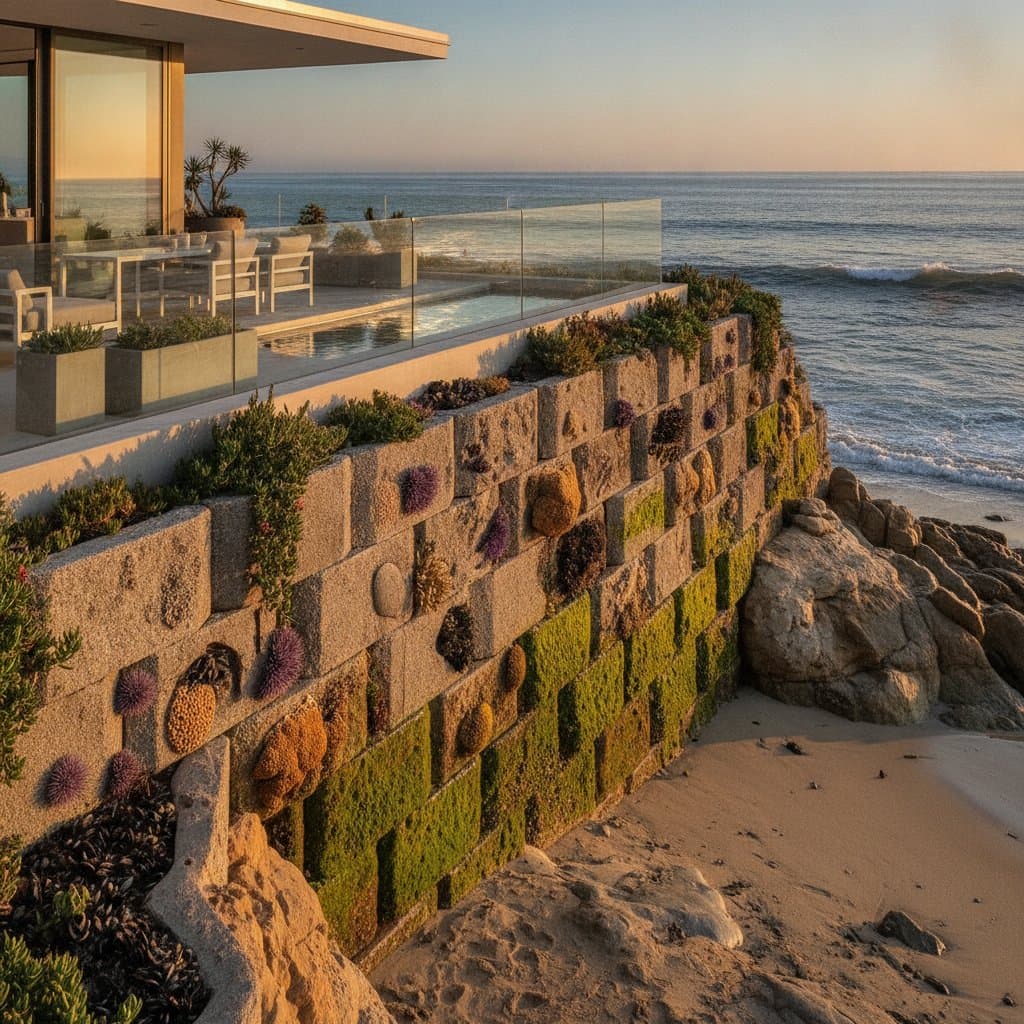
Living Seawalls Cost Between 250 and 600 Dollars Per Linear Foot in 2026
Coastal homeowners confront ongoing erosion threats. Traditional concrete barriers shield property yet harm nearby ecosystems. Living seawalls merge structural support with ecological features to stabilize shorelines and encourage marine habitats.
San Diego residents benefit from understanding material choices, installation steps, and total expenses before committing to a project. This overview covers pricing factors, labor requirements, and practical maintenance approaches.
Average Project Costs
Expect to pay 250 to 600 dollars per linear foot for a complete living seawall. The typical rate settles near 400 dollars per linear foot when both structural panels and habitat elements are included.
Traditional concrete walls range from 150 to 350 dollars per linear foot yet provide fewer long-term ecological advantages. Higher upfront costs for living designs often yield savings through lower repair needs and greater durability.
Costs by Property Size
- Small residential sections of 30 to 50 linear feet total 7500 to 25000 dollars.
- Mid-size waterfront lots of 75 to 150 linear feet total 30000 to 90000 dollars.
- Larger estates exceeding 200 linear feet total 80000 dollars or more.
Limited site access or extra permitting steps increase these figures.
Material Options and Pricing
| Material Type | Key Features | Cost per Linear Foot | Expected Lifespan |
|---|---|---|---|
| Reinforced concrete with textured surfaces | Supports marine attachment | 300 to 450 dollars | 40 plus years |
| Modular eco-blocks with planters | Built-in tidal zones | 350 to 500 dollars | 35 plus years |
| Rock and reef hybrids | Combines stone with habitat modules | 400 to 600 dollars | 50 plus years |
| Bio-composite panels | Recycled lightweight construction | 250 to 400 dollars | 20 to 30 years |
Concrete and rock options deliver the strongest performance in high-energy wave zones.
Labor and Installation Details
Labor represents 40 to 60 percent of the budget. Specialized coastal contractors charge 60 to 120 dollars per hour. Typical tasks include site evaluation, foundation work, panel placement, and vegetation integration.
Permitting adds 2000 to 10000 dollars depending on local coastal rules. Owners should verify requirements early.
Key Cost Influences
Wave exposure, soil stability, and site access affect final pricing. Complex designs that incorporate walkways or coral modules raise expenses. Native plant selections increase initial outlays yet lower ongoing care.
Strategies to Reduce Expenses
- Select modular components that simplify placement.
- Address the most eroded sections first.
- Specify salt-tolerant native species.
- Coordinate with adjacent property owners for shared permits.
- Apply for coastal restoration grants when available.
- Time work for calmer seasons.
Professional Installation Versus Owner Involvement
Structural engineering and habitat design require licensed expertise. Owners may handle post-installation planting or monitoring, yet foundation and permitting tasks belong to professionals.
Frequent Errors and Prevention
Skipping soil assessments or using unsuitable plants leads to early failure. Overlooking annual inspections reduces ecological gains. Compliance with regulations avoids costly corrections.
Questions Homeowners Commonly Ask
Living seawalls reduce erosion by absorbing wave energy through combined barriers and root systems. A properly maintained installation lasts 30 to 50 years. Most coastal jurisdictions require permits. Annual inspections and debris removal constitute standard care. Property values often rise due to improved resilience and environmental appeal. Suitability depends on local wave conditions and soil type.
Protecting the Completed Installation
Regular monitoring of plant health and structural integrity preserves performance. Scheduled reviews allow timely adjustments that extend service life. Living seawalls deliver reliable shoreline defense while supporting local marine communities.