
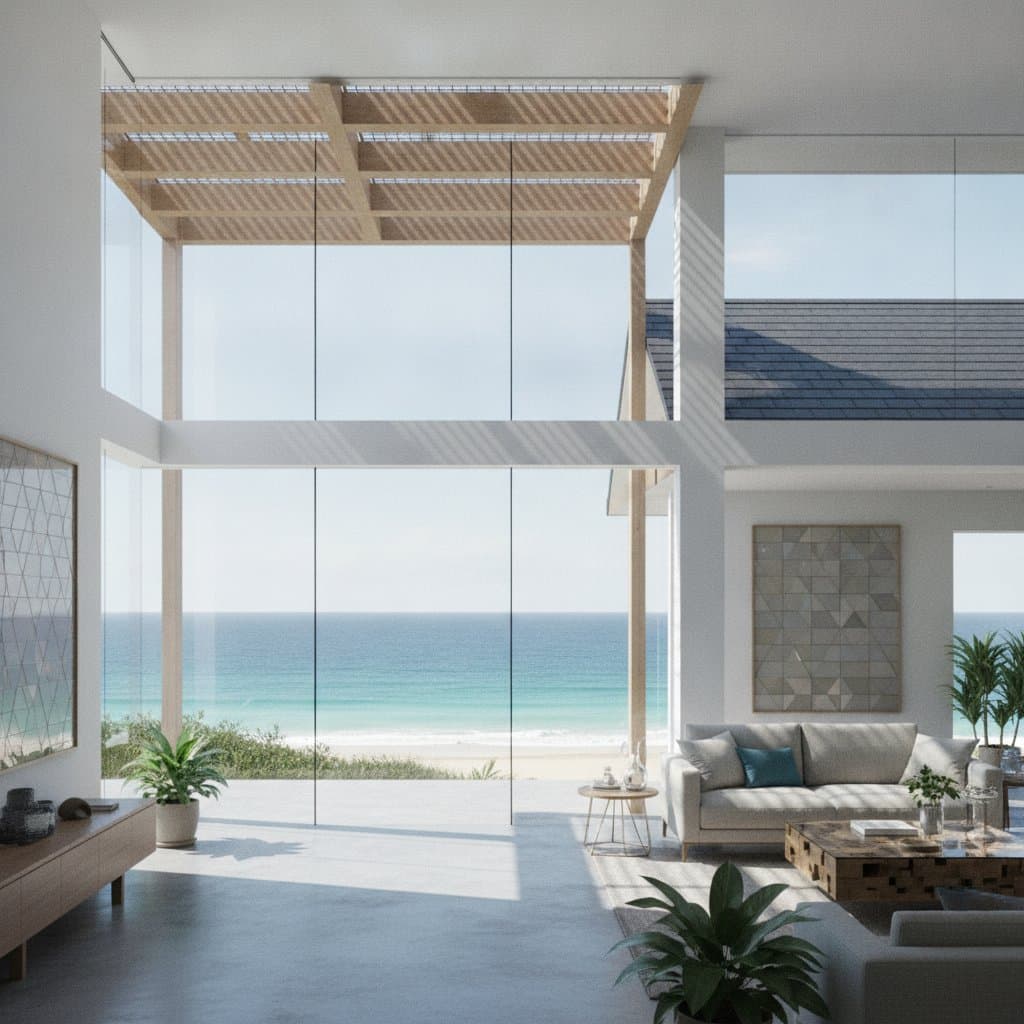
9 Innovative Ways Coastal Homes Get Solar Power Without Visible Panels
Living near the coast brings advantages such as ocean breezes, beautiful light, and a relaxing atmosphere. Traditional rooftop solar panels can clash with that aesthetic. New solar innovations now allow homeowners to generate renewable energy discreetly.
These systems preserve architectural beauty while improving efficiency and property value. Coastal homeowners can select from several advanced designs that make solar nearly invisible.
Discreet Solar Roofing Solutions
1. Solar Glass Tiles That Look Like Traditional Roofing
Solar glass tiles resemble classic roof materials such as clay or slate. Each tile contains photovoltaic cells that capture sunlight and convert it into electricity.
For coastal homes these tiles resist salt air, moisture, and wind. They suit properties with strict design guidelines.
Choose tempered solar glass for better durability in coastal climates.
2. Integrated Solar Roof Systems
Integrated solar roofs replace traditional materials entirely. Solar cells sit directly in the roof surface and create a uniform appearance.
This approach suits modern coastal homes with minimalist lines or flat roofs. It removes gaps that attract debris in salty air. Installation costs start around 30000 dollars and deliver strong returns through energy savings.
3. Solar Shingles That Blend Seamlessly
Solar shingles combine panel efficiency with the look of asphalt shingles. They remain lightweight and weather resistant.
Each shingle connects to the home electrical system. The surface stays clean and uniform while generating energy.
Hidden Solar in Everyday Materials
4. Solar Windows for Coastal Light and Energy
Transparent solar windows absorb ultraviolet and infrared light while allowing visible light through. The captured energy converts into electricity.
In coastal areas with large ocean facing windows this technology proves practical. Double glazed solar glass improves insulation and reduces glare from water.
5. Solar Skylights That Illuminate and Energize
Solar skylights harness sunlight to power ventilation fans or LED systems. Some models store excess energy for nighttime use.
Coastal homeowners value the added brightness and reduced grid reliance. These units also help control humidity in kitchens and bathrooms.
6. Solar Railings and Balustrades
Glass railings along decks and balconies can incorporate transparent solar cells. They generate electricity while preserving open views.
Wiring stays hidden inside the posts. Pair the railings with low voltage LED lighting for evening ambiance.
Outdoor and Landscape Solar Integration
7. Disguised Solar Pathway Tiles
Solar pathway tiles fit into driveways, patios, or garden paths. They capture daylight and power outdoor lighting at night.
Tempered glass or resin versions withstand coastal moisture and foot traffic. Occasional cleaning keeps them functional.
8. Solar Pergolas and Shade Structures
Solar pergolas combine shade with power generation. They support outdoor kitchens, pool pumps, or lighting without grid draw.
Costs range from 15000 to 35000 dollars depending on size. Coastal properties benefit from the dual role of shelter and energy production.
9. Solar Fences and Privacy Screens
Solar fences embed slim panels into their structure. They produce electricity while providing privacy and wind protection.
Marine grade fasteners prevent salt damage. These fences can power gate motors, irrigation, or security lighting.
Planning Advice for Coastal Solar Integration
Orientation matters for any hidden solar surface. South or west facing angles work best in most coastal regions.
Select systems that allow easy cleaning to manage salt buildup. Confirm that roofing or framing supports the added weight.
Coastal areas enforce strict building codes. Certified installers familiar with local rules help secure permits.
Questions Coastal Homeowners Ask About Integrated Solar
Most integrated solar products last two to three decades with routine care. Rinse surfaces periodically to remove salt residue.
Efficiency runs slightly lower than traditional panels yet improves yearly. Larger surface coverage often offsets the difference.
Modern solar glass and shingles resist corrosion and wind when rated for marine environments. Battery storage connects easily to these systems for cloudy days or nighttime use.
Upfront costs exceed standard panels. Long term savings and preserved views justify the investment for many owners. Professional installation ensures safety and code compliance.