
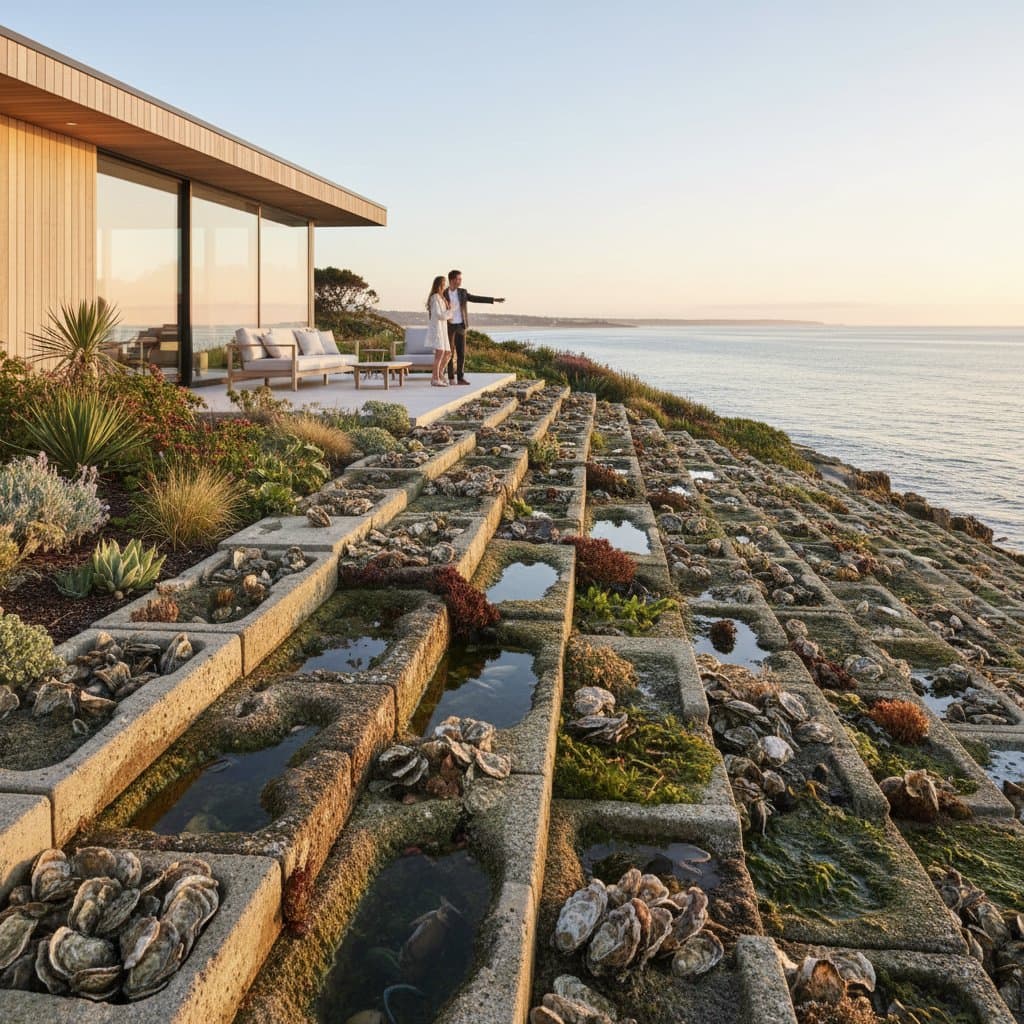
Living Seawalls: A Sustainable Approach to Coastal Protection
Picture yourself on the patio, observing waves approach the shore without concern for encroaching erosion. Living seawalls make this scenario possible by safeguarding properties while promoting marine habitats. These innovative structures integrate engineering precision with ecological principles to stabilize shorelines and support diverse species such as oysters, algae, and fish. Rather than imposing a plain concrete barrier, they establish a dynamic system that defends and revitalizes the coast.
This guide details the nature of living seawalls, their pricing structure, advantages over conventional alternatives, and installation feasibility. Readers gain insights into biodiversity enhancement, maintenance requirements, and permitting processes. For residents along the San Diego coastline or similar areas, this information aids in evaluating whether a living seawall aligns with property needs and sustainability goals.
Key takeaway: Living seawalls range in cost from $1,500 to $20,000 per linear foot, influenced by material choices and project scope. They shield against wave action while nurturing ocean life. Consult experienced professionals specializing in sustainable coastal solutions for customized estimates.
Factors Influencing Costs
The installation of a living seawall introduces complexities beyond those of standard barriers. Traditional concrete seawalls typically cost $800 to $1,200 per linear foot, whereas living seawalls span $1,500 to $20,000 per linear foot based on materials, design intricacies, and site-specific conditions.
Average cost: Approximately $7,800 per linear foot for a hybrid system incorporating structural and biological components.
Primary Cost Elements
- Design and engineering: Budget $2,000 to $15,000 for site assessments, regulatory approvals, and blueprint development. Collaboration among coastal engineers and biologists ensures both durability and habitat efficacy.
- Materials: Options like modular concrete panels, reef-inspired blocks, and sustainable composites range from $100 to $300 per square foot. Textured finishes replicate natural rock formations to encourage organism attachment.
- Labor: Marine specialists bill $50 to $150 per hour. Projects often span weeks, contingent on tidal patterns and terrain challenges.
- Permits and assessments: Regulatory fees add $5,000 to $25,000, varying by jurisdiction.
- Site preparation and equipment: Tasks including excavation, leveling, and marine access via barges contribute $10,000 to $40,000.
Variables Affecting Expenses
- Wave exposure: Intense conditions demand reinforced builds and extended footings.
- Coastal composition: Sandy substrates require distinct securing methods compared to rocky terrains.
- Site access: Isolated or inclined locations elevate transportation and workforce expenses.
- Ecological integration: Advanced modular setups or diverse materials raise costs yet amplify environmental gains.
Installation Options: DIY or Professional
The appeal of constructing a living seawall draws handy individuals, yet it demands expert planning and approvals. Balancing structural reliability with habitat functionality necessitates accurate technical oversight.
Scenarios for DIY Projects
Homeowners with construction experience may enhance existing seawalls with habitat panels or deploy coir logs and salt-resistant vegetation on mild inclines. Essential tools and supplies include:
- Marine-grade anchors or concrete fasteners
- Precision leveling instruments
- Safety gear such as gloves and protective attire
- Biodegradable netting or habitat logs
- Locally adapted, saline-tolerant flora
Such endeavors usually require 1 to 2 days and $200 to $800 in supplies. Verify compliance with regional coastal authorities prior to commencement.
Reasons to Engage Professionals
Full-scale constructions, reef modules, or integrated systems benefit from certified marine experts. These teams deploy specialized machinery like cranes, vessels, and subaqueous fixings to guarantee enduring performance.
Advantages of professional services:
- Adherence to environmental and safety codes
- Designs fortified against surges and soil loss
- Biologist-informed habitat incorporation
- Ongoing warranties and support plans
Complexity rating: Moderate to advanced. Professionals offer the most secure path for typical property owners.
Ongoing Maintenance Practices
Living seawalls demand vigilant monitoring to preserve both engineering soundness and biological vitality. Proactive care sustains performance over decades.
Scheduled Evaluations
Conduct biannual reviews, plus immediate post-storm checks. Identify fissures, shifted components, or backend scouring. Prompt interventions avert extensive damage.
Surface and Debris Management
Steer clear of chemical agents that threaten aquatic organisms. Employ gentle brushing or moderate water streams for algae and sediment removal. Restrain efforts to avoid hindering habitat development.
Plant Oversight
Adjust or supplement greenery to sustain root density. Robust foliage anchors earth and purifies drainage.
Expected Longevity
Appropriate upkeep extends service life to 25 to 50 years. Maturing biological elements like shellfish and algae reinforce the assembly organically.
Ecological Advantages
Beyond defense, living seawalls enrich surrounding waters, transforming barren walls into vibrant ecosystems.
- Habitat enhancement: Rough profiles host shellfish, algae, and crustaceans, attracting larger marine species.
- Pollutant reduction: Filter-feeding organisms clarify water by capturing contaminants.
- Climate mitigation: Greenery sequesters carbon and tempers shoreline temperatures.
- Erosion control: Contoured designs diffuse wave force progressively.
- Public involvement: Initiatives frequently unite communities, researchers, and educators in conservation efforts.
Frequently Asked Questions
What defines a living seawall?
A living seawall merges protective engineering with habitat-friendly features. Textured or segmented panels promote growth of marine organisms, yielding a harmonious defense that safeguards and rehabilitates the environment.
What is the expected lifespan of a living seawall?
Properly tended units endure 25 to 50 years. Duration hinges on build quality, wave intensity, and upkeep routines. Biological accretions often bolster resilience as they develop.
Do living seawalls suit every shoreline?
They excel in areas with moderate wave action or hybrid applications. High-energy cliffs or turbulent zones might necessitate conventional reinforcements augmented by eco-panels.
Are special permits necessary for living seawalls?
Affirmative. Authorities mandate ecological and engineering clearances to uphold standards and protect habitats. Engage coastal specialists early in planning.
Can a living seawall elevate property worth?
Indeed, particularly in sustainability-oriented markets. Prospective buyers value the dual role in security and natural enhancement.
Steps to Implement a Living Seawall
To pursue a living seawall, evaluate your coastal profile and connect with marine engineering firms focused on green erosion solutions. Obtain several proposals, explore configurations, and clarify upkeep commitments from the outset.
Advancing technologies signal a progressive era in shoreline management. A thoughtfully executed living seawall functions as resilient safeguard and ecological haven, securing your residence while invigorating adjacent waters.