
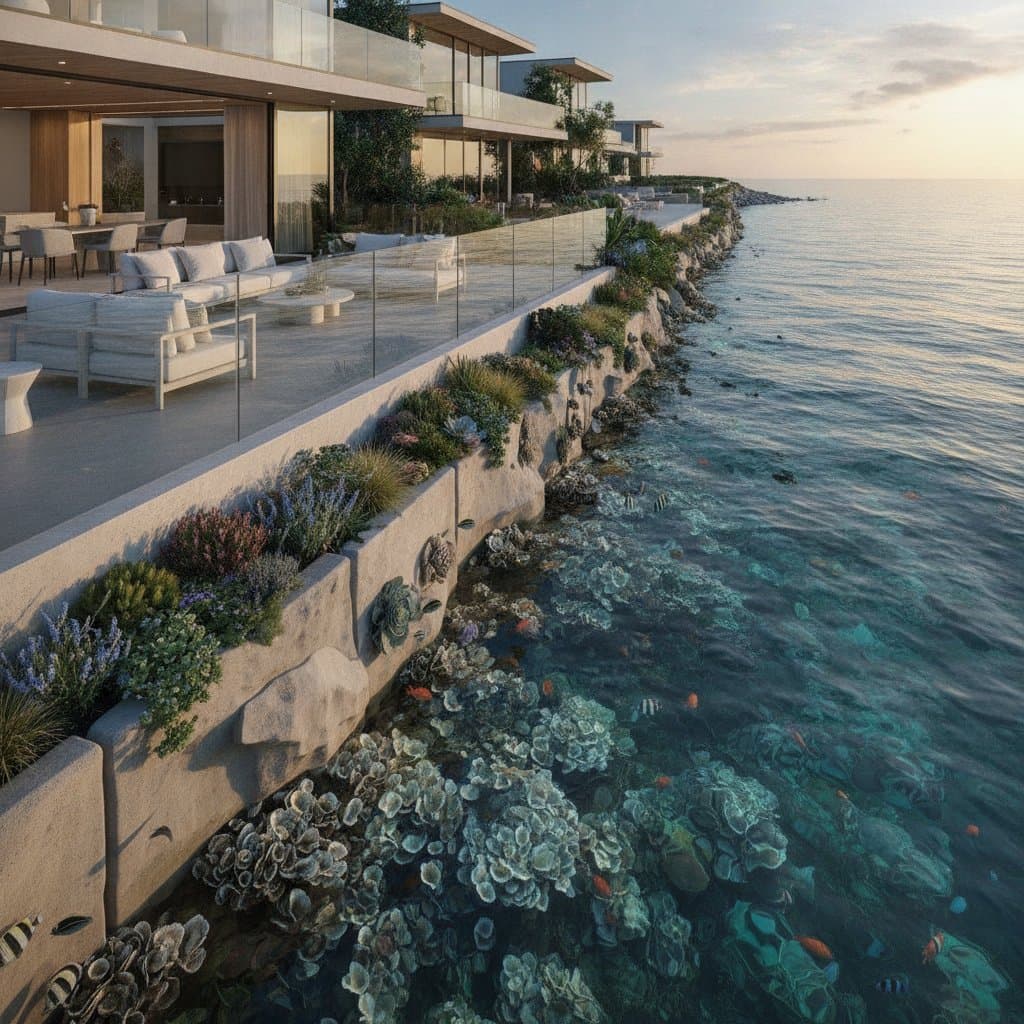
9 Living Seawall Ideas for Eco-Friendly Erosion Control at Waterfront Homes
Living by the water offers beauty along with challenges. Coastal homeowners frequently face erosion, failing seawalls, and declining marine life near their properties. Traditional concrete barriers protect shorelines temporarily. However, they reflect wave energy instead of absorbing it. This reflection can worsen erosion over time. Many have watched their waterfronts shrink or noticed fewer fish and crabs near docks. A smarter solution is gaining attention: living seawalls.
Living seawalls merge the protective role of traditional walls with natural elements. These systems support marine ecosystems. They promote biodiversity and stabilize shorelines. The result is a more attractive coastal setting. These approaches work with nature rather than against it. Homeowners gain a seawall that stands strong and revives waterfront life.
This guide presents nine creative living seawall ideas. They transform properties into eco-friendly spaces. Options range from modular panels for oysters to native vegetation for runoff filtration. Ideas fit various budgets and shoreline conditions. Whether renovating an old barrier or planning new work, these concepts provide inspiration for resilience and beauty.
Natural Elements That Support Seawall Function
Oyster Reef Integration for Water Filtration
Oysters serve as natural water purifiers. A small oyster reef filters thousands of gallons of water each day. This process improves water clarity and supports fish populations. Homeowners can integrate oyster habitat modules at the base of a seawall. Such integration encourages natural reef development.
Attachment options include oyster cages, reef balls, or pre-seeded tiles. These attach directly to the wall. As oysters grow, their shells create a rough layer. This layer absorbs wave energy and provides texture for additional marine life.
Contact local environmental groups to source oyster shells or spat for reef projects near the property.
Native Vegetation for Shoreline Stability
Native coastal vegetation planted along the base or top of a seawall offers natural reinforcement. Grasses, mangroves, and salt-tolerant shrubs trap sediment. They also reduce runoff. Roots stabilize soil. Foliage provides shade and shelter for small creatures.
Select species suited to regional salinity and tidal range. Southern coastal zones benefit from cordgrass and mangrove seedlings. Temperate areas gain from saltgrass or sea lavender. These choices add beauty and resilience.
- Difficulty: Easy to intermediate
- Maintenance: Seasonal pruning and monitoring for invasive species
A layered planting approach combines low-rooting grasses with taller vegetation. This method maximizes erosion control.
Intertidal Shelves for Habitat Diversity
Intertidal shelves function as mini-terraces within the seawall. They provide resting zones that flood at high tide and expose at low tide. These areas become habitats for snails, crabs, mussels, and other species.
Each shelf can contain natural rocks, oyster shells, or shallow vegetation beds. The structure becomes dynamic and living. It changes with the tide while delivering beauty and ecological benefits.
Vary shelf heights to support multiple marine zones. This variation attracts a wider range of species.
Planning Steps for Homeowners
Assess shoreline conditions before construction begins. A solid plan supports long-term success and regulatory compliance.
- Consult local marine engineers to evaluate wave exposure and soil stability.
- Review regional regulations on tidal zones and marine habitat protection.
- Select materials with priority on non-toxic and durable options.
- Plan for accessibility to allow maintenance and monitoring.
- Add educational signage for properties visible to the public. This helps others understand sustainable shoreline protection.
Answers to Common Questions
What is a living seawall?
A living seawall combines hard engineering with ecological design for shoreline protection. It supports marine habitats, improves water quality, and reduces erosion.
How much does a living seawall cost to install?
Costs vary based on materials and design. Most homeowners spend between 60 and 150 dollars per linear foot. Advanced features such as oyster habitats increase the price.
Do living seawalls require more maintenance than traditional ones?
These structures need light seasonal care. Tasks include checking plant health and removing debris. Biological growth strengthens the wall over time, leading to longer life.
Can an existing seawall be converted into a living one?
Modular panels and attachments allow upgrades to older seawalls. Full replacement is unnecessary. This method saves costs and benefits the environment.
Are living seawalls effective against storms?
They absorb and dissipate wave energy more effectively than rigid walls. Texture, vegetation, and reef growth reduce wave force and stabilize shorelines.
Benefits for Your Waterfront Property
A completed living seawall brings vibrancy to the shoreline. Birds return to feed on small fish. Oysters filter the water. Plants create a smooth transition between land and sea. The property gains both protection and ecological value.