
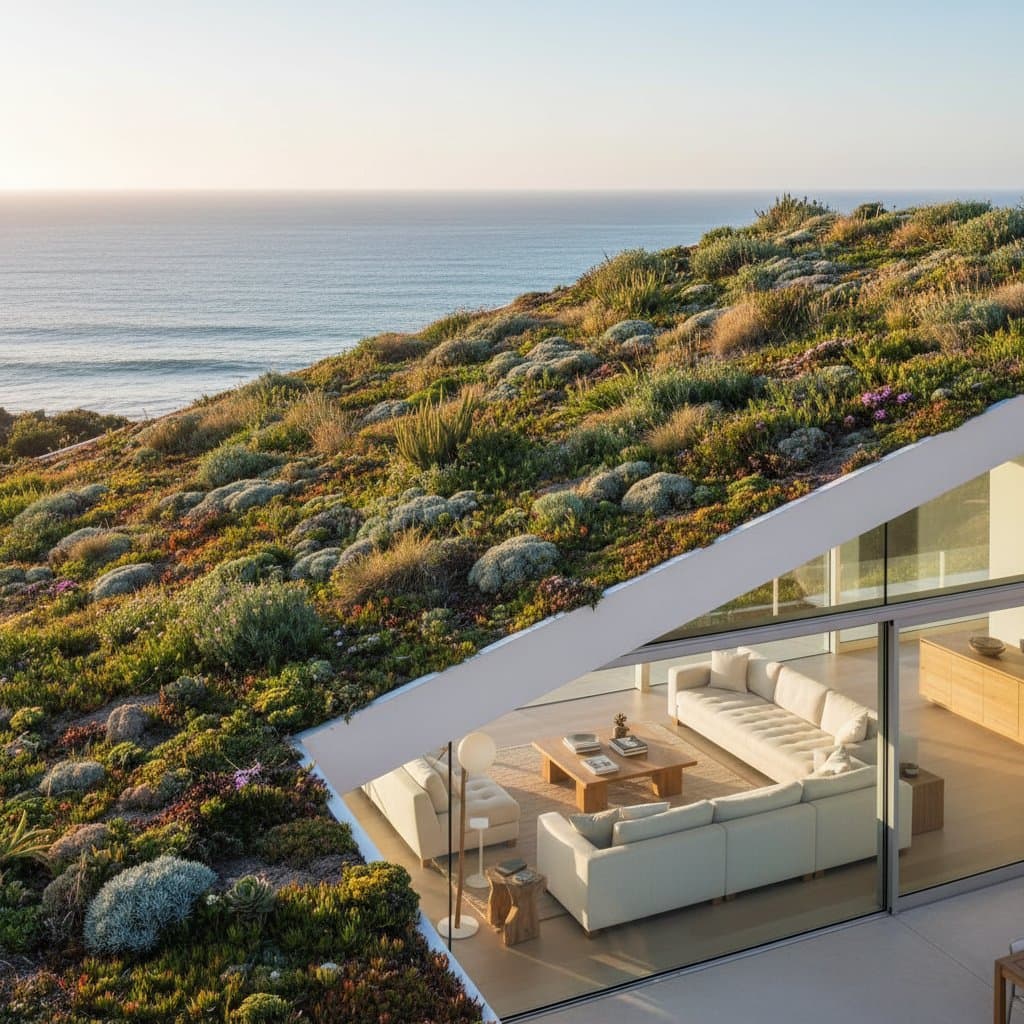
Reduce Coastal Home Heat Gain by 60 Percent with Living Roofs
Coastal homes face unique challenges from intense sunlight, salty air, and persistent humidity. These conditions strain traditional roofing materials and drive up cooling costs. Homeowners seek solutions that balance comfort, aesthetics, and environmental impact. Living roofs, or green roofs, provide a proven option. Research indicates that these systems reduce heat gain by up to 60 percent compared to standard roofs. The outcome includes cooler indoor spaces and reduced reliance on mechanical cooling.
This guide covers the mechanics of living roofs, their advantages in coastal settings, and practical steps for design, installation, and upkeep.
The Science of Living Roofs
A living roof consists of vegetation grown over a waterproof membrane. Supporting layers handle drainage, block roots, and provide lightweight soil. Plants capture sunlight, provide shade, and release moisture via evapotranspiration. These actions collectively lower surface temperatures.
Mechanisms for Heat Reduction
Conventional roofs absorb solar energy, which conducts into attics and rooms below. Living roofs counteract this process through several means:
- Plant foliage blocks direct solar rays.
- Evapotranspiration cools the surface as water vapor escapes.
- Soil and plant mass offer natural insulation.
Together, these elements drop roof temperatures substantially. Interior heat gain falls by approximately 60 percent, fostering a more temperate home environment with less need for air conditioning.
Advantages for Coastal Properties
Coastal regions endure prolonged sun exposure and elevated humidity levels. These factors intensify heat buildup on roofs. Living roofs excel here because suitable plants tolerate salt, drought, and wind. Local species adapt seamlessly, enhancing both performance and ecological harmony.
Design Strategies for Coastal Living Roofs
Effective design ensures a living roof withstands coastal demands while delivering thermal benefits for years. Key considerations include system type, plant selection, and water management.
Types of Green Roof Systems
Two primary categories exist:
- Extensive roofs: Feature thin soil layers and self-sustaining plants like sedums or grasses. These suit retrofits on homes with moderate structural capacity and demand little ongoing care.
- Intensive roofs: Incorporate deeper soil for varied flora, including perennials or low shrubs. They require robust support but enable usable green spaces.
Extensive designs often prove optimal for coastal residences, offering strong insulation with straightforward implementation.
Plant Selection for Coastal Resilience
Vegetation forms the core of any living roof. Opt for native, salt-tolerant, and wind-resistant varieties to minimize inputs. Recommended options include:
- Ice plant (Carpobrotus edulis), which spreads quickly and handles saline conditions.
- Sedum species, known for drought endurance and low water needs.
- Coastal sage (Artemisia californica), adapted to local soils and climates.
- Dune grass (Elymus mollis), effective against erosion from sea breezes.
- Sea thrift (Armeria maritima), compact and resilient to coastal stress.
These choices align with regional ecosystems, cutting irrigation and fertilizer requirements.
Drainage and Water Management
Effective drainage averts water accumulation and plant stress. Installers incorporate a dedicated drainage layer under the soil to channel surplus away. Integrate rainwater harvesting for irrigation during arid periods. Drip systems deliver precise moisture, conserving resources while sustaining plant health.
Installation Process and Expert Guidance
While modest projects tempt DIY approaches, comprehensive installations benefit from professional involvement. Specialists evaluate structural integrity, specify materials, and customize for coastal exposures.
Evaluating Structural Capacity
Added weight from saturated soil and plants necessitates careful assessment. Engage a structural engineer to calculate loads and confirm roof adequacy. Reinforcements, such as enhanced beams, address any deficiencies before proceeding.
Essential Waterproofing Measures
A robust waterproof membrane forms the foundation, shielding the building from moisture intrusion. Pair it with a root barrier to prevent invasive growth that could compromise integrity over time.
Selecting Qualified Installers
To secure reliable results, follow these steps when engaging professionals:
- Verify licensing and insurance coverage.
- Obtain references from comparable coastal installations.
- Demand a comprehensive proposal detailing layers, materials, and timelines.
- Examine warranties covering vegetation, membranes, and labor.
Expert execution guarantees safety, efficiency, and durability.
Financial Aspects, Savings, and Long-Term Value
Initial costs for living roofs exceed those of conventional options, yet benefits accrue over time. Expect expenses from $15 to $50 per square foot, influenced by system complexity, area, and regional labor rates.
Energy Cost Reductions
These roofs diminish cooling demands, particularly in summer. Owners observe 20 to 30 percent drops in electricity use for air conditioning. Such efficiencies lower bills and environmental impact.
Prolonged Roof Durability
Vegetation protects underlying surfaces from ultraviolet damage and thermal cycling. This extends service life to 30 to 50 years, versus 20 years for standard roofs, deferring replacement expenses.
Property Value Enhancement
Eco-conscious features appeal to buyers in coastal markets. A living roof elevates aesthetics and signals lower operating costs, potentially boosting resale value by 5 to 10 percent.
Frequently Asked Questions
What level of maintenance do living roofs demand?
Extensive versions require light attention: quarterly weeding, drain checks, and supplemental watering in dry months. Intensive setups involve pruning and soil amendments a few times yearly.
Do living roofs withstand heavy rainfall and storms?
Proper construction ensures resilience. Drainage layers manage excess flow, while plants mitigate erosion and slow runoff, easing burdens on drainage systems.
Might living roofs invite pests?
Well-maintained systems draw pollinators but deter nuisances. Select resistant plants and monitor drainage to avoid issues.
Does added weight pose risks to the home?
Engineers assess compatibility. Extensive roofs weigh 10 to 20 pounds per square foot when wet, fitting many structures; intensive ones may need upgrades.
How long until a living roof establishes fully?
Plants typically cover the surface in one to two seasons. Consistent watering and minimal nutrients accelerate rooting.
Is the roof suitable for walking or gardening?
Extensive types limit access to maintenance tasks. Intensive designs accommodate paths or lounging areas with reinforced access points.
Exist incentives for green roof adoption?
Local utilities and municipalities often provide rebates up to $5 per square foot, tax deductions, or grants. Check regional programs for sustainable building to offset costs.
Integrate a Living Roof for Sustained Coastal Comfort
Installing a living roof equips your home to manage heat effectively. Achieve 60 percent less gain, slash energy use, and foster biodiversity. Consult experts to tailor this solution to your property, securing enduring benefits.