
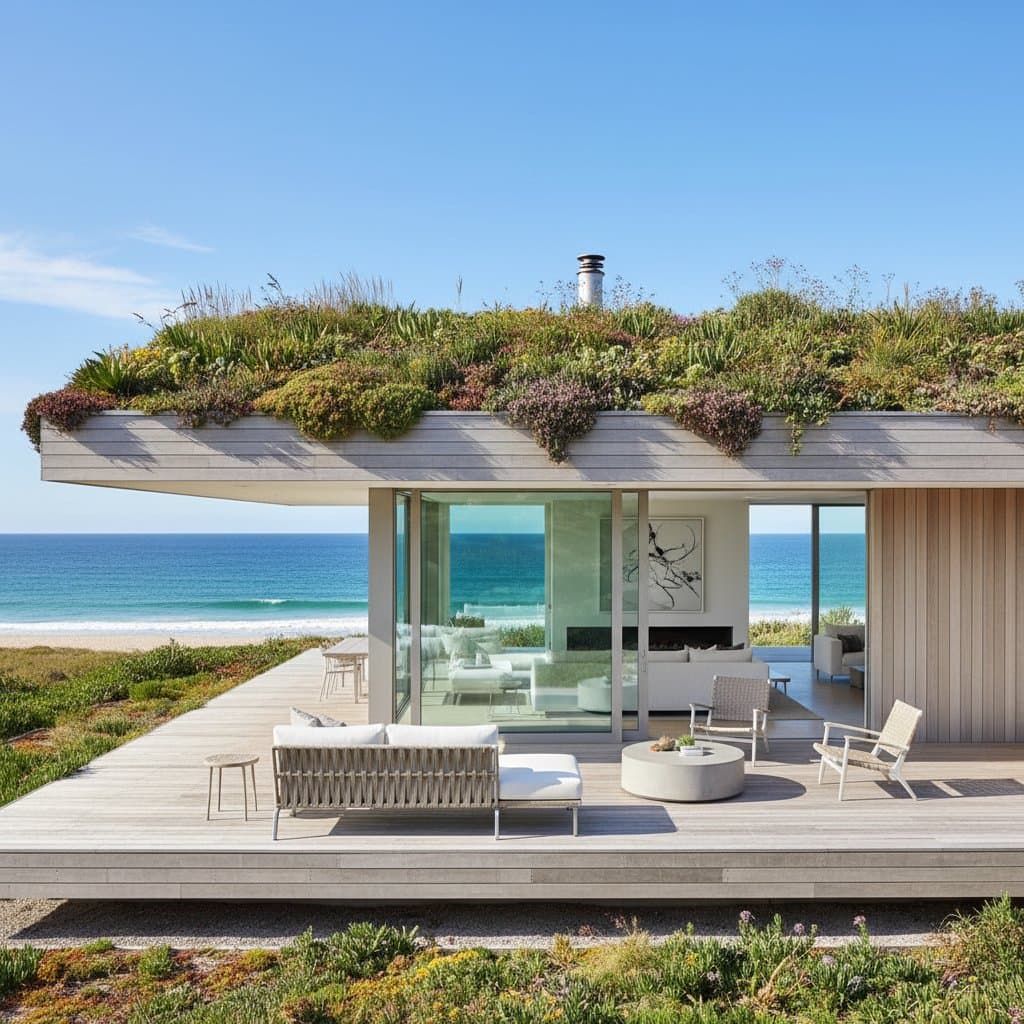
How Living Roofs Reduce Beach Home Cooling Costs by 35%
Coastal environments deliver abundant sunlight, ocean winds, and elevated humidity levels that elevate the expense of maintaining comfortable indoor temperatures. Residents in seaside neighborhoods find that living roofs, alternatively termed green roofs, diminish air-conditioning requirements by up to 35 percent. This approach to insulation maintains cooler interiors, lowers utility expenses, and introduces a vibrant green element to the landscape.
Individuals renovating established beach residences or constructing new ones benefit from grasping the mechanics of living roofs and their associated expenses. Such knowledge supports sound choices aligned with long-term financial and environmental objectives.
Understanding the Function of a Living Roof
A living roof consists of a multi-layered structure that sustains plant growth atop a waterproof barrier. Components encompass a drainage layer, a substrate for growth, and resilient vegetation like succulents, sedums, or salt-tolerant grasses suited to coastal zones. These elements form an effective thermal shield that impedes heat penetration, thereby sustaining lower indoor temperatures over extended durations.
In regions exposed to relentless solar rays and saline atmospheres, living roofs deliver dual advantages of climate control and surface safeguarding. Plants capture sunlight prior to its contact with the underlying roof, while soil and foliage moisture facilitate evaporative cooling. This process mitigates the urban heat island effect common in densely built coastal areas.
Breaking Down the Average Cost of a Living Roof
Installation expenses for a living roof span $20 to $40 per square foot, influenced by design intricacy and plant selections. Extensive systems, featuring minimal soil depth and lightweight flora, align with the lower spectrum. Semi-intensive variants, incorporating greater soil volume and diverse plantings, approach the upper limit.
| Roof Type | Average Cost per Sq. Ft. | Maintenance Level | Typical Plant Depth |
|---|---|---|---|
| Extensive | $20 - $28 | Low | 2 to 6 inches |
| Semi-Intensive | $30 - $40 | Moderate | 6 to 12 inches |
For a residence covering 1,500 square feet, anticipate outlays between $30,000 and $60,000. Although initial expenditures appear substantial, reductions in energy consumption and enhanced roof endurance frequently offset these over a decade or more. Consider consulting local contractors for precise estimates tailored to specific site conditions.
Labor Expenses and Key Installation Considerations
Labor constitutes 40 to 50 percent of overall project costs. Skilled crews charge $50 to $75 hourly for tasks including membrane application, drainage setup, and vegetation integration. Structural assessments may incur extra fees if reinforcements prove necessary to bear the weight of added materials.
Elements Affecting Overall Expenses
- Roof pitch and accessibility: Level surfaces facilitate straightforward modifications at reduced rates.
- Irrigation infrastructure: Automated systems enhance reliability yet elevate upfront investments.
- Vegetation choices: Selecting arid-adapted species minimizes ongoing care requirements.
- Membrane quality: Durable options resist corrosion from marine influences and prevent water intrusion.
- Regulatory approvals: Coastal jurisdictions often mandate fees for permits and compliance checks.
Evaluate these variables during planning to refine budget projections and avoid unforeseen charges.
Mechanisms Behind Cooling Cost Reductions
Living roofs maintain roof surfaces up to 40 degrees cooler than conventional coverings. This disparity curtails indoor heat accumulation, easing the burden on cooling units. Seasonal analyses indicate utility savings ranging from 25 to 35 percent for typical beach dwellings.
The substrate and greenery operate as an adaptive insulator. Daytime heat absorption paired with moisture release tempers ambient air. Nocturnal dissipation occurs gradually, stabilizing conditions and reducing reliance on mechanical systems during peak demand periods.
Studies from coastal universities affirm these efficiencies, particularly in climates with high solar indices. Homeowners observe consistent performance across varying weather patterns, underscoring the reliability of this technology.
Upkeep Requirements and Durability Expectations
Established living roofs demand limited intervention. Routines involve periodic removal of weeds, drainage evaluations, and targeted nutrient applications. Coastal dwellers favor indigenous species that endure brackish conditions with scant oversight.
Appropriate management extends service life to double that of standard roofs. Foliage layers block harmful UV exposure and thermal fluctuations, preserving the integrity of protective membranes. Annual professional audits ensure optimal function and early detection of potential issues.
Strategies to Minimize Living Roof Expenses
- Select regionally adapted flora that flourish without extensive support.
- Implement prefabricated modules for streamlined assembly and future adjustments.
- Integrate harvested rainwater mechanisms to supply irrigation at no recurring cost.
- Pursue rebates from local authorities promoting sustainable construction or runoff mitigation.
- Handle routine tasks personally, engaging experts solely for structural reviews.
These measures can trim initial and sustained costs by 15 to 20 percent, accelerating return on investment.
Weighing DIY Approaches Against Professional Services
DIY installations suit small-scale projects on accessible roofs, where homeowners possess basic horticultural knowledge. Kits with pre-assembled trays simplify the process, though they limit customization. Success hinges on thorough preparation, including load-bearing calculations to avert safety risks.
Professional engagement proves essential for larger or complex setups. Certified teams navigate permitting, ensure code adherence, and provide warranties against defects. The expertise minimizes errors that could lead to leaks or plant failure, justifying the added labor premium for most coastal applications.
Frequently Asked Questions About Living Roofs
Do permits remain necessary for living roof installations?
Coastal municipalities generally mandate approvals to confirm structural integrity and hydrological standards. Contact the local authority early to outline requirements and timelines.
What duration characterizes a standard installation?
Residential projects span two to four weeks, contingent on meteorological factors and surface area. Phased approaches allow partial occupancy during completion.
Is foot traffic permissible on living roofs?
Extensive designs discourage substantial use to protect shallow roots, whereas semi-intensive configurations with sturdy supports permit occasional access or modest lounging zones.
Which features most enhance a living roof's worth?
Primary gains include utility reductions, improved water management, and elevated real estate appeal. Prospective purchasers value the blend of fiscal prudence and ecological responsibility.
Do living roofs invite insect or animal intrusions?
Well-maintained installations seldom encounter such problems. Opt for resilient plantings and vigilant drainage to deter common coastal nuisances.
How frequently does watering occur for living roofs?
Mature systems require supplementation only amid prolonged droughts. Sensor-based automation maintains hydration levels efficiently, conserving resources.
Advancing Sustainable Coastal Residences
Integrating a living roof transforms beach homes into resilient, efficient sanctuaries. Beyond financial relief, these systems foster biodiversity and community resilience against climate shifts. Property owners who invest in this innovation secure enduring comfort and a legacy of environmental stewardship.