
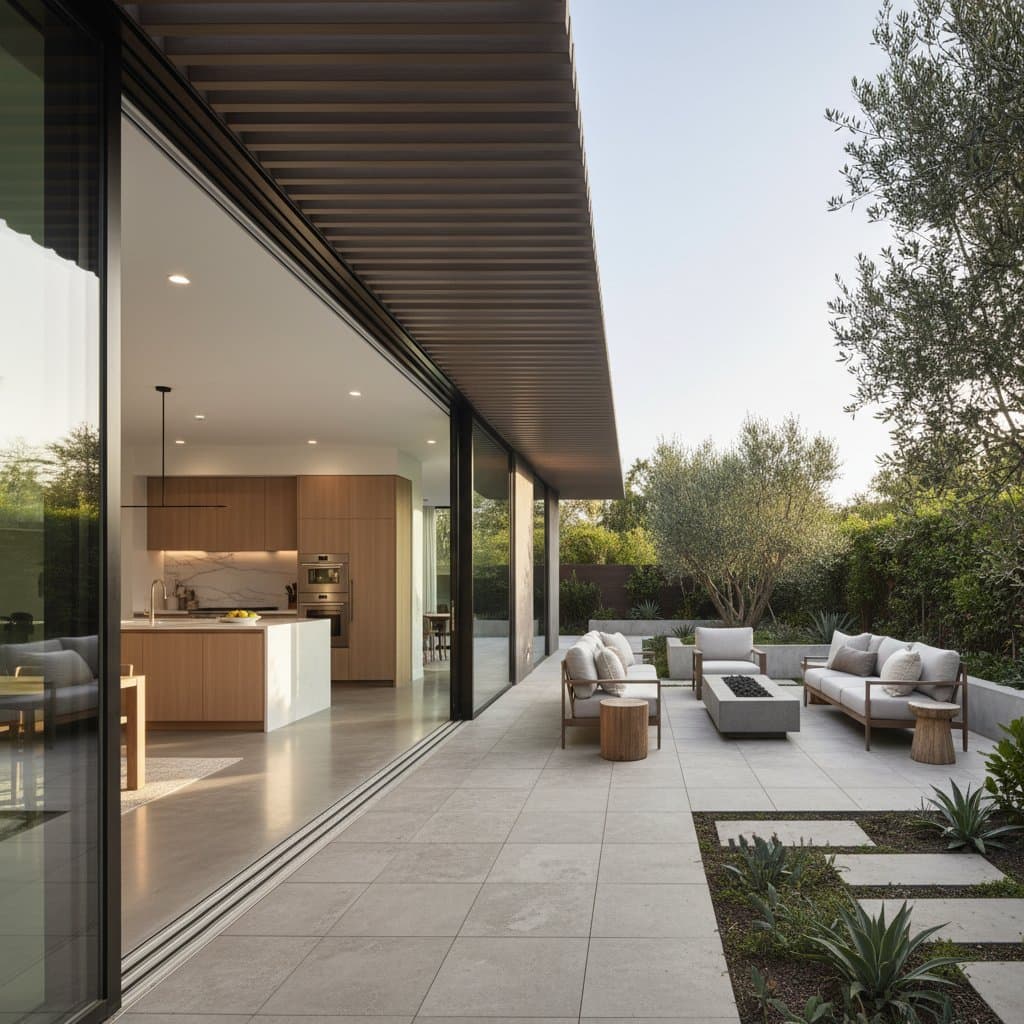
Indoor-Outdoor Remodel Costs: 2025 Pricing Breakdown
Creating a seamless indoor-outdoor living space ranks among the most impactful upgrades for homeowners. This approach expands usable square footage, maximizes natural light, and elevates property value. However, navigating indoor-outdoor remodel costs requires careful consideration, as prices fluctuate based on location, material selections, and design complexity.
This guide provides a detailed breakdown of expected investments for elements such as disappearing doors and decks, alongside landscaping and lighting. Homeowners gain insights into setting a realistic budget, identifying primary expense areas, and selecting options that optimize returns.
Understanding Indoor-Outdoor Living Remodels
Indoor-outdoor remodeling integrates interior comfort with exterior openness. Projects frequently involve enlarging patios, installing expansive sliding or folding glass panels, and enhancing outdoor kitchens or entertainment zones.
The objective centers on fostering uninterrupted transitions between areas, making living spaces feel more expansive and attuned to the natural environment. Such transformations suit diverse settings, from coastal properties to contemporary suburban residences, delivering lifestyle enhancements and improved marketability.
Common Features of Indoor-Outdoor Remodels
- Disappearing or multi-panel doors that open fully to connect with patios
- Outdoor kitchens or bars constructed from weather-resistant materials
- Covered patios or pergolas designed for year-round enjoyment
- Consistent flooring materials extending from interior to exterior areas
- Integrated lighting and heating systems to ensure comfort and atmosphere
Establishing Your Remodeling Budget
Homeowners should first assess affordable spending limits before soliciting estimates. Indoor-outdoor projects span from basic patio enhancements to comprehensive structural overhauls.
Expect average expenditures of $150 to $600 per square foot, influenced by project scale. Extensive endeavors incorporating structural alterations, plumbing, or premium finishes often surpass these figures.
Disclaimer: Cost estimates presented here represent averages and may differ substantially by region, labor rates, material standards, and project intricacies.
Key Factors Influencing Cost
- Size and Scope: A modest patio extension incurs lower costs than transforming an entire wall with multi-panel doors.
- Structural Modifications: Eliminating load-bearing walls or installing support beams introduces engineering fees and permitting requirements.
- Material Choices: Options like composite decking, natural stone, or advanced glass assemblies elevate overall expenses.
- Labor and Permits: Professional workmanship and regulatory approvals typically comprise 30 to 50 percent of the budget.
- Utilities and Systems: Incorporating gas lines, electrical circuits, or plumbing for outdoor features adds notable costs.
Major Cost Categories in an Indoor-Outdoor Remodel
1. Disappearing Door Systems
Disappearing doors serve as focal points in numerous indoor-outdoor projects, enabling broad apertures that unite indoor and outdoor realms.
Average Cost Range: $1,000 to $1,500 per linear foot for installation.
Cost Variables:
- Frame composition, including aluminum, wood, or fiberglass
- Glass specifications, such as standard, low-emissivity, or insulated varieties
- Panel quantity and operational mechanisms
Tips:
- Select energy-efficient glass options to regulate indoor climates effectively.
- Incorporate adequate drainage and sealing measures around tracks to prevent water intrusion.
- Engage certified installers to mitigate risks of misalignment or inadequate seals.
2. Flooring and Surface Continuity
Extending identical flooring materials across indoor and outdoor zones achieves a unified aesthetic. Selections must withstand exposure to moisture, temperature variations, and regular use.
Popular Options:
- Porcelain tile: Offers resilience and slip resistance, with installation costs of $10 to $25 per square foot.
- Composite decking: Provides minimal upkeep and durability, priced at $15 to $45 per square foot.
- Natural stone: Delivers sophistication at a premium, ranging from $30 to $75 per square foot.
Tip: Maintain harmonious color schemes or patterns to promote visual cohesion, even with minor material variations between zones.
3. Outdoor Kitchens and Living Zones
Incorporating an outdoor kitchen or gathering area boosts functionality and appeals to prospective buyers, though it substantially raises project expenses.
Average Cost Range: $10,000 to $50,000, scaled by dimensions and inclusions.
Common Elements:
- Built-in grills or cooktops
- Countertops featuring protective surfaces
- Sinks linked to plumbing systems
- Refrigerators or ice makers positioned below counters
- Cabinetry for storage and seating arrangements
Money-Saving Ideas:
- Opt for prefabricated kitchen modules over bespoke cabinetry.
- Employ concrete or stainless steel for robust, economical surfaces.
- Leverage proximate utility connections to avoid extensive new installations.
4. Roofing and Shade Structures
Covered patios or pergolas offer protection from environmental elements, thereby prolonging the practicality of outdoor areas.
Cost Range:
- Simple pergola: $3,000 to $8,000
- Solid roof extension: $15,000 to $40,000
Considerations:
- Align roofing styles and materials with the existing home architecture.
- Integrate lighting or ventilation elements for enhanced usability.
- Confirm structural integrity, particularly for attachments to the primary building.
5. Lighting and Electrical Work
Strategic illumination elevates outdoor environments, converting them into versatile venues suitable for various times of day.
Estimated Costs:
- Basic LED pathway lights: $20 to $50 per unit
- Recessed soffit lighting: $150 to $300 per installed fixture
- Smart lighting systems: $1,500 to $5,000
Prioritize multilayered setups encompassing task, ambient, and accent lighting. Choose energy-conserving fixtures paired with weatherproof cabling to uphold safety standards.
6. Landscaping and Hardscaping
The adjacent landscape contributes directly to the indoor-outdoor dynamic. Integrate enhancements that harmonize with the core remodel.
Cost Range: $5,000 to $30,000
Common Elements:
- Paver or flagstone pathways
- Retaining walls or planting beds
- Gardens featuring drought-resistant species
- Automated irrigation networks
Tip: Incorporate indigenous plants to minimize ongoing care and water consumption.
Steps for Managing Your Indoor-Outdoor Remodel
Step 1: Define Your Goals
Articulate specific objectives for the project, such as expanded hosting capabilities, smoother spatial transitions, or heightened market value. A defined purpose directs both design and financial planning.
Step 2: Set a Realistic Budget
Catalog anticipated outlays, allocating 10 to 20 percent for unforeseen challenges. Solicit bids from multiple sources to evaluate pricing variations and rationale.
Step 3: Hire Qualified Professionals
Select licensed contractors experienced in structural adjustments and protective measures against weather. Review references, confirm coverage, and examine client feedback.
Step 4: Obtain Necessary Permits
Regulatory approvals apply to modifications involving structures, electricity, or water systems. Contractors typically manage this, but verify inclusion in agreements.
Step 5: Plan for Weather and Timing
Exterior tasks hinge on favorable conditions. Time operations for drier periods and prepare protective enclosures if interiors remain exposed.
Step 6: Inspect and Finalize
Conduct a thorough walkthrough upon completion, evaluating door functionality, seals, and surface quality. Resolve discrepancies prior to final settlements.
Frequently Asked Questions
How much does an indoor-outdoor remodel usually cost?
Full renovations generally fall between $50,000 and $200,000. Modest updates, such as door replacements or flooring links, begin near $20,000. Variations stem from material selections, alterations, and regional factors.
Are disappearing doors worth the investment?
Disappearing doors enhance enjoyment and property worth through expansive, contemporary designs and superior ventilation. Initial costs prove justifiable in mild climates, yielding favorable returns.
Do I need a permit for an indoor-outdoor remodel?
Projects affecting structural elements, power sources, or water lines necessitate approvals. Patio enclosures or platforms may also require compliance. Consult local regulations and delegate to contractors.
What materials hold up best for outdoor kitchens?
Stainless steel, concrete, and stone excel in endurance and elemental resistance. Steer clear of raw wood or absorbent substances prone to distortion or discoloration. Favor straightforward, heat-tolerant cleaning surfaces.
Can I match indoor and outdoor flooring exactly?
Certain producers provide coordinated collections for dual applications. Porcelain tiles and natural stones facilitate seamless visuals. Ensure exterior variants include anti-slip properties and climatic durability.
How long does an indoor-outdoor remodel take?
Comprehensive efforts span weeks to months, contingent on extent and meteorology. Basic installations proceed more swiftly. Account for inspection timelines and supply interruptions.
What adds the most value in an indoor-outdoor remodel?
Expansive glass portals, equipped kitchens, and cohesive illumination generate superior resale advantages. Practical, upkeep-light configurations that amplify living areas appeal strongly to buyers.
Executing Your Vision
Indoor-outdoor remodeling transcends aesthetic appeal; it cultivates a harmonious bond between residence and surroundings, fostering enduring utility and worth. Grasping expense drivers and strategizing meticulously enables alignment of creative goals with fiscal constraints.
Secure comprehensive estimates, partner with adept specialists, and prioritize climate-adapted materials. Through deliberate preparation, the resulting space emerges as intuitive, effective, and perennial.