
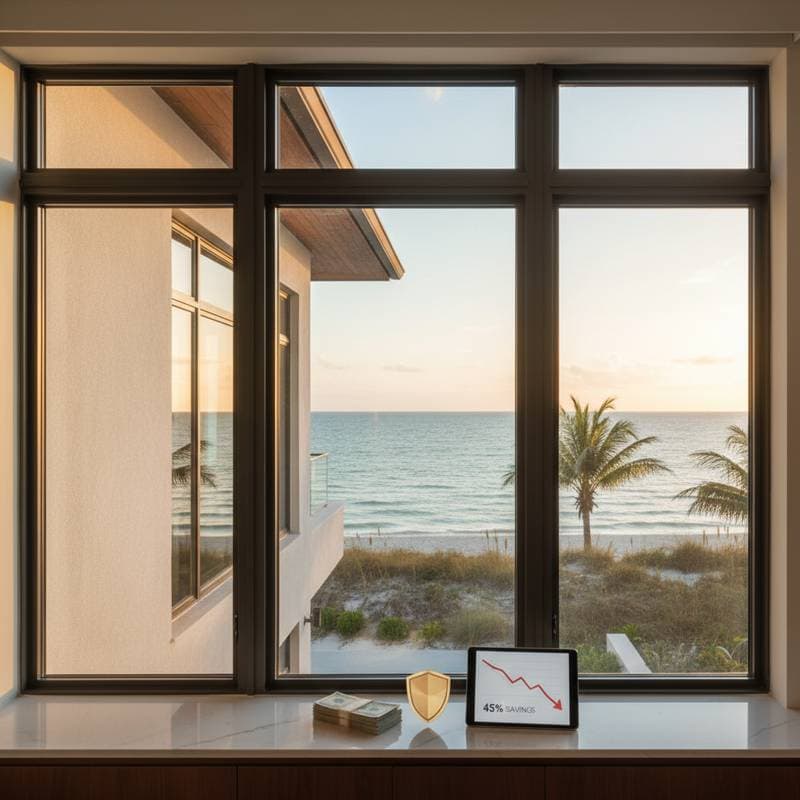
Coastal Homes Save 45 Percent on Insurance with Impact Windows
Visualize your beachfront living room with waves crashing outside, secure in the knowledge that your home withstands storms and insurance premiums drop substantially. This security stems from impact windows. For coastal homeowners, these installations yield insurance reductions of up to 45 percent, accumulating significant long-term benefits.
This guide explains the mechanisms behind insurance savings, highlights advantages for coastal properties, and identifies key selection criteria. Residents of San Diego bungalows or seaside estates gain practical insights to safeguard assets while managing expenses effectively.
Understanding Impact Windows
Impact windows, also known as hurricane or storm windows, endure high winds and airborne debris. Constructed with laminated glass, they feature two panes joined by a transparent, shatter-resistant interlayer. Should the outer pane fracture, the interlayer preserves structural integrity, averting hazardous openings during severe weather.
Engineered initially for hurricane zones, these windows suit coastal areas such as San Diego, where salt exposure, gusty winds, and security needs demand robust solutions.
Photo: A contemporary coastal residence featuring expansive impact windows oriented toward the ocean.
Balancing Costs and Savings
Installation expenses for impact windows depend on dimensions, materials, and manufacturers. The table below provides an overview.
| Project Scope | Estimated Cost Range | Potential Insurance Savings | Payback Period |
|---|---|---|---|
| Partial upgrade (front-facing windows only) | $7,000 - $12,000 | 15 - 25 percent | 6 - 8 years |
| Full home installation | $18,000 - $30,000 | 35 - 45 percent | 4 - 6 years |
| Luxury coastal home (custom window sizes) | $35,000 or more | 40 - 45 percent | 5 - 7 years |
Tip: Verify compliance with local building regulations and insist on certified professionals. Faulty installation may invalidate warranties and forfeit insurance reductions.
Selecting Impact Window Types
Performance and visual appeal guide type selection. Common options include:
-
Single-Hung and Double-Hung Windows
Traditional designs permit ventilation alongside impact resistance. They facilitate straightforward cleaning and upkeep. -
Casement Windows
Side-hinged for outward opening, they capture ocean breezes efficiently. These excel in thermal performance. -
Sliding Windows and Doors
Ideal for broad vistas, contemporary versions incorporate strengthened rails for reliable function. -
Picture Windows
Stationary frames enhance illumination and scenic outlooks. Pair them with vented units to promote circulation. -
Architectural Shapes
Tailored forms like arches or trapezoids integrate style with defensive capabilities.
Securing Insurance Discounts
Documentation and verification unlock optimal reductions. Follow these steps:
-
Secure Manufacturer Approval
Seek endorsements from accredited testing bodies that affirm adherence to wind and impact criteria. -
Engage Licensed Professionals
Insurance providers mandate expert fitting to endorse claims. Self-installation seldom earns complete credits. -
Arrange Wind Mitigation Assessment
Post-installation, an authorized evaluator examines the property. The resulting documentation influences rate adjustments. -
Present Evidence to Insurers
Furnish inspection summaries, billing records, and certification documents to your policyholder. -
Explore Combined Incentives
Certain carriers aggregate rebates for impact windows, fortified roofing, and protective shutters.
Tip: Maintain electronic records of paperwork for potential carrier transitions.
Gaining Environmental and Energy Advantages
Impact windows extend value through ecological and comfort enhancements. Sealed edges curb drafts, easing demands on air conditioning units. Numerous variants hold Energy Star ratings, sustaining stable interior climates throughout seasons.
In salty, humid coastal settings, these barriers curb corrosion and dampness buildup. Consequently, maintenance needs decline, and energy consumption optimizes over time.
Photo: An interior space with full-height impact windows providing coastal panoramas.
Identifying Qualified Contractors
Installation quality determines window efficacy. Prioritize contractors who demonstrate:
- Valid credentials and coverage
- Proven expertise in coastal or storm-rated projects
- Favorable community feedback or endorsements
- Clear cost breakdowns and guarantee terms
Request comprehensive estimates covering old window disposal, workforce, supplies, and approvals. Ensure the specialist activates product warranties in your name.
Upgrading for Lasting Protection
With impact windows in place, benefits surpass reduced premiums. Experience enhanced visibility, diminished noise, and assurance in home resilience. Initial expenditures translate to enduring gains in security and livability.
Coastal property owners often realize substantial returns via premium cuts, utility efficiencies, and elevated market worth. These elements typically recoup costs in mere years. Security enhancements and tranquility prove invaluable.
Consider replacing conventional glass if present in your coastal dwelling. Consult certified specialists, solicit multiple estimates, and embrace fortified living with financial rewards.