
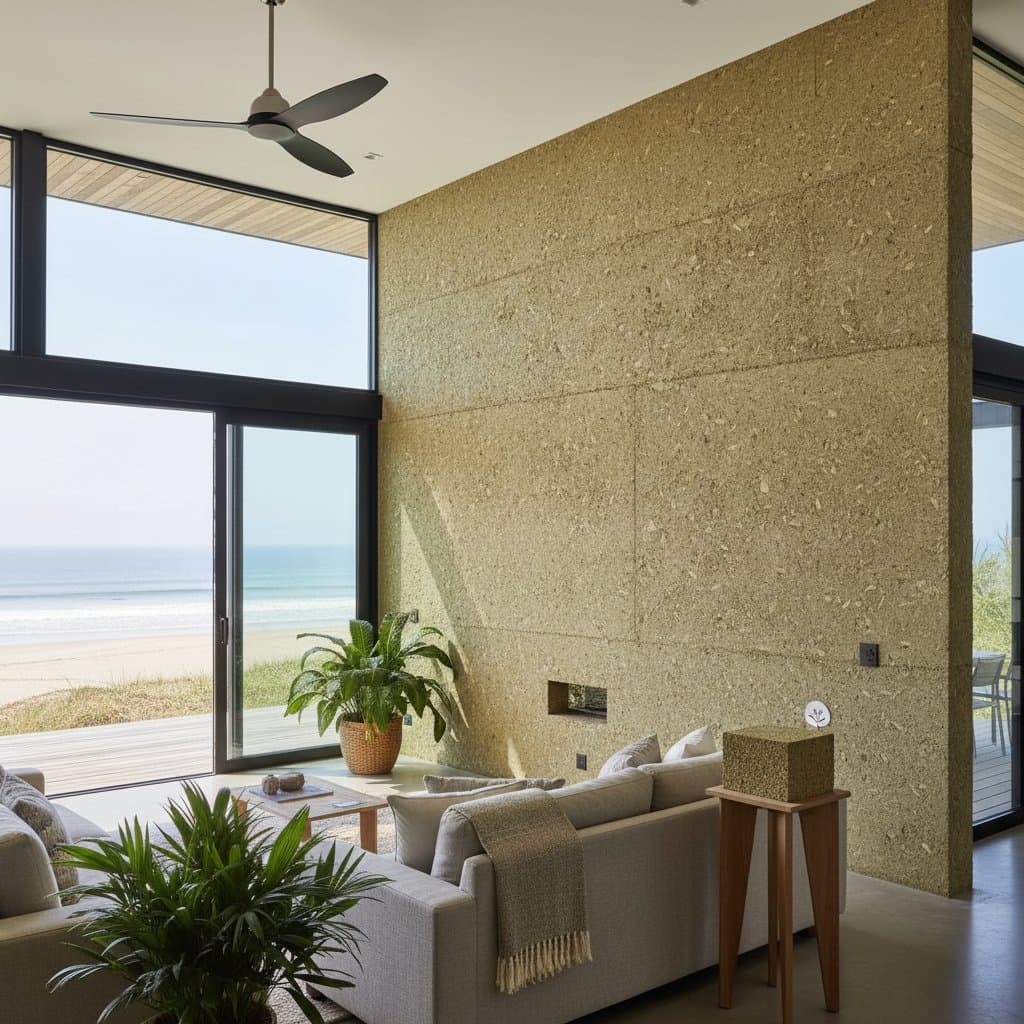
Hempcrete Walls Defy Mold in Coastal Environments
Coastal living brings ocean views and fresh air, yet it also introduces challenges from persistent humidity and salt exposure. Traditional building materials often succumb to mold growth under these conditions, leading to costly repairs and health concerns. Hempcrete emerges as a robust alternative, offering walls that naturally repel mold while enhancing overall home performance.
This material combines hemp fibers with a lime-based binder, creating a lightweight, insulating block that thrives in damp climates. Homeowners in areas such as San Diego benefit from its moisture-regulating properties, which maintain dry interiors without synthetic barriers. As interest grows, understanding hempcrete's applications becomes essential for those planning resilient coastal builds.
Cost Considerations for Hempcrete Construction
Hempcrete wall construction generally ranges from $150 to $250 per square foot, with most projects averaging $200 per square foot. Factors such as project scale, location, and customization influence this figure significantly. In coastal zones, where skilled labor for natural materials remains scarce, costs may trend toward the higher end.
Key elements driving expenses include:
- Material Composition: The blend of hemp hurds, lime binder, and water forms the base. Premium lime sources or locally unavailable hemp can increase costs by 10 to 20 percent.
- Wall Dimensions: Greater thickness enhances insulation and moisture resistance but demands additional volume of mix.
- Labor Requirements: Precise mixing, casting, and curing necessitate experienced teams to avoid defects like uneven density.
- Regulatory Compliance: Alternative materials may require extra permits or engineering reviews, incurring small fees.
- Surface Treatments: Opt for lime plasters or clay renders to preserve breathability; incompatible coatings risk moisture buildup.
For new builds, hempcrete may elevate the overall budget by 10 to 15 percent over wood framing. However, its resistance to degradation translates to savings over time through fewer repairs and energy-efficient operation.
Mechanisms of Mold Resistance in Hempcrete
Mold requires moisture and darkness to proliferate, conditions common in humid coastal settings. Hempcrete counters this through its alkaline lime component, which creates an inhospitable pH for fungal growth. Unlike sealed surfaces that trap dampness, hempcrete permits vapor diffusion, enabling walls to dry out naturally.
In contrast to drywall, which absorbs water and fosters hidden mold colonies, hempcrete maintains equilibrium with ambient humidity. This dynamic regulation prevents condensation buildup and supports healthier living spaces, particularly for residents prone to respiratory issues. Testing in high-moisture environments confirms hempcrete's superior performance in preventing microbial issues.
Installation Options: DIY and Professional Approaches
Hempcrete suits various installation methods, from owner-led efforts to expert-led projects. For minor additions like accent walls or outbuildings, DIY installation proves feasible with preparation. Larger applications, such as full-home exteriors, demand professional oversight to ensure structural reliability.
DIY Installation Details:
- Complexity: Moderate for those with construction experience.
- Duration: One to two weeks for a modest section, accounting for mixing and curing phases.
- Essential Tools: Industrial mixer, formwork, tamping tools, and safety gear.
- Preparation Steps: Master precise ratios (typically 1:2:1 lime, hemp, water by volume) and practice on samples.
Professional Installation Benefits:
Specialists optimize compaction for uniform strength and integrate hempcrete into code-compliant designs. They select compatible framing and vapor-open assemblies to amplify moisture management. A hybrid model, starting with a pilot project, allows novices to build confidence before scaling up.
Long-Term Maintenance and Durability
Once installed, hempcrete demands minimal intervention, thanks to its self-repairing nature. The lime binder carbonates over time, sealing minor fissures through reaction with atmospheric carbon dioxide. Routine checks target roof edges and exterior renders to confirm effective water shedding.
Steer clear of high-pressure cleaning, which damages the surface; gentle brushing or low-volume rinsing suffices. Apply permeable sealants sparingly to retain breathability. Properly maintained, these walls endure for generations, retaining their protective qualities against coastal elements.
Frequently Asked Questions
Is hempcrete fully waterproof?
No, it functions as a vapor-permeable material rather than an impermeable barrier. Protection involves breathable coatings and adequate eaves to manage liquid water exposure.
Does hempcrete suit renovation projects?
Yes, it integrates well as infill insulation or plaster replacements in existing structures. Coastal renovations often employ it to remediate chronic mold without full demolition.
How environmentally sound is hempcrete?
Highly so; hemp plants capture CO2 during growth, and the cured material continues sequestration. Production emits far less than cement-based alternatives.
Which regions see the greatest advantages from hempcrete?
Humid coastal areas maximize its mold and humidity controls, though its thermal mass benefits arid or temperate zones equally.
Steps to Incorporate Hempcrete in Your Coastal Build
Assess your site's humidity levels and consult local builders experienced in bio-based materials. Request detailed quotes outlining material specs and labor plans to align with your budget. By selecting hempcrete, you invest in a home that withstands environmental stresses while promoting wellness and ecological balance.