
9 Green Roof Solutions That Cut Coastal Garage AC Costs by 35%
Coastal garages often overheat during summer afternoons because of intense sun exposure and heat reflecting off concrete or asphalt surfaces. Homeowners in these areas frequently face high energy bills as air conditioning systems work overtime. Green roofs provide an effective solution by adding insulation and absorbing heat before it reaches the interior space.
These living roof systems can reduce cooling costs by up to 35 percent in sunny coastal climates. They combine thermal performance with rainwater management and visual appeal. The following nine solutions address both practical installation steps and long term maintenance.
Functional Design Strategies
1. Choose Drought-Tolerant Coastal Plants
Drought-tolerant succulents such as sedum, ice plant, and stonecrop handle salt spray, wind, and limited rainfall effectively. These plants reduce water demand and keep the overall weight load manageable. Native species further improve resilience because they adapt to local soil conditions.
2. Install a Layered Roof System for Insulation
A complete green roof includes a waterproof membrane, drainage layer, filter fabric, growing medium, and vegetation. The layered structure traps cooler air and blocks heat transfer into the garage below. Professional installation is recommended to verify that waterproofing and structural support meet load requirements.
3. Integrate Reflective Barriers Beneath the Green Layer
A light-colored reflective membrane installed under the soil layer directs heat away from the roof deck. This addition can lower interior temperatures by several degrees beyond the cooling provided by plants alone. White or off-white membranes perform best under direct coastal sunlight.
Design Enhancements for Greater Efficiency
4. Use Modular Planter Tiles for Easy Maintenance
Interlocking planter trays allow quick installation and simple access to roof components for inspection. Homeowners can rearrange or replace individual sections without disturbing the entire system. This approach suits smaller garages and keeps future maintenance expenses predictable.
5. Add a Drip Irrigation System
A drip irrigation setup supplies water directly to plant roots and reduces evaporation losses. Typical system costs range from 300 to 800 dollars depending on roof size. Connecting the system to a rainwater collection barrel further improves sustainability.
6. Create a Multi-Level Green Space
Extending the green roof into adjacent patio or deck areas increases shade coverage and insulation depth. Small shrubs or ornamental grasses occupy upper levels while low succulents stabilize edges against erosion. The varied heights improve both thermal performance and visual interest.
Maintenance and Longevity Tips
7. Schedule Seasonal Inspections
Quarterly checks of drainage outlets, membrane condition, and plant growth prevent minor issues from escalating. Basic garden tools and a few hours of work are usually sufficient for these tasks. Early detection of clogs or root intrusion protects the underlying structure.
8. Fertilize Sparingly
Slow-release organic fertilizer applied no more than twice per year maintains plant health without promoting excessive growth. Occasional soil testing helps balance nutrients and avoids overloading the roof with unnecessary biomass.
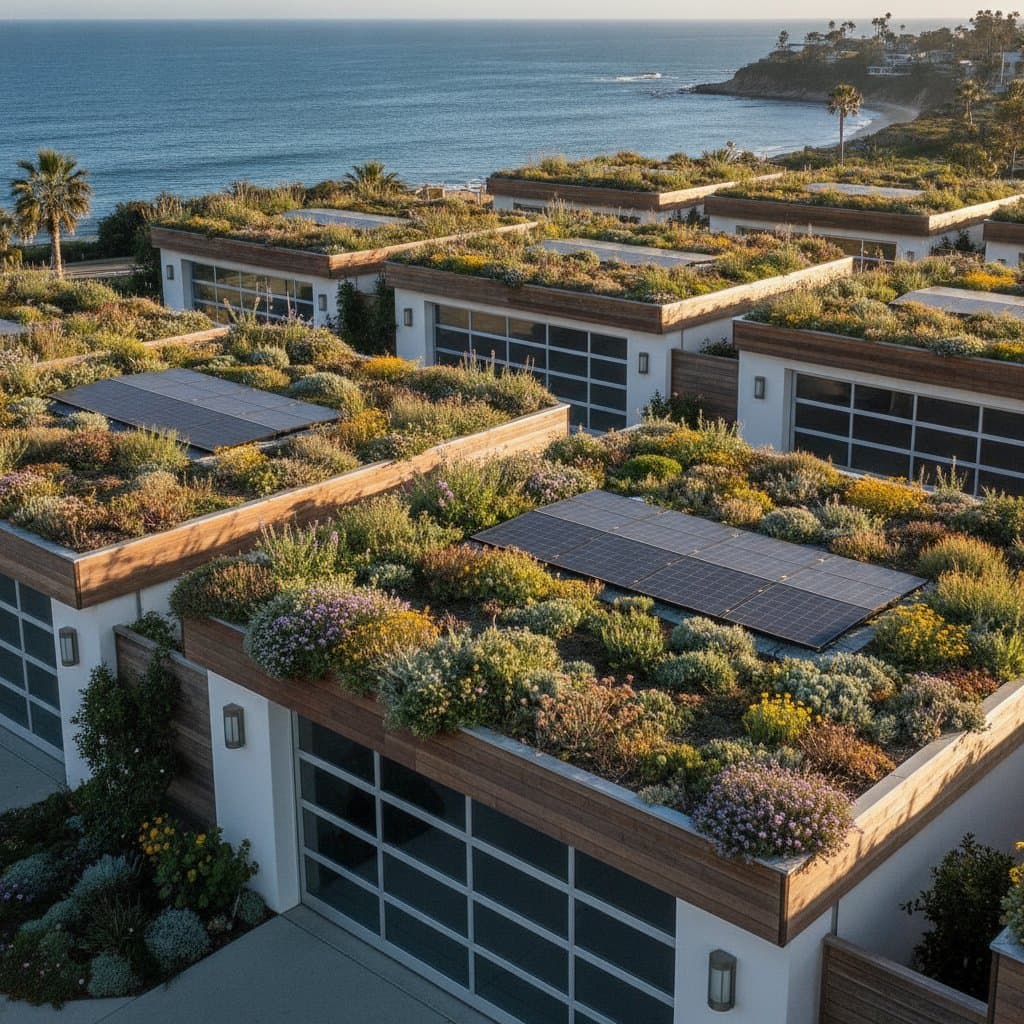
9. Combine Solar Panels with Green Roofing
Vegetation beneath solar panels lowers panel temperatures and improves electricity output. The panels in turn provide partial shade that protects plants during peak heat. Integrated systems typically cost between 8,000 and 15,000 dollars depending on scale.
Extra Planning Advice
Before installation, confirm that the garage structure can support an additional 15 to 30 pounds per square foot when the growing medium is saturated. Lightweight rooftop soil mixes and adequate roof slope ensure proper drainage. Designated access points simplify future inspections.
Frequently Asked Questions
How much can a green roof lower garage temperatures?
A properly installed green roof can reduce interior temperatures by as much as 15 degrees and cut air conditioning use by roughly 35 percent during peak summer months.
What types of roofs can support green systems?
Flat and low-slope roofs work best, though pitched roofs can accommodate green systems when retention grids and secure anchoring are added.
Do green roofs attract pests?
Properly maintained green roofs with native plants and functioning drainage rarely attract insects or rodents.
How long does a green roof last?
With routine care, a green roof typically lasts 30 to 50 years, often outlasting conventional roofing materials.
Is professional installation necessary?
Large or complex projects benefit from professional installation to ensure correct waterproofing and structural calculations.
Realizing Long Term Benefits
A green roof converts an overheated garage into a cooler, more efficient space while adding lasting property value. Careful plant selection, layered construction, and consistent maintenance deliver measurable energy savings and reduced environmental impact for coastal homeowners.