
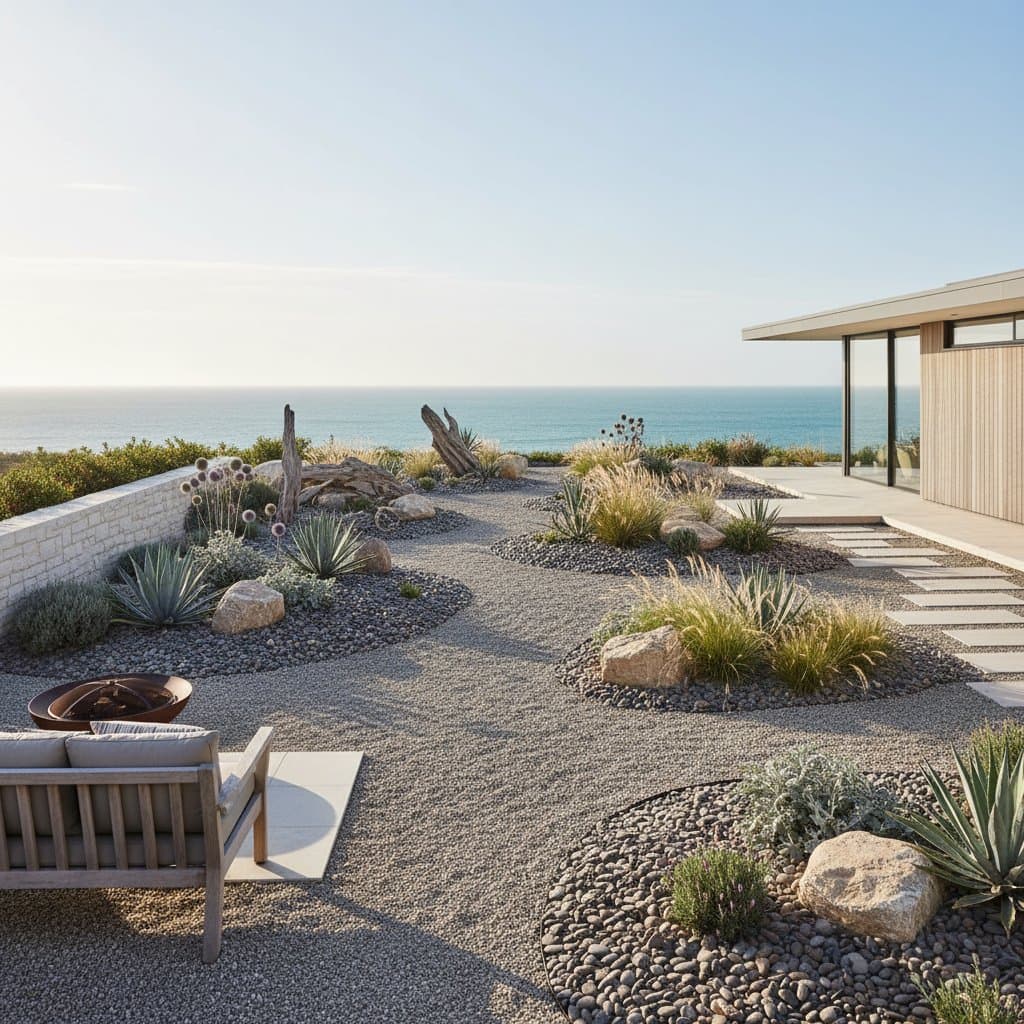
Gravel Gardens: 2026's Lawn Replacement for Coastal Homes
Gravel gardens gain popularity among coastal homeowners as a viable substitute for traditional lawns. Installation costs average $4 to $10 per square foot, influenced by design details and plant choices. In regions emphasizing water conservation and reduced upkeep, these gardens deliver a refined, drought-resistant option that endures intense sunlight, salty air, and coastal winds.
Why Gravel Gardens Suit Coastal Homes
A gravel garden features gravel, stones, and water-wise plants in place of water-intensive turf. This approach mirrors the rugged charm of seaside settings while promoting resource efficiency and minimal care. Coastal challenges such as sandy terrain, strong breezes, and salt intrusion render conventional grass impractical, positioning gravel gardens as a superior choice.
Key advantages encompass:
- Reduced irrigation needs after initial planting
- Superior drainage suited to sandy soils
- Tolerance for salt and prevention of erosion
- Simplified ongoing care post-establishment
- Contemporary appearance that harmonizes with seaside structures
These elements merge utility with elegance, appealing to those desiring an attractive landscape free from excessive water costs or frequent trimming.
Average Cost of Gravel Garden Installation
Expenses for a gravel garden depend on project scale, material selections, and intricacy. The following table outlines typical cost categories.
| Project Type | Cost Range (per sq. ft.) | Description |
|---|---|---|
| Basic DIY Gravel Garden | $2 - $4 | Straightforward arrangement with few plants and standard gravel |
| Professionally Installed Garden | $5 - $10 | Encompasses planning, borders, and vegetation choices |
| Custom Landscape Design | $10 - $20 | High-end materials, watering systems, and illumination |
For a 500-square-foot coastal area, anticipate $2,500 to $5,000 for expert setup. DIY efforts lower expenses through self-sourced supplies and rented tools, though delivery fees apply.
Design Ideas for Coastal Gravel Gardens
Effective gravel garden design integrates aesthetics with usability, echoing the local terrain. Consider site-specific elements like sunlight patterns and foot traffic when planning.
1. Coastal Drift Style
Select light-colored gravel in shades of cream or soft gray to echo beach sands. Incorporate resilient natives such as sea thrift, dune grass, and ice plants for a seamless, wave-inspired vista.
2. Modern Minimalist
Opt for consistent gravel paired with clean metal or rock borders. Feature striking specimens like century plant, Spanish dagger, or desert candle to craft a sharp, geometric focal point.
3. Mediterranean Inspiration
Employ fine limestone gravel alongside aromatic herbs including French lavender, trailing rosemary, and common sage. This palette enhances homes with plaster finishes or clay accents in mild seaside climates.
4. Pollinator-Friendly Oasis
Integrate gravel walkways with blooms such as common yarrow, gaillardia, and erigeron. These selections draw pollinators while requiring little moisture, fostering a vibrant ecosystem.
Factors That Influence Gravel Garden Costs
Multiple variables determine the total investment in a gravel garden. Grasping these allows for precise financial forecasting.
1. Gravel Type and Quantity
Premium options like decomposed granite or polished river stones exceed the price of plain rounded pebbles. Plan for 1 to 2 tons per 100 square feet to achieve adequate coverage.
2. Site Preparation
This phase includes turf removal, surface grading, weed membrane installation, and base compaction. Challenging terrains with inclines demand additional retaining structures or soil amendments.
3. Plant Selection
Prioritize indigenous or arid-adapted species to minimize future efforts, though upscale varieties raise upfront spending. Opt for container-grown starters to ensure quick rooting.
4. Edging and Hardscape Features
Pathways, boulders, and boundary markers enhance definition at added expense. Linear edging in aluminum or natural stone runs $2 to $6 per foot.
5. Professional Design Fees
Engaging an expert guarantees optimal water flow, species compatibility, and cohesive arrangement. Fees span $500 to $2,000 based on site assessment and blueprint complexity.
Planning and Budgeting Tips
Thoughtful preparation suits gravel gardens to diverse coastal sites with fluctuating soils and weather. Follow these strategies to control spending effectively.
- Develop a detailed sketch highlighting routes, rest zones, and greenery areas.
- Source regionally available gravel to cut shipping expenses and match surroundings.
- Deploy durable geotextile fabric to block weeds and preserve gravel integrity.
- Incorporate varied gravel depths for slopes to manage runoff in permeable layers.
- Introduce vegetation in phases, beginning with robust perennials to distribute outlays.
- Repurpose on-site elements like reclaimed bricks or beach finds for accents.
Low-Cost and DIY Gravel Garden Options
Hands-on projects offer budget-friendly entry into gravel gardening, yielding personal satisfaction.
Essential steps for basic DIY execution:
- Clear vegetation and even the substrate.
- Position breathable geotextile sheeting.
- Distribute gravel to a uniform 2- to 3-inch thickness.
- Cut openings in the fabric for plant insertion.
- Moisten the surface to compact materials securely.
Such endeavors reduce costs by 40 to 60 percent versus hired services, suiting compact or experimental spaces.
Environmental and Functional Benefits
Gravel gardens blend allure with ecological stewardship, aiding adaptation to coastal pressures.
Notable gains involve:
- Water savings through sparse post-planting hydration
- Soil stabilization against wind and waves
- Support for local wildlife via adapted flora
- Decreased labor for cutting, feeding, and replacing
- Enhanced percolation to avoid waterlogging
These attributes position gravel gardens as forward-thinking selections amid water scarcity and regulations.
Return on Investment and Property Value
Strategic gravel installations amplify exterior appeal and resale potential. Recovery rates vary by region and execution, typically recouping 50 to 80 percent via savings and market uplift.
| Feature | Average ROI | Added Benefit |
|---|---|---|
| Drought-Tolerant Landscaping | 60% | Decreased utility payments |
| Native Plant Integration | 70% | Enhanced ecological diversity |
| Decorative Hardscape Elements | 80% | Stronger visual frontage |
| Professional Design | 65% | Optimized spatial harmony |
Intangible rewards include enduring, low-effort exteriors that withstand seasonal shifts.
Frequently Asked Questions
What gravel size works best for gardens?
Medium sizes from 0.5 to 1 inch provide balance in footing and flow. Finer particles migrate readily, whereas coarser ones dominate the view.
Do gravel gardens require irrigation?
Established setups demand little, though young growth benefits from targeted lines or hoses in arid spells.
Can gravel combine with other elements?
Certainly; it complements flagstone paths, timber platforms, and mulch zones for layered textures.
How to prevent weeds in gravel?
Install robust underlayment and refresh top layers periodically to suppress intrusions.
Are gravel gardens family-friendly?
Rounded varieties or fine granite offer soft, stable ground for play and pet activity.
Sustaining Your Gravel Garden
Established gravel gardens demand sparse attention centered on tidiness and vitality.
Routine practices include:
- Periodic raking to redistribute and clear refuse
- Prompt removal of sprouting weeds
- Seasonal pruning to shape and stimulate foliage
- Periodic gravel additions to sustain volume
As the garden evolves, stones and plants intertwine to evoke serene coastal essence, supplanting high-demand lawns with resilient beauty.
For seaside residents pursuing enduring, eco-conscious yard transformations, gravel gardens deliver integrated utility, aesthetics, and conservation. Precise planning and suited selections ensure lasting vitality, water efficiency, and alignment with maritime rhythms.