
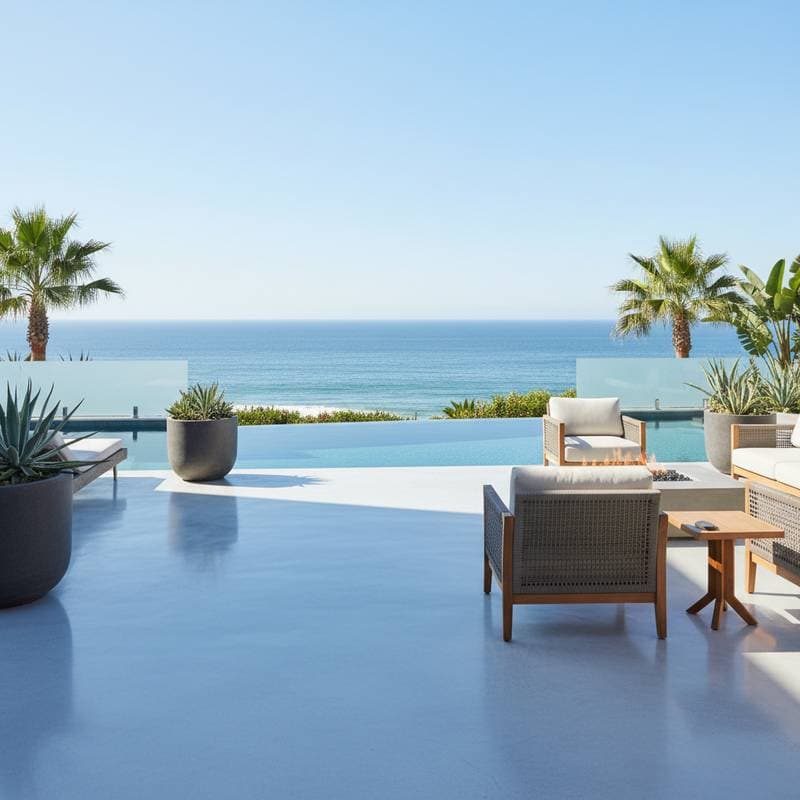
Gel-Coat Concrete: The Coastal Patio Revolution Transforming Outdoor Living
Homeowners in coastal areas seek patios that withstand salt air, high humidity, and intense sunlight while retaining visual appeal. Traditional concrete surfaces frequently fade, crack, or develop stains under such exposure, resulting in an outdated appearance. Gel-coat concrete emerges as a superior alternative, delivering a smooth, resilient, and easy-to-maintain finish that repels moisture, resists fading, and endures daily wear.
This guide explains the nature of gel-coat concrete, its mechanisms, suitability for seaside properties, and essential considerations for your project. Readers gain insights into its advantages, enabling informed decisions for upgrading outdoor spaces in coastal regions.
What Is Gel-Coat Concrete?
Gel-coat concrete consists of a standard concrete base topped with a protective layer of gel-based resin. This coating forms a glossy, hardened seal that shields the underlying material from water infiltration and environmental stressors. Borrowed from applications in marine vessels and automotive exteriors, the technique adapts effectively to patios, providing comparable safeguards and enhanced aesthetics.
Available in diverse tints ranging from earthy stone tones to contemporary glossy sheens, the gel coat cures into an impermeable barrier. It minimizes vulnerabilities such as cracking, surface flaking, and discoloration caused by prolonged exposure to the elements.
Key Benefits of Gel-Coat Concrete
- Moisture resistance: Ideal for humid coastal settings where salt-laden air accelerates degradation of unprotected concrete.
- UV protection: Maintains color integrity and surface quality despite extended direct sunlight.
- Low maintenance: Requires only occasional cleaning with a gentle detergent to restore pristine condition.
- Slip resistance: Incorporate fine aggregates during application to enhance traction on damp surfaces.
- Aesthetic flexibility: Select from matte, satin, or high-gloss options to align with personal style preferences.
Why Coastal Homes Are Turning to Gel-Coat Patios
Seaside conditions impose severe demands on exterior surfaces, with saltwater spray, abrasive winds, and gritty sand causing progressive erosion, pitting, and color loss. Gel-coated concrete establishes a robust defense, averting these deteriorations while imparting a luminous, resort-inspired elegance through light reflection.
For those who host gatherings outdoors, this finish ensures enduring sophistication and usability. It integrates seamlessly with elements like stone edging, built-in cooking areas, or adjacent pool surrounds, sustaining uniformity with reduced effort.
Comparing Gel-Coat to Other Patio Finishes
| Finish Type | Durability | Maintenance | Aesthetic Range | Cost (Estimated Range per sq. ft.) |
|---|---|---|---|---|
| Stained Concrete | Moderate | Moderate | Wide | $5–$10 |
| Stamped Concrete | Moderate | Moderate | Wide | $8–$15 |
| Epoxy Coating | High | Moderate | Limited | $6–$12 |
| Gel-Coat Concrete | Very High | Low | Extensive | $10–$20 |
Disclaimer: Costs vary by location, material quality, and labor rates.
Planning a Gel-Coat Patio Project
Effective planning forms the foundation of a durable gel-coat installation. Professionals must handle the process, emphasizing thorough preparation to maximize longevity. Inadequate preparation or subpar materials compromise performance over time.
Step 1: Evaluate Your Existing Surface
Examine the current patio for cracks wider than a quarter-inch, flaking sections, or level inconsistencies. Minor repairs involve filling and smoothing defects prior to coating. Contractors assess structural integrity to decide between overlay application or a full slab replacement.
Step 2: Set a Realistic Budget
Expect costs averaging $10 to $20 per square foot nationwide, influenced by project scale, selected finish, and custom features. Obtain at least three detailed estimates outlining preparation, materials, application, and any warranties. Factor in potential add-ons like edge detailing or color matching.
Step 3: Choose a Finish and Color
Opt for light palettes such as soft sands, pearl whites, or seashell grays in coastal designs; these choices deflect heat and harmonize with ocean views. Textured variants simulating limestone or coral add natural depth without increasing slip risks.
Step 4: Hire a Qualified Contractor
Seek specialists experienced in resin-based overlays, reviewing portfolios of coastal installations. Verify credentials through state licensing boards, request client testimonials, and confirm comprehensive insurance coverage. Expertise guarantees uniform application and complete curing for optimal results.
Step 5: Schedule Around Weather Conditions
Application demands dry weather and temperatures between 50 and 85 degrees Fahrenheit to facilitate proper bonding and hardening. Monitor forecasts for a two-to-three-day window free of rain or high winds, rescheduling if necessary to prevent adhesion failures.
Care and Maintenance Tips
Gel-coated patios demand minimal intervention to sustain their protective qualities and shine. Regular attention prevents minor issues from escalating.
Routine Cleaning
- Remove loose dirt and sand daily with a broom or leaf blower.
- Clean monthly using a solution of mild soap and lukewarm water, applied with a non-abrasive brush.
- Steer clear of acidic cleaners or high-pressure equipment, which may etch the surface.
Seasonal Inspection
- Annually check for impact damage or wear in high-use zones, repairing promptly with matching gel coat.
- Apply a refresh layer every three to five years, as advised by the installer, to reinforce the barrier.
Protective Measures
- Position furniture pads or coasters beneath legs to distribute weight evenly.
- Deploy removable rugs in pathways to buffer foot traffic and spills.
- After coastal storms, hose down the area to eliminate salt deposits that could corrode the coating.
Design Inspiration for Coastal Gel-Coat Patios
Gel-coat concrete complements seaside architecture, elevating both sleek modern layouts and classic bungalows.
Popular Design Themes
- Nautical Neutrals: Pair pristine white coatings with deep blue cushions and weathered wood accents for a seafaring vibe.
- Tropical Oasis: Select warm beige finishes alongside palm fronds, woven loungers, and vibrant planters.
- Contemporary Coastal: Employ glossy slate tones with slim steel railings and geometric fire pits.
- Mediterranean Retreat: Integrate terracotta-inspired shades with tiled fountains and olive tree borders.
Integrating Lighting and Landscaping
Incorporate low-voltage LED path lights embedded along edges to highlight the gel coat's sheen at dusk, ensuring energy efficiency and safety. Surround the patio with salt-tolerant plants like sea oats or dune grass in raised beds, creating privacy screens that soften the space without overwhelming the clean lines of the surface. Use permeable pavers for walkways to manage runoff, blending functionality with the natural coastal palette.
Frequently Asked Questions
What makes gel-coat concrete different from epoxy coatings?
Gel-coat employs a denser resin formulation that prioritizes surface hardness and UV stability over deep penetration. Epoxy provides strong adhesion but often discolors under intense solar exposure, whereas gel-coat retains clarity longer.
Can I apply gel coat to an existing patio?
Application proves feasible on stable concrete substrates. Professionals clean thoroughly, apply an etching solution for bonding, and patch imperfections to achieve seamless results.
How long does a gel-coated patio last?
Proper installation and care yield 10 to 15 years of service, varying with local weather patterns, foot traffic, and maintenance frequency.
Is gel-coat concrete slippery when wet?
Professional installations include anti-slip textures or silica additives, ensuring secure footing comparable to natural stone in rainy conditions.
How often should I reseal or refresh the surface?
Schedule inspections every two years; refresh coatings typically occur every three to five years, tailored to exposure levels by the installing team.
Can gel-coated patios handle heavy furniture or grills?
The hardened layer withstands substantial loads without denting. Protect against scratches by using glides or mats under metal bases.
What color options are available?
Custom mixing supports an array of hues, from subtle driftwood neutrals to vibrant azure blues, precisely coordinated with home exteriors or garden themes.
Maximizing Longevity and Enjoyment on Your Coastal Patio
With gel-coat concrete, coastal homeowners secure a versatile foundation for year-round outdoor activities. This finish not only combats environmental challenges but also inspires creative enhancements, from casual barbecues to serene sunset gatherings. Invest in quality installation to fully realize the potential of your seaside sanctuary.