
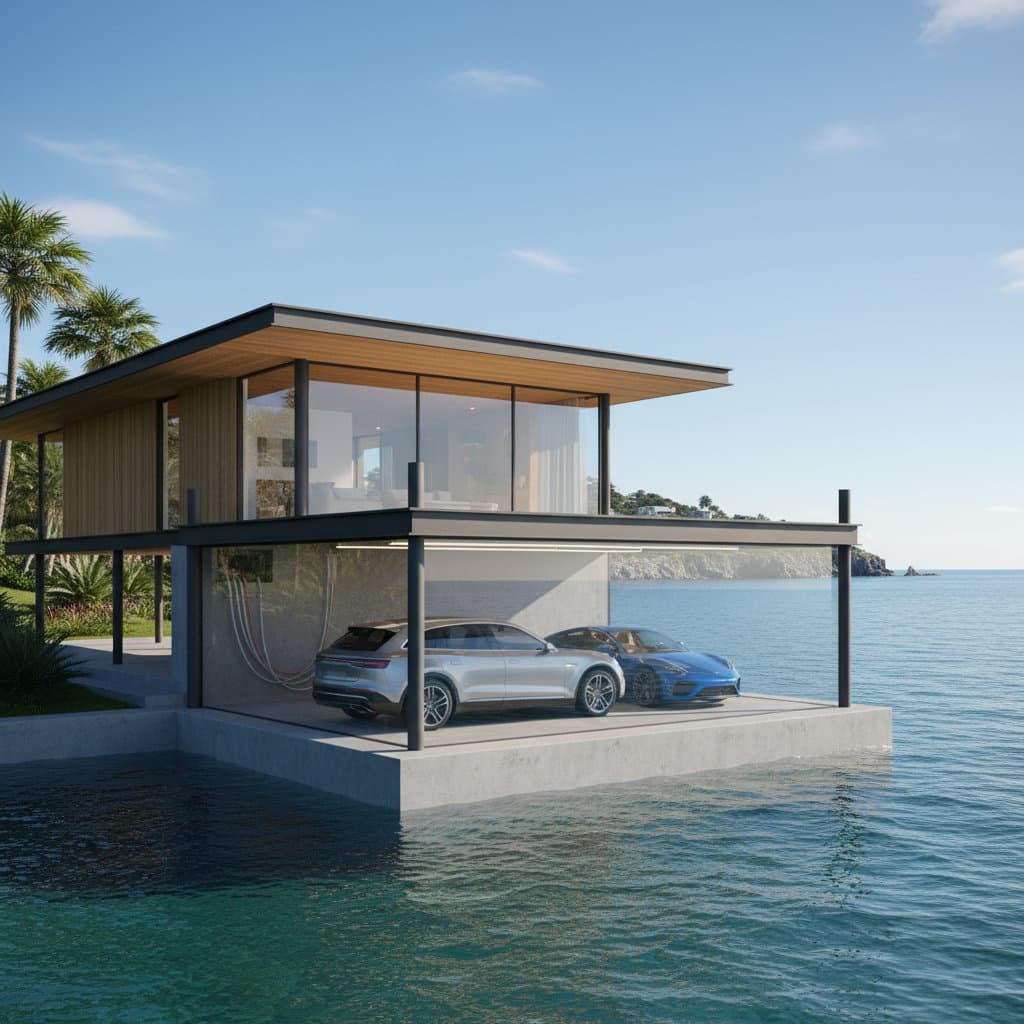
Introduction to Amphibious Garages
Amphibious garages employ a combination of buoyancy and guided movement to elevate above floodwaters. This approach utilizes physics-based design elements, such as floating foundations and vertical guideposts, to safeguard vehicles and equipment. Homeowners in flood-prone coastal regions benefit from this adaptive technology that maintains accessibility while minimizing long-term risks.
Cost Considerations for Amphibious Garages
Construction expenses for an amphibibious garage depend on factors like dimensions, selected materials, engineering complexity, and regional regulations. Initial investments exceed those of conventional garages, yet they yield substantial savings through avoided flood repairs and reduced insurance rates.
| Project Type | Estimated Cost Range | Description |
|---|---|---|
| Basic Single-Car Garage | $80,000 - $120,000 | Buoyant base with basic manual elevation mechanisms. |
| Two-Car or Premium Garage | $130,000 - $200,000 | Advanced features including automated controls and integrated technology. |
| Retrofit of Existing Garage | $100,000 - $160,000 | Modifications to add floating capabilities to a current structure. |
Budget an additional 20 percent for unforeseen elements such as permitting delays or site-specific adjustments. Flood-related damages frequently exceed $100,000 per incident, encompassing vehicle replacement and structural fixes. Over time, the amphibious option proves more economical.
Amphibious Garages Versus Conventional Flood Measures
Standard flood defenses typically elevate buildings on fixed pilings or apply impermeable barriers. In contrast, amphibious garages permit vertical displacement solely during high water events, preserving everyday usability.
| Feature | Traditional Flood-Proofing | Amphibious Garage |
|---|---|---|
| Elevation | Permanent lift above base level | Temporary rise during inundation |
| Access | Often elevated with steps or slopes | Retains standard ground entry |
| Aesthetics | Appears raised or mismatched | Integrates seamlessly with design |
| Cost Efficiency | Modest initial outlay, elevated ongoing expenses | Substantial upfront, reduced future costs |
| Maintenance | Frequent barrier resealing required | Primarily mechanical checks |
This design ensures convenience in normal conditions and robust protection when needed.
Sustainable Aspects of Amphibious Design
Beyond defense against water, amphibious garages promote environmental harmony in shoreline development. They accommodate environmental shifts rather than oppose them, thereby conserving resources and prolonging structure longevity.
Key Environmental Benefits
- Minimize post-flood waste by preventing structural failure
- Decrease material use through fewer reconstruction efforts
- Enhance water management by aligning with natural drainage patterns
- Support renewable energy via rooftop solar installations for operational power
Photo: Contemporary amphibious garage featuring solar arrays against a scenic waterfront setting.
As shorelines face intensifying climate challenges, this form of architecture supports broader strategies for durable habitation.
Steps to Develop an Amphibious Garage
Prospective owners should follow a methodical process to implement an amphibious garage, whether new construction or adaptation.
Detailed Planning Process
- Site Evaluation: Engage geotechnical and structural engineers to analyze soil stability and historical flood patterns.
- Design Collaboration: Consult architects experienced in flood-adaptive buildings to customize the blueprint.
- Regulatory Approval: Present detailed plans to municipal bodies, ensuring adherence to zoning and environmental codes.
- Build Execution: Select contractors proficient in floating platforms and pliable infrastructure connections.
- Verification Phase: Perform simulated elevation tests to confirm functionality and watertight integrity.
Maintain comprehensive records throughout for insurance validation and enhanced marketability. Resilient features appeal strongly to future purchasers.
Ongoing Care for Amphibious Structures
Post-installation, amphibious garages demand straightforward maintenance, particularly in saline environments, to sustain reliability.
Routine Maintenance Guide
- Examine guideposts and flotation elements yearly for signs of deterioration or rust.
- Clear outflow paths to avoid obstructions in adverse weather.
- Verify supple utility lines for integrity and flexibility.
- Reapply protective sealants per manufacturer guidelines.
Realizing Security Through Adaptive Design
Amphibious garages empower coastal residents by transforming potential vulnerabilities into strengths. They merge cutting-edge engineering with functional elegance, securing essential possessions amid rising tides.
Visualize flood events where vehicles and storage stay elevated and dry. This capability represents practical innovation tailored for waterfront life.