
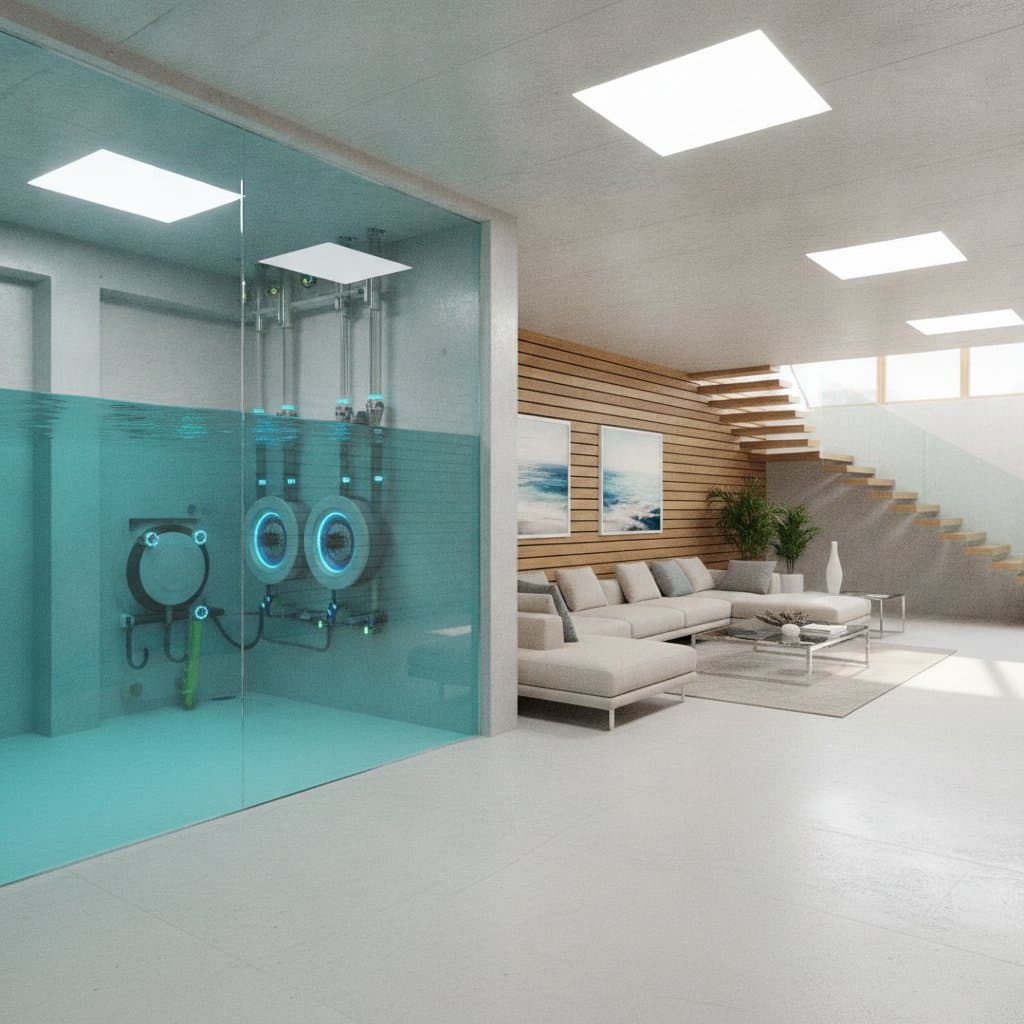
Coastal Homes Add Basements to Store Tidal Floods
Coastal properties face increasing challenges from rising water levels. Homeowners now turn to basements designed specifically to store tidal floods. These engineered spaces act as controlled reservoirs beneath homes. They reduce damage during high tides and storm surges.
In areas like San Diego, this approach combines practicality with modern engineering. Retrofit or new construction costs range from $40,000 to $120,000. The final price depends on size, soil conditions, and waterproofing complexity.
How Flood-Storage Basements Work
A flood-storage basement differs from standard living space. It serves as a sacrificial chamber that collects seawater during tidal events. Pumps and gravity systems release the water once tides recede. This process protects foundations and prevents erosion.
Key Components
- Waterproof walls and floors made of reinforced concrete with marine-grade sealants
- Automatic sump pumps that activate on water entry
- Pressure relief valves to manage hydrostatic loads
- Drainage channels linked to municipal or natural outflow systems
- Moisture sensors and alarms for early detection
Cost Breakdown for Flood-Resistant Construction
| Project Type | Typical Cost Range | Features Included |
|---|---|---|
| Retrofit under existing home | $60,000 - $120,000 | Excavation, structural reinforcement, waterproofing |
| New build with integrated system | $40,000 - $90,000 | Foundation design, pump system |
| Conversion of crawl space | $25,000 - $60,000 | Concrete floor, sealing, drainage |
Costs vary with soil type, elevation, and local codes. Engineers often recommend extra reinforcement near tidal zones.
Why Homeowners Choose This Approach
Frequent tidal flooding prompts many to seek sustainable mitigation. Traditional seawalls and raised foundations prove costly or visually intrusive. Flood-storage basements remain discreet and integrate with existing architecture.
Main Benefits
- Lower flood insurance premiums through demonstrated mitigation
- Protection of structural integrity during repeated events
- Extended property lifespan and improved resale value
- Preservation of coastal aesthetics without elevated platforms
- Reduced community runoff volume
Design and Engineering Factors
Construction in coastal zones requires careful planning. The structure must resist intense lateral and upward water pressure. Engineers apply hydrostatic modeling to create flexible yet durable designs. Soil composition, elevation, and shoreline proximity all affect requirements.
Factors That Influence Cost and Performance
- Soil composition affects drainage needs and foundation depth.
- Lower elevations demand stronger waterproofing and pump capacity.
- Closer shoreline locations face higher hydrostatic pressure.
- Marine-grade materials increase longevity.
- Local regulations add permitting and compliance expenses.
Maintenance Requirements
Routine inspections keep the system effective. Schedule annual waterproofing checks and monthly pump tests. Clean drainage filters twice yearly to avoid clogs. The investment typically returns 60 to 75 percent through lower repair costs and insurance savings.
| Maintenance Task | Frequency | Typical Cost |
|---|---|---|
| Pump inspection and testing | Monthly | $100 - $300 |
| Waterproof seal renewal | Every few years | $2,000 - $4,000 |
| Drainage system cleaning | Twice a year | $500 - $1,200 |
Common Questions
Can a flood-storage basement be added to an existing home? Yes. Retrofitting requires excavation and reinforcement, which increases costs.
Does it increase home value? Often yes. Buyers in flood-prone areas seek proven protection features.
Does the space stay dry year-round? It remains dry except during flood events. The design supports temporary storage only.
Can the basement serve as living space? No. It must function as a flood chamber with minimal furnishings.
How long does installation take? Construction usually requires several months depending on permits and site conditions.
Protecting Long-Term Value
A flood-storage basement delivers both defense and property improvement. Regular monitoring and maintenance ensure continued performance. Homeowners gain reliable protection against future tidal events while maintaining the character of shoreline living.