
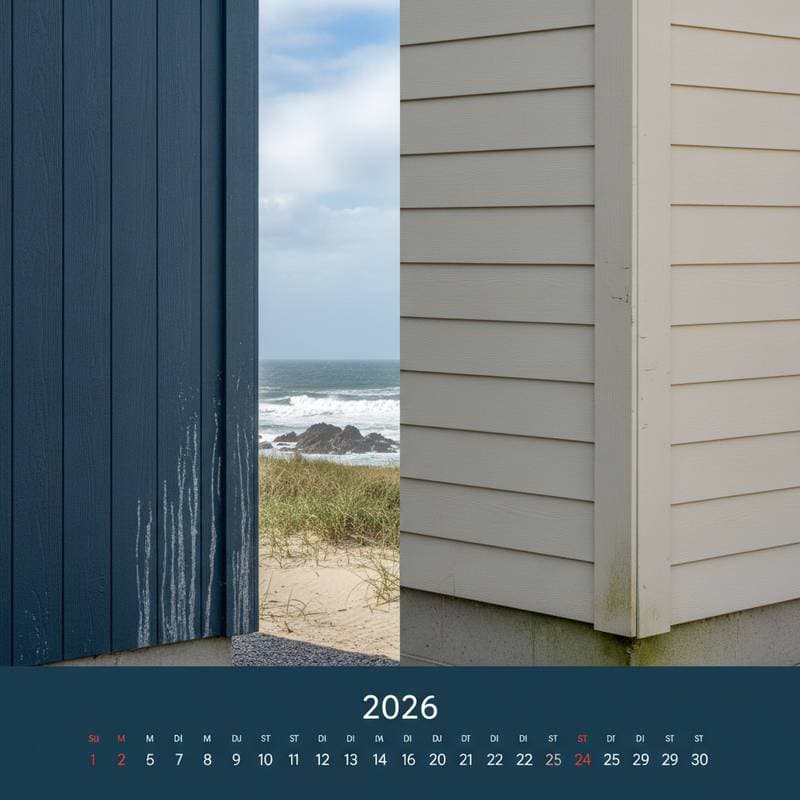
Fiber Cement vs Vinyl Siding Costs for Coastal Homes
Coastal homes face constant exposure to salt air, wind, and moisture that shorten the life of exterior materials. Selecting siding requires weighing upfront costs against long term performance and maintenance demands. Fiber cement and vinyl represent two common options with distinct price points and durability profiles.
Average Installed Costs
New siding on a typical coastal residence ranges from 9000 to 27000 dollars. Vinyl siding averages 6.25 dollars per square foot installed. Fiber cement averages 10.75 dollars per square foot installed. A 2000 square foot home therefore costs about 12500 dollars for vinyl or 21500 dollars for fiber cement.
Cost Comparison by Home Size
- Small bungalow of 1200 square feet: vinyl 5400 to 10200 dollars, fiber cement 9000 to 17400 dollars.
- Mid size home of 2000 square feet: vinyl 9000 to 17000 dollars, fiber cement 15000 to 29000 dollars.
- Large home of 3000 square feet: vinyl 13500 to 25500 dollars, fiber cement 22500 to 43500 dollars.
Fiber cement projects often require heavier materials and additional coastal reinforcements that increase total expense.
Performance and Maintenance Differences
Fiber cement resists salt air, moisture, and wind effectively and lasts 40 to 50 years. Vinyl performs adequately in milder conditions yet fades or loosens in strong coastal exposure and lasts 20 to 30 years. Fiber cement needs repainting every 10 to 15 years while vinyl requires only occasional washing. Fiber cement offers noncombustible fire resistance whereas vinyl softens under high heat.
Labor for vinyl averages 1.50 to 3.00 dollars per square foot. Labor for fiber cement averages 3.50 to 6.00 dollars per square foot. Coastal installations add corrosion resistant fasteners that increase costs by 300 to 700 dollars.
Key Cost Influences
Home size, siding style, material grade, and local labor rates affect final pricing. Permits add 200 to 600 dollars. Removal of existing siding adds 1.25 to 2.25 dollars per square foot. Painting fiber cement adds 2000 to 4000 dollars.
Strategies to Control Expenses
- Obtain three detailed bids from licensed coastal contractors.
- Schedule work during slower seasons to reduce labor rates.
- Select mid grade materials or prefinished boards when appropriate.
- Combine siding work with insulation upgrades to share labor costs.
- Complete simple prep tasks such as fixture removal in advance.
Professional Installation Considerations
Vinyl siding allows moderate DIY feasibility on single story homes with 20 to 30 percent potential savings. Fiber cement installation carries higher risk and is best left to professionals due to panel weight and silica dust precautions. Proper installation protects manufacturer warranties and meets local building codes.
Frequent Installation Errors
Homeowners should avoid skipping moisture barriers, using standard fasteners in salt air, neglecting ventilation gaps, and selecting the lowest bid without verifying coastal experience. Consistent maintenance such as annual rinsing and timely repainting preserves siding performance for decades.
Answers to Common Coastal Siding Questions
Most coastal areas require permits for siding replacement. Vinyl projects typically finish in 5 to 10 days while fiber cement projects require 10 to 15 days. Fiber cement generally returns 65 to 75 percent of cost at resale compared with 55 to 65 percent for vinyl. Salt air accelerates fading on vinyl and necessitates periodic surface sealing on fiber cement. Full removal of damaged existing siding prevents trapped moisture beneath new layers.
Fiber cement withstands winds up to 130 miles per hour when properly fastened. Vinyl performs reliably up to 110 miles per hour. Both materials benefit from regular inspections after storms and prompt repairs to seams and trim.