
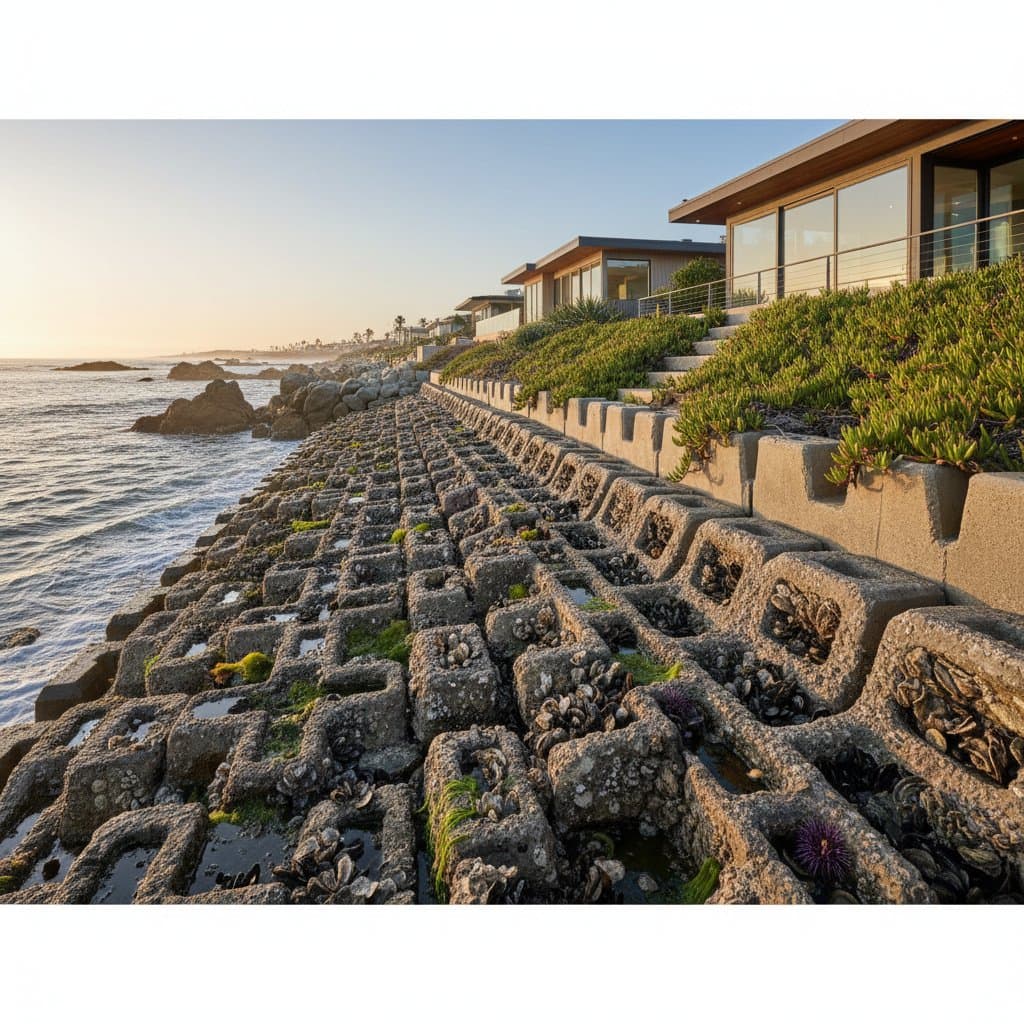
Eco Seawalls: A Sustainable Alternative for 2026 Coastal Homes
Picture yourself on a patio with a view of the Pacific Ocean, where waves meet a shoreline shielded by a vibrant ecosystem rather than stark concrete. Eco seawalls represent this vision, integrating engineering principles with natural ecology to safeguard properties. For residents along the San Diego coast, these innovative structures offer dual benefits: robust protection against erosion and support for local marine habitats.
This article details the mechanics of eco seawalls, associated expenses, and their rising prominence in future coastal projects. Readers gain insights into cost-saving measures, choices between self-installation and expert services, and ongoing care practices. Installation expenses typically range from $1,500 to $20,000, with an average of $7,800 for standard residential applications. Secure estimates from qualified local specialists, as site-specific factors like permits and wave patterns influence both pricing and specifications.
Article Overview
- Cost influences
- Available types and selections
- Self-installation versus expert services
- Cost-reduction strategies
- Frequently asked questions
Cost Influences
Expenses for eco seawalls vary between $1,500 and $20,000, determined by dimensions, elevation, and selected components. A typical residential setup averages $7,800 for a moderate-length barrier. Key elements impacting the budget include the following:
- Component selection: Options such as biologically enhanced concrete, oyster reef units, and natural stone differ in expense. Biologically enhanced concrete panels cost $80 to $150 per linear foot, whereas modular reef units range from $100 to $200 per foot.
- Installation labor: Expert services charge $45 to $100 per hour. Challenges like limited waterfront access or tidal constraints extend labor duration.
- Regulatory approvals: Permits in coastal zones cost $500 to $3,000, varying with location and ecological evaluations.
- Site readiness: Tasks such as demolishing prior concrete, reinforcing soil, or installing drainage systems add $1,000 to $4,000.
- Configuration intricacy: Designs featuring curves, tiers, or integrated habitat features command higher fees yet deliver superior environmental advantages.
Initial investments in eco seawalls may exceed those of conventional concrete, but extended durability and reduced upkeep offset the difference. These structures enhance ecological functions and aesthetic appeal, potentially increasing property desirability in coastal areas.
Available Types and Selections
Living Oyster Reefs
Ideal for: Shallow intertidal areas and properties prioritizing environmental integration.
Oyster reefs serve as organic wave attenuators that dissipate energy and purify surrounding water. Install precast blocks or mesh bags filled with shells to foster oyster attachment, resulting in an evolving, self-reinforcing barrier.
Advantages: Enhances water transparency, bolsters biodiversity, and regenerates via natural oyster proliferation.
Disadvantages: Provides gradual initial shielding and demands suitable water quality with consistent salinity levels.
Photo: Matt Jeppson / Getty Images
Biologically Enhanced Concrete Panels
Ideal for: Urban settings or established barriers requiring structural reinforcement.
These panels incorporate rough textures and mineral additives to draw in sessile marine species. They suit full replacements or overlays on legacy concrete surfaces.
Advantages: Delivers solid load-bearing capacity, facilitates straightforward upgrades, and promotes attachment of corals and algae.
Disadvantages: Involves elevated material pricing and restricts form adaptability.
Photo: Lisa Romerein / Getty Images
Hybrid Rock and Vegetation Barriers
Ideal for: Gently sloping shores or landscaped coastal properties.
Assemble layered stones with salt-resistant flora to create seamless integration with the natural terrain, effectively dispersing wave forces.
Advantages: Offers visual harmony, demands minimal upkeep, controls soil loss, and establishes wildlife refuges.
Disadvantages: Necessitates broader installation space and performs less effectively on abrupt inclines.
Photo: David Papazian / Getty Images
Floating Reef Units
Ideal for: Harbor facilities or piers seeking wave mitigation.
Constructed from repurposed substances, these buoyant assemblies accommodate aquatic organisms while minimizing wave rebound.
Advantages: Allows repositioning and suits provisional or trial implementations.
Disadvantages: Exhibits reduced longevity and provides inadequate shielding against intense forces.
Photo: John Gollop / Getty Images
Self-Installation Versus Expert Services
Constructing an eco seawall exceeds routine home improvement efforts. Modest enhancements like shoreline plantings or oyster enclosures permit self-directed approaches, but substantial builds demand professional involvement.
Self-directed possibilities:
- Positioning oyster-filled bags or spherical reef forms in calm waters
- Establishing native halophytes such as cordgrass or pickleweed
- Upkeeping installed panels via periodic cleaning and observation
Expert services advised for:
- Barriers exceeding two feet in height
- Locations exposed to vigorous currents or fluctuating tides
- Projects involving engineering analyses or biodiversity surveys
Specialists provide knowledge in hydrodynamic simulations, sediment management, and adherence to regional statutes. They guarantee alignment with protective guidelines for shorelines and ecosystems.
Cost-Reduction Strategies
Achieve affordability through deliberate planning with these approaches:
- Adopt a combined configuration. Integrate flora with compact engineered elements rather than comprehensive barriers.
- Repurpose on-site resources. Utilize salvaged stone or concrete fragments for foundational layers, subject to safety and approval.
- Participate in incentive initiatives. Municipalities and conservation organizations frequently subsidize living shoreline endeavors with funding or rebates.
- Implement in stages. Initiate with a test segment, then scale based on performance and financial capacity.
- Conduct routine upkeep. Address algal accumulations and early signs of degradation to avert expensive interventions.
Essential Property Evaluations
Prior to selecting an eco seawall, assess these site characteristics:
- Wave intensity: High-energy zones require fortified panels or extended footings.
- Tidal fluctuations: Barrier elevation must align with regional cycles to preserve ecological equilibrium.
- Ground composition: Unstable or granular substrates benefit from supplementary securing or fabric reinforcements.
- Environmental conditions: Choose components resistant to saline degradation and thermal variations.
- Design preferences: Decide between organic appearances or contemporary aquatic aesthetics.
Beyond individual safeguards, eco seawalls foster community-wide resilience. In select districts, coordinated living barriers mitigate erosion along extended coastal segments.
Upkeep Practices and Durability
Marine life inherently fortifies eco seawalls, leading to lower maintenance needs compared to traditional concrete. Implement seasonal reviews to maximize service life:
- Post-storm evaluations: Identify scour, fractures, or shifted components.
- Debris clearance: Eliminate accumulated litter or wood to sustain circulation.
- Growth assessment: Vigorous shellfish or algal coverage signals optimal conditions.
- Drainage verification: Confirm permeability features like apertures or membranes stay unobstructed.
- Flora restoration: Renew affected shoreline species annually.
With proper attention, these installations endure 20 to 50 years, frequently surpassing the lifespan of conventional barriers prone to deterioration.
Frequently Asked Questions
How do eco seawalls differ from standard concrete ones?
Eco seawalls incorporate biological elements to support habitats, whereas concrete versions prioritize structure alone, often harming local ecosystems.
Are permits required for installation in San Diego?
Yes, coastal commissions mandate approvals to ensure environmental compliance; consult local authorities early.
Can eco seawalls increase property value?
They often do, by enhancing sustainability appeal and reducing long-term risks from erosion and storms.
What maintenance frequency is typical?
Quarterly checks suffice, with intensified efforts after weather events.
Planning Your Coastal Upgrade
For San Diego coastal dwellers, transitioning to living shorelines presents timely opportunities. Engage a shoreline specialist or ecologist for a tailored evaluation, identifying optimal solutions like reef systems or vegetative hybrids. Gather bids from certified providers, navigate permitting processes, and schedule work during low-activity tidal periods.
An eco seawall extends beyond defense; it enriches the coastal environment by purifying waters, sheltering species, and amplifying natural allure.