
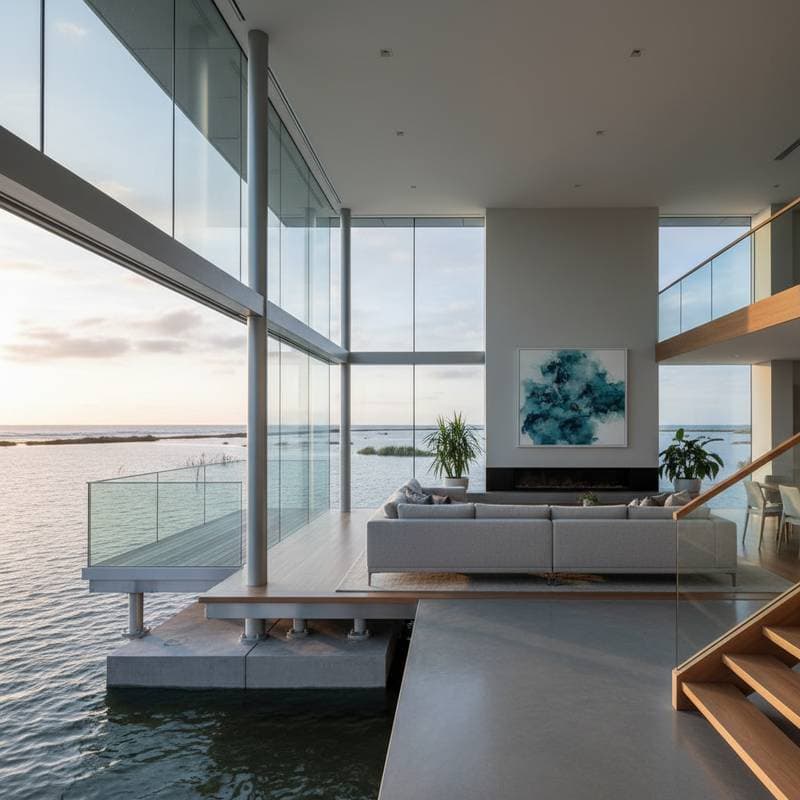
Understanding Amphibious Foundations
Coastal regions face increasing threats from rising sea levels and frequent flooding. Traditional homes built on solid foundations often suffer extensive damage during high tides or storms. Amphibious foundations provide an innovative solution, allowing structures to rise with floodwaters and return to their original position when the water recedes.
These systems integrate principles from marine engineering with contemporary building techniques. Homes equipped with amphibious foundations maintain stability on land while gaining buoyancy in water. This adaptability protects properties in vulnerable waterfront areas and supports sustainable living amid climate change.
How Amphibious Foundations Operate
At the core of an amphibious foundation lies a buoyant platform, typically constructed from durable materials such as concrete or steel. This platform rests on vertical guide posts anchored deep into the ground. During normal conditions, the home sits securely on the platform, connected to the posts with flexible joints that permit vertical movement.
When floodwaters rise, the platform lifts the entire structure upward, sliding along the guide posts. Hydraulic dampers or springs control the motion to prevent abrupt shifts. As waters subside, gravity guides the home back to its base, where locking mechanisms secure it in place.
Engineers design these systems to handle specific load capacities, accounting for the home's weight and local water dynamics. Sensors can monitor water levels and alert homeowners to impending lifts, ensuring safety throughout the process.
Key Benefits for Coastal Property Owners
Property owners in flood-prone zones gain significant advantages from amphibious foundations. First, these installations reduce the risk of water damage to the home's interior and structure. Unlike elevated homes on pilings, amphibious designs keep living spaces at ground level for everyday convenience.
Insurance premiums often decrease with such resilient features, as insurers recognize the lower likelihood of claims. Long-term maintenance costs remain manageable, with periodic inspections of the guide posts and platform ensuring reliability. Homeowners also preserve their views and access to waterfront amenities without relocating inland.
Environmentally, amphibious homes minimize disruption to natural shorelines. They avoid the need for extensive earthworks or barriers that can harm ecosystems. This approach aligns with broader goals of climate adaptation, promoting communities that thrive alongside rising tides.
Real-World Applications and Examples
Several projects demonstrate the effectiveness of amphibious foundations. In the Netherlands, a country long accustomed to water challenges, engineers have built floating neighborhoods in cities like Amsterdam. These communities withstand seasonal floods while providing modern housing.
Closer to home, initiatives in the United States explore similar technologies. Along the Gulf Coast, pilot programs in Louisiana integrate amphibious elements into reconstruction efforts post-hurricane. Homes there have successfully navigated storm surges, emerging unscathed.
In California, developers in areas like San Diego consider amphibious retrofits for existing properties. Local regulations increasingly support these innovations, offering incentives for adoption in high-risk zones. Success stories from these sites highlight the technology's potential to safeguard diverse coastal lifestyles.
Considerations for Implementation
Prospective owners should evaluate site-specific factors before pursuing an amphibious foundation. Soil conditions influence the depth and stability of guide posts, requiring geotechnical assessments. Local building codes mandate compliance with seismic and wind load standards, particularly in earthquake-prone regions.
Construction timelines vary, typically spanning several months for new builds or retrofits. Costs range from moderate to high, depending on the home's size and complexity, but grants and rebates often offset expenses. Consulting certified engineers ensures the design matches the property's unique needs.
Homeowners must also plan for maintenance routines, such as clearing debris from guide posts and testing buoyancy mechanisms annually. These steps preserve the system's performance over decades.
Embracing Resilient Waterfront Living
Amphibious foundations transform the narrative around coastal living from one of vulnerability to empowerment. They enable families to remain in cherished locations, enjoying the beauty of the sea without constant flood worries. As climate patterns evolve, this technology paves the way for innovative, adaptive communities.
By investing in such solutions, property owners not only protect their assets but also contribute to a more sustainable future. The blend of engineering ingenuity and practical design offers a blueprint for resilience, ensuring that waterfront homes endure and flourish.