
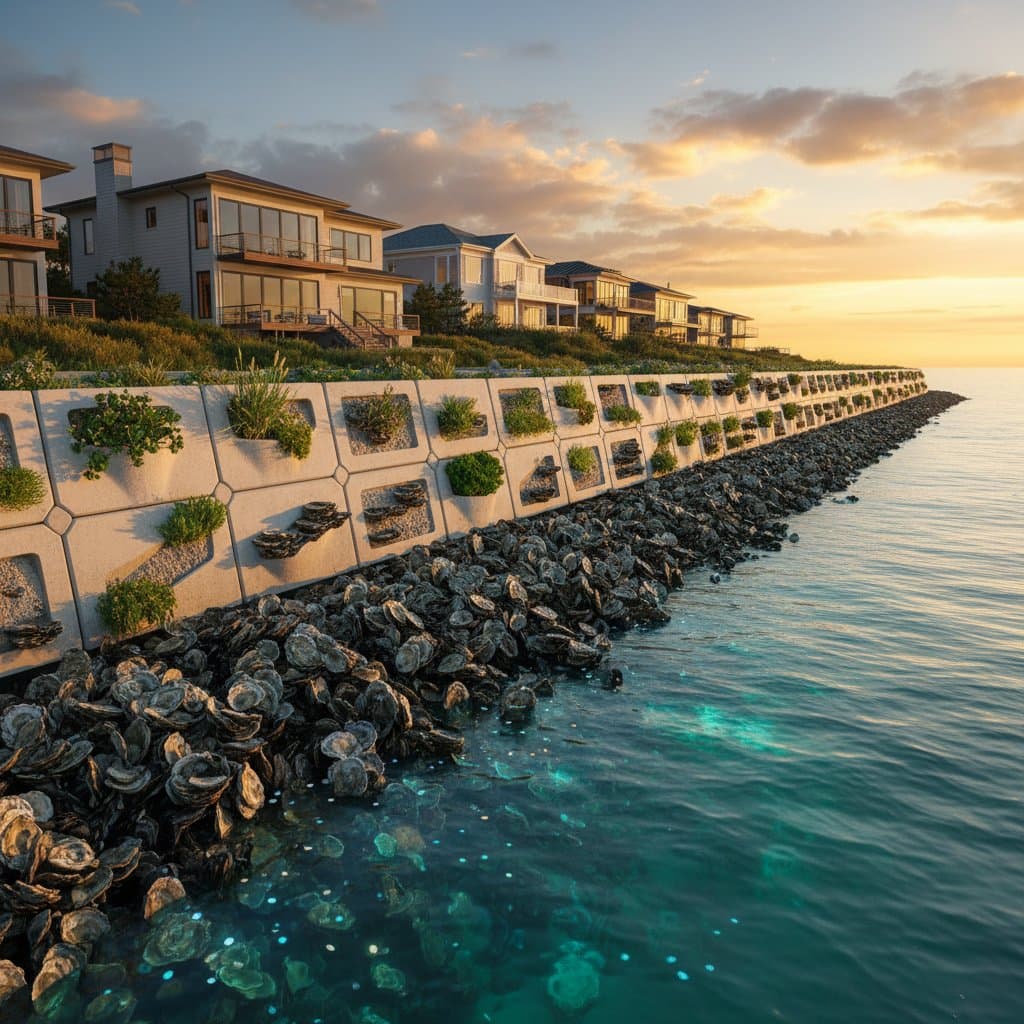
Eco Seawalls: Nature's Shield for Waterfront Homes
Imagine waking up to the gentle lapping of waves against your backyard shoreline, rather than the relentless crash of surf that erodes your property. For coastal homeowners, rising tides and intensifying storms make this peaceful scene increasingly elusive. Traditional concrete seawalls provide temporary defense, yet they damage marine ecosystems and reflect wave energy, which worsens erosion in adjacent areas. Eco seawalls, or living seawalls, offer a superior alternative by integrating engineering with ecology to safeguard properties while fostering natural habitats.
These structures employ materials that mimic natural coastlines, supporting species such as oysters, seagrass, and corals. The outcome is a resilient barrier that collaborates with the environment, enhancing biodiversity and coastal stability.
Key takeaway: Installation costs for an eco seawall range from $1,500 to $20,000, influenced by project scale, materials, and location. Homeowners typically invest around $7,800. Although initial expenses exceed those of basic concrete options, the enduring protection, ecological advantages, and reduced maintenance justify the outlay. For intricate installations or expansive sites, obtain estimates from contractors experienced in coastal restoration and marine engineering.
Factors Influencing Costs
Constructing an eco seawall requires expertise in construction, biology, and hydrology. Expenses fluctuate based on design choices, regulatory approvals, and environmental specifics.
Typical range: $1,500 to $20,000
Average cost: $7,800
Professional installation advised for optimal results
Primary Cost Determinants
- Material Choices
- Concrete modules featuring textured surfaces: $100 to $150 per linear foot
- Recycled plastic or composite units: $80 to $120 per linear foot
- Rock combined with oyster shells: $60 to $100 per linear foot
-
Project Dimensions
Residential shorelines often span 20 to 40 linear feet, whereas larger estates or public areas may require over 200 feet. Longer segments demand more resources and planning. -
Access to the Site
Challenging terrain or isolated locations elevate labor expenses. Utilization of cranes or barges adds $2,000 to $5,000 for equipment mobilization. -
Regulatory Permits and Assessments
Fees for coastal permits vary from $500 to $2,500, depending on jurisdictional requirements. Environmental evaluations confirm compliance with marine protection standards. -
Labor and Design Intricacies
Tailored features, such as layered reef formations, extend design phases and necessitate skilled personnel. Marine specialists charge $60 to $100 per hour. -
Ongoing Maintenance Provisions
Yearly checks and minor cleanings range from $200 to $500. As biological elements like oyster clusters develop, maintenance demands typically decrease.
Types of Eco Seawalls
Oyster Reef Barriers
Best suited for shallow intertidal areas and organic shorelines.
These systems utilize oyster shells, limestone aggregates, or concrete domes to attract oyster larvae. Over time, the developing reefs dissipate wave impact, curb soil loss, and purify surrounding waters by filtering contaminants.
Pros: Develops independently, enhances water purity, bolsters marine populations
Cons: Establishment period required, potential permitting hurdles for reef deployment
Photo: Coastal Restoration Group / Getty Images
Hybrid Living Walls
Ideal for homes balancing defense with visual harmony.
Hybrid designs merge durable elements like boulders or blocks with biotic features, including saltmarsh grasses or mangrove seedlings. This layered approach mitigates wave intensity and establishes shelters for avian and aquatic species.
Pros: Adaptable configurations, budget-friendly scaling, aesthetic enhancement
Cons: Installation demands coordinated engineering and horticultural skills
Photo: Marine Eco Systems / Getty Images
Installation Options: DIY or Professional
Small-scale components of eco seawalls lend themselves to self-installation, though comprehensive projects demand expert involvement for safety and efficacy.
Assessing DIY Viability
Difficulty: Moderate to advanced
Time commitment: 2 to 5 days for limited segments
Essential tools: Shovels, wheelbarrows, masonry implements, protective equipment
For brief, low-impact shorelines, employ natural resources such as stones, coir rolls, and indigenous flora to form a basic vegetated slope. Adhere to prescribed gradients and drainage protocols. Verify compliance with regional regulations prior to commencement.
Rationale for Professional Engagement
Properties exposed to vigorous currents, intricate erosion patterns, or needing reinforcement benefit from specialist intervention. Experts evaluate geotechnical stability, tidal dynamics, and fluid forces to engineer durable solutions spanning decades.
Pro tip: Seek coastal engineers versed in hybrid systems eligible for ecological grants or collective financing. Inquire about subsidies for environmentally sound shoreline defenses.
Strategies for Cost Reduction
While eco seawalls involve significant investment, strategic approaches minimize expenditures while upholding performance.
-
Incorporate Reclaimed Resources
Sourced from local initiatives, materials like pulverized concrete, oyster remnants, and salvaged rock prove economical and promote resource recycling. -
Collaborate on Shared Efforts
Partner with adjacent property owners to distribute workforce and machinery costs across extended barriers. -
Opt for Prefabricated Components
Modular panels and interlocking units accelerate assembly and curtail bespoke engineering charges. -
Leverage Regional Initiatives
Certain areas subsidize living shoreline endeavors that contribute to communal ecological assets. -
Emphasize Future Economies
Elevated initial costs yield savings through diminished upkeep and potential property appreciation.
Upkeep and Durability
Eco seawalls demand integrated care to preserve both structural integrity and biological vitality.
Standard Maintenance Protocols
- Conduct post-storm evaluations for fractures, shifts, or undermining.
- Clear accumulations and non-native species to favor endemic growth.
- Supplement plantings to sustain root systems.
- Track the progression of oysters or mussels for effective filtration.
Projected Service Life
Well-engineered eco seawalls endure 40 to 75 years under regular oversight. Biotic features facilitate natural mending, lessening reconstruction needs. As flora and reefs mature, the system evolves to accommodate shifting coastal dynamics.
Broader Ecological and Societal Advantages
Beyond property safeguarding, eco seawalls rehabilitate long-altered coastlines.
Enhancement of Water Purity
Oysters and vegetation serve as biological sieves, extracting particulates and toxins. A established oyster formation processes thousands of gallons daily, elevating transparency and dissolved oxygen.
Fostering Diverse Habitats
Textured profiles and greenery provide sanctuaries for fish, crustaceans, and shorebirds, elevating species variety and inviting eco-tourism.
Mitigation of Wave Rebound
In contrast to smooth concrete that redirects surges, eco seawalls disperse forces, averting undercutting and shielding nearby terrains.
Adaptation to Climate Shifts
With ascending sea levels, these installations adjust organically. Vegetative and reef elements extend vertically and laterally, bolstering defenses sans extensive overhauls.
Frequently Asked Questions
How long until an eco seawall stabilizes the area?
Systems initiate shoreline reinforcement within months. Complete biological integration, including reef maturation or vegetation rooting, spans one to three years, contingent on site variables.
Do eco seawalls match the robustness of conventional types?
Affirmative, with appropriate engineering. Structural bases paired with flexible biota deliver robustness and adaptability, as living layers cushion impacts on rigid components.
Is permitting necessary for living seawalls?
Generally, yes. Shoreline alterations mandate approvals from municipal and state bodies to uphold ecological standards. Expedited processes may apply to sustainable variants.
Can eco seawalls boost property worth?
Indeed. Prospective buyers value eco-conscious protections that improve landscapes and mitigate degradation risks, yielding sustained appreciation and allure.
Steps to Implement Your Eco Seawall
Erecting an eco seawall transcends routine upgrades; it embodies stewardship of both home and habitat. Begin with a thorough shoreline appraisal, then engage marine professionals adept in biotic integrations.
As seasons pass, observe the evolution from protective edifice to vibrant ecosystem. Witness oysters cleansing tides, flora undulating with currents, and serene waters securing your domain.