
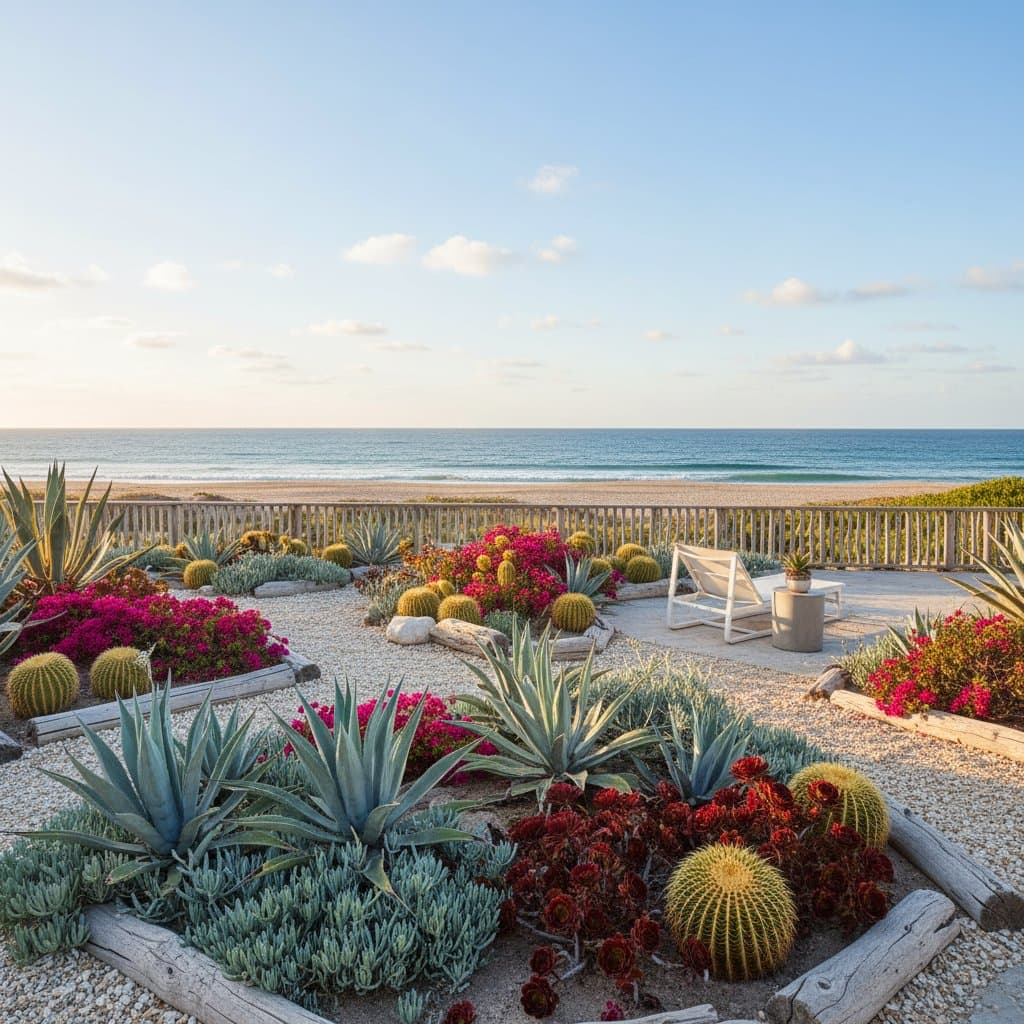
Desert Plants for Water-Wise Beauty in Beach Gardens
Coastal gardens captivate with their open vistas, resilient flora, and effortless allure. However, sustaining verdant spaces near the ocean presents hurdles, including water scarcity, saline soils, and relentless winds. Homeowners along the shore increasingly turn to desert plants, prized for their toughness and artistic forms, to infuse coastal settings with vitality while cutting down on upkeep and irrigation demands.
If your seaside plot battles dry spells or nutrient-poor ground, consider this common plight. Conventional coastal vegetation often demands ample hydration, which clashes with conservation efforts. In contrast, desert varieties excel in environments marked by intense sunlight, loose sands, and gusts. Integrating these robust options yields a contemporary yet organic garden brimming with hues, forms, and dynamism.
This resource delves into effective methods for incorporating desert plants into coastal designs. Readers gain insights into suitable varieties, layout techniques, and upkeep strategies to foster an enduring exterior that shines across seasons.
[Image: A coastal garden featuring agave, succulents, and ornamental grasses near the beach]
Designing a Desert-Inspired Coastal Garden
Success in fusing desert elements with beach aesthetics hinges on harmony. Preserve the casual seaside essence while introducing firmness and durability via sturdy desert choices.
1. Build a Solid Base
Initiate with soil enhancement and water flow management. Beachside earth typically percolates swiftly yet skimps on fertility. Incorporate organic compost to bolster composition without compacting the medium. Such plants favor rapid runoff paired with light nourishment.
- Opt for elevated planters or contoured mounds for species sensitive to pooling.
- Fashion subtle inclines to direct precipitation to deep-rooted specimens.
- Apply a covering of pulverized shells or pebbles to retain dampness and curb soil loss.
[Image: Layered garden bed with succulents and sand-gravel mix for drainage]
2. Layer Textures and Hues for Dynamic Appeal
Desert flora offer diverse shapes and shades. Pair them alongside native seaside grasses and blooming perennials to achieve a fluid, multidimensional vista.
Consider these combinations:
- Agave alongside blue fescue or sea lavender for striking differentiation
- Aloe with ice plant to inject vivid tones
- Yucca paired with ornamental grasses for elevation and framework
Pro Tip: Maintain unified schemes. Tones of muted silvers, pale greens, and earth beiges harmonize desert and ocean themes seamlessly.
3. Highlight Sculptural Elements
These plants command attention inherently. Position them as organic artworks to ground the composition. Substantial agaves, golden barrel cacti, or striking yuccas suit framing walkways or accentuating entrances.
In compact areas, select restrained types such as Agave parryi or Echeveria, which deliver tactile interest minus spatial dominance. For added drama, cluster varied sizes to mimic natural rock formations, enhancing the wild coastal narrative.
11 Top Desert Plants for Coastal Resilience
Selecting the right species ensures adaptation to seaside rigors. Below are proven performers that withstand salt spray, poor soils, and aridity while enhancing visual drama.
- Agave attenuata: Soft, curving leaves form fountain-like rosettes. Thrives in full sun; tolerates occasional salt exposure.
- Aloe vera: Spiky, fleshy leaves store water efficiently. Adds medicinal flair and yellow blooms.
- Yucca filamentosa: Sword-shaped foliage with white threads. Provides vertical accent and deer resistance.
- Echeveria spp.: Rosette succulents in rosey pastels. Ideal for rock gardens; propagate easily from offsets.
- Opuntia ficus-indica: Paddle-shaped prickly pear with edible fruit. Drought-proof and wind-resistant.
- Dasylirion wheeleri: Grass-like desert spoon with spidery tips. Creates movement in breezes.
- Ferocactus wislizeni: Barrel cactus with vivid red flowers. Compact for containers near patios.
- Sedum spp.: Low-growing stonecrop forms carpets. Stabilizes slopes and attracts butterflies.
- Hesperaloe parviflora: Red yucca with coral spikes. Blooms reliably without supplemental water.
- Beaucarnea recurvata: Ponytail palm with swollen base. Architectural focal point for larger spaces.
- Carpobrotus edulis: Hardy ice plant trails over edges. Purple daisy flowers cover ground swiftly.
Incorporate these into beds or pots, spacing according to mature size to allow air flow and root expansion.
Maintenance and Care for Coastal Xeriscapes
Established desert plants require little intervention, yet targeted routines promote longevity. Implement these steps to sustain health amid marine influences.
1. Implement Efficient Irrigation
Saturate soil thoroughly at intervals to promote robust rooting. Employ subsurface drip systems to target bases and cut vapor loss.
- For recent additions: Irrigate once weekly until settled.
- For seasoned growth: Supplement biweekly, adjusting for precipitation.
Pro Tip: Schedule applications at dawn to limit moisture escape and saline accumulation.
2. Address Salt and Gusts
Ocean gales desiccate foliage and leave crystalline deposits. Periodically hose down surfaces with clean water to clear buildup. Erect barriers like feathery grasses or compact shrubs to shield tender growth from abrasion.
Monitor for stress signs, such as browning tips, and relocate vulnerable plants to leeward spots if needed.
3. Perform Routine Trimming and Clearing
Clip faded fronds or exhausted blooms to maintain neatness and spur renewal. These species demand scant shearing overall. Eradicate intruders promptly to safeguard scarce resources.
In fall, inspect for pests like mealybugs; a gentle soap spray suffices for control without chemicals.
Frequently Asked Questions
How do desert plants handle coastal humidity?
Most adapt effectively with swift-draining substrates. Steer clear of excess moisture, and promote ventilation to fend off rot.
Can I mix tropical plants with desert species?
Indeed, with selectivity. Confine lush types to protected zones, offsetting them with arid-tolerant allies for unified upkeep.
Do desert plants need fertilizer in coastal gardens?
Generally, no. Excess nutrients spur leggy development; rely on initial compost for sustenance.
How can I prevent erosion in sandy coastal soil?
Deploy trailing succulents such as ice plant or sedum. Their mat-forming habit secures earth while contributing floral accents.
What about pests in these mixed gardens?
Salt-tolerant setups deter many invaders. Introduce beneficial insects like ladybugs for natural balance.
Sustaining Harmony in Your Seaside Landscape
With time, a desert-coastal garden evolves into a testament to adaptability and elegance. Sculpted forms interplay with saline airs and granular paths, yielding a scene rooted in its locale.
These selections not only endure but flourish under light tending. Their flowers draw vital pollinators, silhouettes play across sands, and water thriftiness embodies eco-conscious coastal existence.
Through this approach, vibrancy and personality persist undiminished. The result stands as a resilient canvas that evolves, responds, and delights season after season.