
Cut Coastal Foundation Costs 30% Using Alternatives
Coastal homes offer unmatched views and settings. Yet salt air, shifting sands, and moisture raise foundation expenses for many owners. Engineered alternatives such as helical piers now allow builders to reduce those costs by up to 30 percent while maintaining safety.
This guide outlines how the systems function in coastal conditions, which factors influence selection, and which steps protect long term value.
Coastal Foundation Challenges
Sandy or saturated soils create four recurring difficulties for traditional footings.
- Erosion removes supporting soil from beneath shallow concrete.
- Corrosion attacks steel reinforcement in the presence of salt.
- Loose soil allows uneven settlement and cracking.
- High water tables exert pressure that leads to leaks or heave.
These conditions often require extra excavation and reinforcement when concrete is poured on site. Systems that limit digging and cure time therefore deliver measurable savings.
Foundation Alternatives That Reduce Expense
Three options lower material volume and labor hours without compromising capacity.
Helical Piers
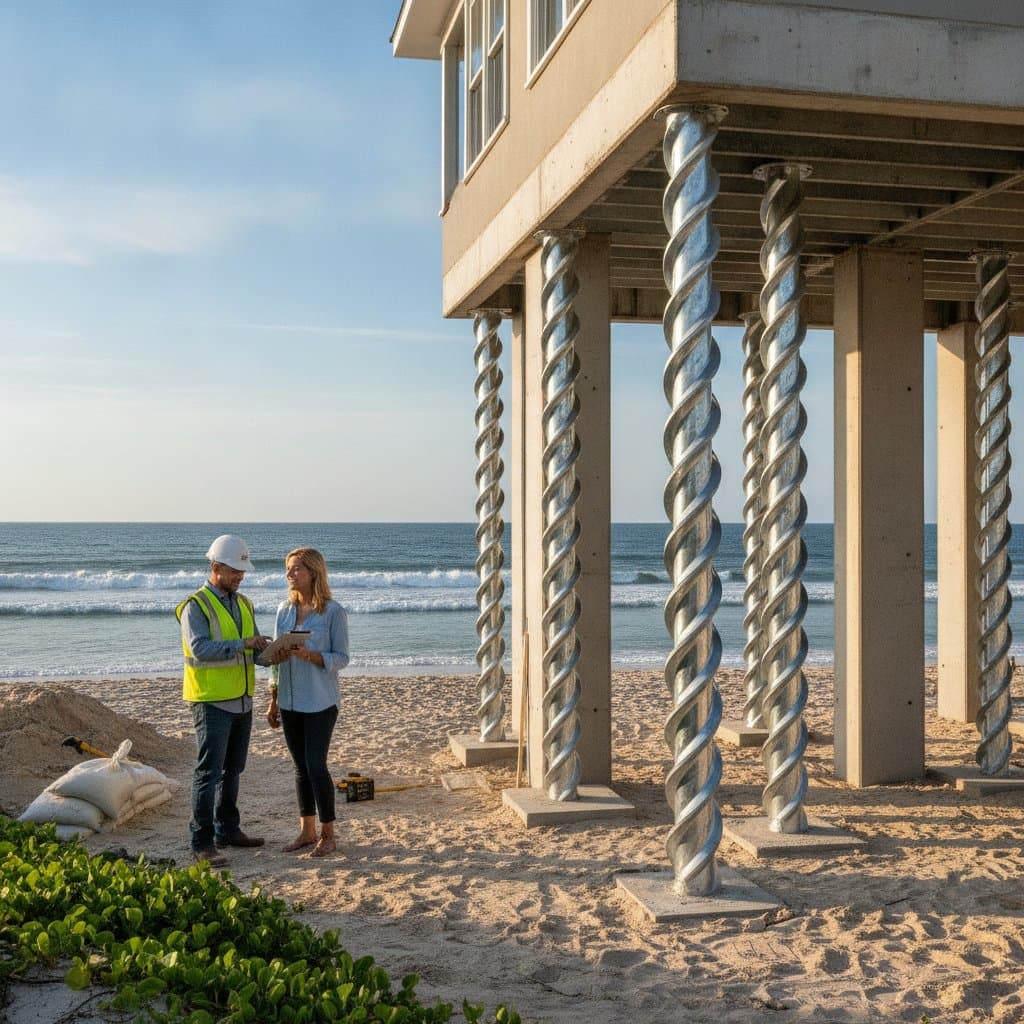
Helical piers consist of steel shafts fitted with helical plates. They are rotated into load bearing strata below loose surface soils.
They reduce costs because excavation stays minimal, installation finishes in hours rather than days, and loading can begin at once. Factory applied coatings resist corrosion in marine air. Coastal projects commonly report savings near 30 percent versus deep concrete piles.
Precast Concrete Piers
Factory produced piers arrive ready for placement. Consistent compressive strength and reduced on site forming time make them attractive for compact or modular homes on firmer coastal lots.
Foam Foundation Systems
Structural foam blocks decrease concrete volume and add insulation. Their light weight limits soil disturbance, which suits elevated designs in flood zones.
Selection Process
Site specific data guide the final choice.
- Commission a soil report from a geotechnical engineer to establish bearing capacity, water depth, and erosion risk.
- Obtain bids from three or more contractors who have installed the chosen system locally.
- Require line item pricing that separates materials, equipment, labor, and corrosion protection.
- Verify compliance with coastal permits and elevation requirements before signing.
- Weigh initial price against documented service life and warranty terms.
Construction Practices That Protect Savings
Simple design choices and timing further stretch budgets.
Rectangular footprints need fewer piers or footings than irregular shapes. Scheduling outside peak season can secure lower crew rates. Existing concrete may sometimes serve as fill, cutting haul costs. Early application of protective coatings and proper drainage prevents future repairs.
Frequently Asked Questions
What are helical piers and how do they work?
Helical piers transfer structural loads through steel shafts to stable soil layers. The helical plates provide end bearing and resist uplift.
Can helical piers support both new construction and retrofit projects?
Yes. New builds receive piers before framing begins. Existing homes can be lifted and underpinned with minimal landscape disruption.
How much do homeowners typically save?
Reported savings range from 25 to 30 percent versus conventional deep foundations, though final figures depend on soil reports and local labor rates.
Are helical piers considered environmentally preferable?
They disturb less soil and require less concrete than excavated footings, lowering embodied carbon.
What is the expected service life in coastal settings?
Properly specified coatings allow helical piers to perform for several decades. Scheduled inspections confirm continued capacity.
Which permits apply to these systems?
Most jurisdictions require engineered drawings and inspections. Licensed contractors normally manage submissions.
Can different foundation types be combined?
Engineers sometimes pair helical piers with grade beams or foam blocks when soil conditions vary across a site.
Implementing Your Foundation Plan
Begin with soil testing, collect comparable bids, and confirm permit requirements. These steps position any coastal project to achieve lower upfront costs and reliable long term performance.