
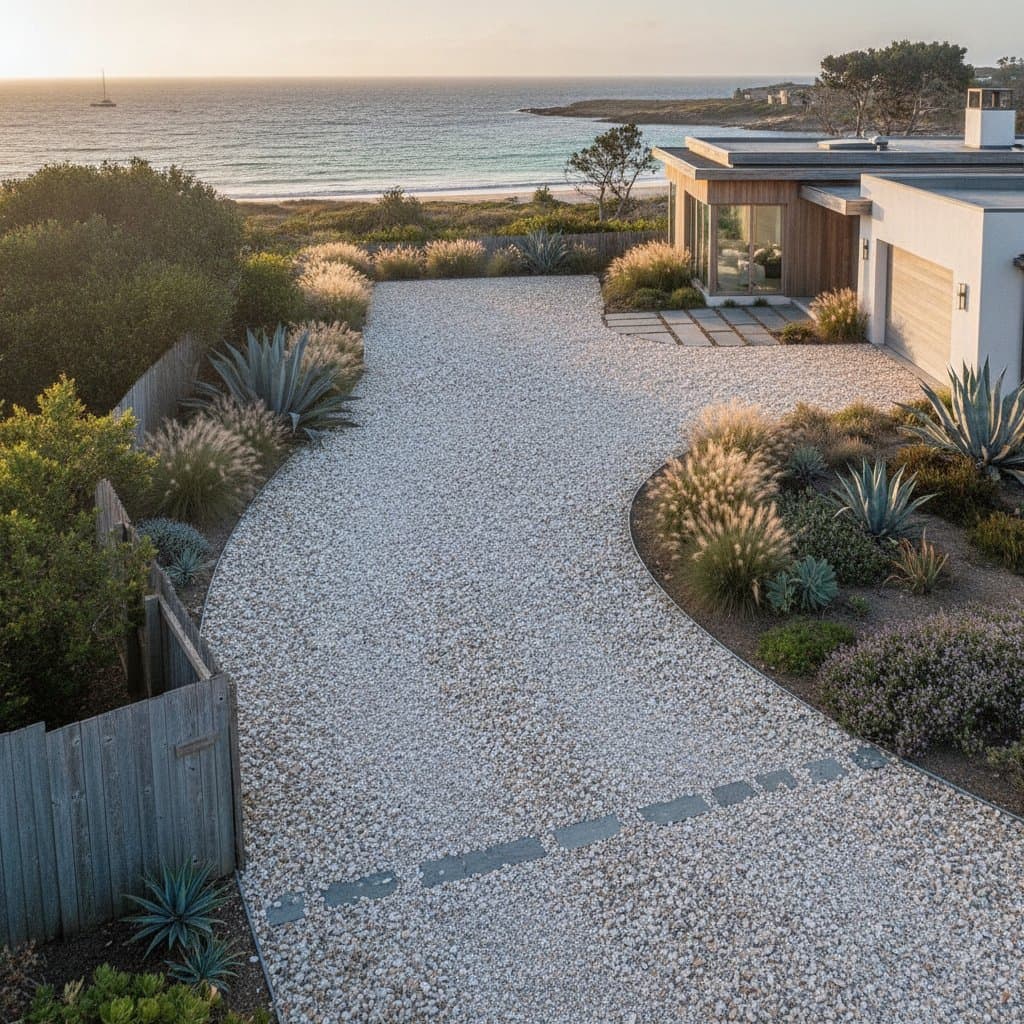
Crushed Shell Driveways Enhance Coastal Homes
Crushed shell driveways offer a natural surface that suits seaside properties. Homeowners select this option to improve curb appeal while supporting sustainable practices. The material creates a bright, textured appearance that blends with beach environments.
Key Advantages
- Serves as an eco-friendly option compared with asphalt or concrete
- Remains affordable with low maintenance after correct installation
- Withstands coastal conditions including salt exposure and erosion
- Reflects sunlight to maintain cooler surface temperatures
- Allows simple renewal by adding fresh layers periodically
This approach combines practicality with visual appeal for properties near the water.
Definition and Composition
A crushed shell driveway consists of cleaned and processed shells from oysters, clams, or scallops. These materials are spread over a prepared base to form a decorative and functional layer. The shells compact over time through use and weather exposure, resulting in a stable surface similar to fine gravel.
The bright texture reflects light effectively and matches surrounding sand and sea tones.
Comparison with Alternative Materials
| Material | Cost per Square Foot | Maintenance Level | Eco-Friendliness | Aesthetic Appeal |
|---|---|---|---|---|
| Crushed Shell | $1.50 - $3.00 | Low | High | Coastal, natural |
| Gravel | $1.00 - $2.50 | Low | Moderate | Rustic, neutral |
| Asphalt | $3.00 - $5.00 | Medium | Low | Traditional, dark |
| Concrete | $4.00 - $8.00 | Medium | Low | Clean, uniform |
| Pavers | $8.00 - $15.00 | Medium | Moderate | Customizable, modern |
Crushed shell surfaces cost about the same as gravel yet provide a lighter appearance suited to coastal settings. They also reduce heat absorption compared with darker asphalt options.
Sustainability Features
Crushed shell driveways support environmental goals through material reuse. Suppliers often obtain shells from seafood processing operations rather than allowing disposal in landfills. The porous structure permits water infiltration that reduces runoff.
Specific Benefits
- Allows rainwater to pass through and filter naturally
- Limits heat buildup around adjacent vegetation
- Draws from regional sources to decrease transport impacts
These qualities appeal to owners focused on responsible property improvements.
Installation Steps
The process follows methods similar to gravel driveway construction. Property owners with basic experience can complete the work or engage professionals for assistance.
- Clear existing material and establish proper grading for drainage.
- Place a base of crushed stone three to four inches deep.
- Secure edging made of wood, metal, or stone to contain the shells.
- Distribute the crushed shells evenly across the prepared area.
- Compact the surface with a roller and apply light water to settle particles.
An additional layer applied after several months improves firmness as natural compaction occurs.
Ongoing Care Practices
Shell driveways require minimal intervention once established. Occasional raking maintains an even surface without specialized equipment.
Regular Tasks
- Redistribute shells to address any uneven areas
- Apply a thin new layer annually to preserve brightness
- Manage weeds through natural barriers or targeted vinegar treatments
- Apply occasional moisture to control dust
The surface strengthens as shells break down and interlock over successive seasons.
Design Approaches
Shell surfaces provide a foundation for coastal landscaping. Pairing them with appropriate plants and borders strengthens the overall effect.
Practical Suggestions
- Select native grasses, succulents, or lavender for drought tolerance
- Define edges with driftwood, cobblestones, or reclaimed timber
- Choose white shells for lighter home exteriors or mixed tones for modern designs
- Install solar lighting to highlight the reflective quality at night
These elements create a cohesive appearance that extends the beach setting onto the property.
Addressing Common Concerns
Durability
Proper installation yields a surface that lasts for years. Compaction through regular use prevents ruts and maintains stability.
Pests and Odors
Reputable suppliers clean shells thoroughly before delivery. This process removes residue that could otherwise cause issues.
Self-Installation
Individuals experienced with gravel projects can follow the same sequence. Attention to base preparation and compaction ensures lasting results.
Weather Performance
The permeable nature handles rainfall effectively. Water drains quickly without pooling or erosion damage.
Color Variations
Oyster and clam shells typically appear white or off-white. Scallop shells introduce pink or tan tones that allow custom combinations.
Planning Your Project
Sourcing materials from nearby suppliers starts the process efficiently. Careful attention to base construction and edging produces a surface that remains attractive with minimal effort. The result delivers both functional access and visual harmony with the coastal surroundings.