
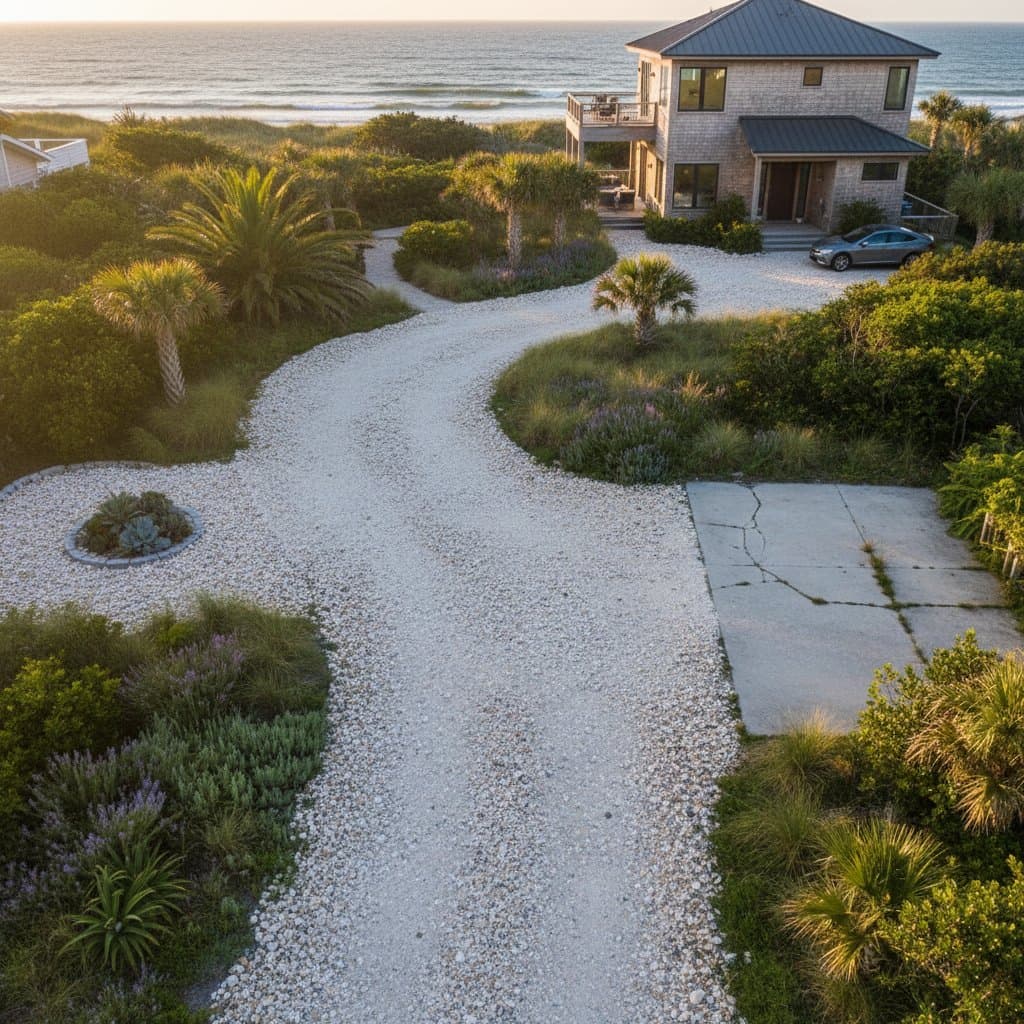
Crushed Shell Driveways: A Sustainable Alternative to Concrete
Coastal homeowners seek durable yet environmentally conscious driveway solutions. Concrete provides reliability but contributes to high carbon emissions during production. Crushed shell driveways emerge as a compelling option, blending aesthetic appeal with ecological advantages suited to seaside settings.
These driveways utilize recycled or sustainably sourced shells, creating permeable surfaces that integrate seamlessly with natural landscapes. Property owners upgrading their exteriors find this choice aligns with modern preferences for low-impact materials.
Average Costs for Crushed Shell Driveways
Installation costs for crushed shell driveways range from $4 to $10 per square foot. Factors such as regional availability and shell variety influence this figure. A typical 600-square-foot two-car driveway totals $2,400 to $6,000, positioning shells as a budget-friendly alternative to concrete, which costs $6 to $12 per square foot.
Shell surfaces promote natural water infiltration, mitigating runoff and erosion risks common in rainy climates. This feature supports groundwater recharge and reduces local flooding potential.
| Driveway Material | Cost per Square Foot | Durability | Maintenance | Environmental Impact |
|---|---|---|---|---|
| Crushed Shells | $4–$10 | Moderate | Low to Moderate | Very Low |
| Concrete | $6–$12 | High | Low | High |
| Asphalt | $5–$9 | High | Moderate | High |
| Gravel | $3–$8 | Moderate | Moderate | Low |
Costs by Shell Type
Shell selections vary in color, grain, and expense, allowing customization to match architectural themes. Oyster, clam, and scallop shells represent popular choices, each delivering distinct visual and functional qualities.
Oyster shells form dense, resilient layers ideal for high-traffic areas. Clam shells introduce coarser textures for added visual interest in less demanding zones.
| Shell Type | Installed Cost per Square Foot | Appearance | Texture | Durability |
|---|---|---|---|---|
| Oyster Shells | $4–$7 | White-gray | Fine, compact | High |
| Clam Shells | $5–$9 | Off-white | Coarse | Moderate |
| Scallop Shells | $6–$10 | Bright white | Smooth | Moderate |
Labor and Installation Expenses
Labor constitutes 40 to 50 percent of overall expenses. Professionals handle site grading, base compaction, and shell layering to achieve optimal stability and drainage. Labor rates average $2 to $4 per square foot.
A well-executed installation endures 10 to 15 years under routine care. This longevity offsets initial outlays through minimal ongoing interventions.
Key Factors Affecting Total Costs
Project pricing depends on multiple elements that homeowners should evaluate during planning.
- Shell sourcing: Proximity to suppliers lowers expenses; distant imports raise them.
- Driveway dimensions and contours: Irregular designs demand extra effort and resources.
- Soil conditions: Inadequate drainage may necessitate supplemental gravel or sand bases.
- Transport charges: Bulk shipments often incur delivery fees based on distance traveled.
- Regulatory compliance: Coastal areas might enforce permits or sourcing restrictions.
Strategies to Lower Crushed Shell Driveway Costs
Homeowners can implement targeted approaches to manage budgets effectively.
- Purchase bulk quantities from regional providers to secure volume discounts.
- Perform preliminary site clearing and leveling to minimize professional labor hours.
- Combine shells with economical gravel aggregates for hybrid durability at reduced cost.
- Schedule periodic raking and replenishment to extend surface life without major repairs.
- Prioritize locally harvested shells to cut shipping expenses and support sustainability.
DIY Installation Versus Professional Services
Crushed shell driveways appear straightforward for self-installation, yet achieving a professional-grade result requires expertise in base preparation and layering. DIY efforts suit small-scale projects like garden paths, where imperfections prove less noticeable. However, vehicle-supporting driveways benefit from hired specialists who ensure even compaction and long-term performance.
Professionals assess soil types, recommend appropriate shell depths, and integrate edging to prevent material migration. While DIY saves on labor, errors such as uneven bases can lead to premature wear and higher corrective costs.
Mistakes to Avoid in Crushed Shell Driveway Projects
Steer clear of these pitfalls to safeguard investment and functionality.
- Omitting a compacted gravel sub-base, which allows shells to settle unevenly over time.
- Applying insufficient shell depth, resulting in ruts from vehicle passage.
- Forgoing perimeter edging, causing shells to spread into adjacent areas.
- Disregarding site grading, which invites water pooling and material displacement.
- Bypassing permit checks, potentially incurring fines in regulated zones.
Frequently Asked Questions on Crushed Shell Driveways
Do Crushed Shell Driveways Need Permits?
Residential installations rarely demand special permits, though coastal regulations or zoning laws may apply. Consult local authorities to confirm requirements and avoid compliance issues.
What Is the Lifespan of a Crushed Shell Driveway?
Properly built surfaces last 10 to 15 years with occasional upkeep. Resurfacing restores appearance and integrity as needed.
Do Crushed Shells Produce Odors?
Newly placed shells may emit a faint scent that dissipates upon compaction and exposure. Opt for pre-washed varieties to eliminate this concern from the outset.
Are Crushed Shell Driveways Slippery in Wet Weather?
Compacted installations offer reliable footing, forming a firm crust that resists sliding. This trait enhances safety during coastal rains.
Can Crushed Shells Support Heavy Vehicles?
Standard setups accommodate passenger cars and light trucks over a reinforced base. For heavier loads, incorporate deeper gravel layers to bolster strength.
How Should You Maintain a Crushed Shell Driveway?
Rake periodically to even out the surface and address depressions. Reapply a light shell layer every two to three years to preserve depth and aesthetics.
Enhancing Longevity and Appeal of Your Shell Driveway
Regular maintenance preserves the driveway's charm and functionality, ensuring it complements your coastal home for years. Integrate seasonal inspections to address wear early, and consider complementary landscaping to amplify the natural vibe. This approach not only sustains value but also reinforces your commitment to eco-conscious living.