
Understanding Coastal Deck Resurfacing Expenses in 2026
Coastal environments expose decks to salt-laden air, persistent moisture, and intense sunlight. These elements cause surfaces to deteriorate through fading, cracking, and peeling. Resurfacing restores functionality and appearance while preserving the underlying structure, offering a practical alternative to complete replacement. This guide details costs, influencing factors, and strategies to manage expenses effectively for 2026 projects.
Key Project Insights
- Average resurfacing cost: $8 to $25 per square foot
- Typical total expense: $2,000 to $12,000
- Primary influences: size, materials, labor rates, and environmental exposure
- Recommended materials: composite, pressure-treated lumber, exotic hardwoods
- Common error: neglecting preparation or protective sealing
- Budgeting advice: allocate 15 to 20 percent extra for delays or unforeseen issues
Defining Deck Resurfacing
Resurfacing replaces worn surface boards while retaining the existing frame. This approach suits decks with stable foundations but damaged tops. In seaside locations, the process incorporates specialized treatments such as removing salt buildup, applying moisture barriers, and installing rust-resistant hardware.
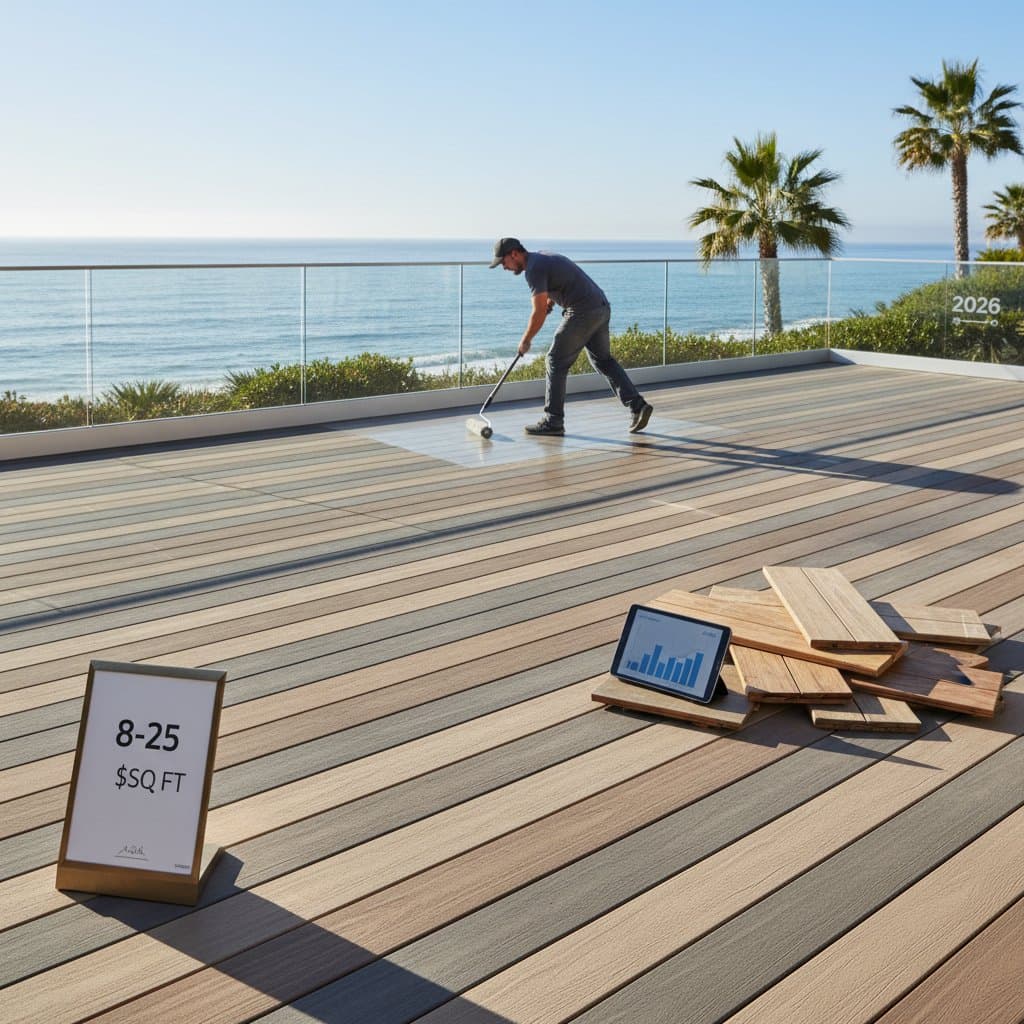
Image description: A brightly lit coastal deck featuring composite materials with an ocean view.
Indicators for Resurfacing
Opt for resurfacing when the following conditions apply:
- The frame remains structurally sound.
- Surface elements exhibit splintering, warping, or discoloration.
- An aesthetic refresh is desired without full reconstruction expenses.
- Enhanced resistance to local weather patterns is necessary.
Structural concerns like rotting posts or compromised joists signal the need for total replacement to ensure safety and longevity.
Cost Breakdown for Coastal Resurfacing
Homeowners in coastal areas face resurfacing expenses of $8 to $25 per square foot on average. Labor constitutes the largest portion, particularly in regions with elevated demand and expertise requirements.
| Deck Size | Pressure-Treated Wood | Composite | Premium Hardwood |
|---|---|---|---|
| 200 sq. ft. | $1,600 - $4,000 | $3,000 - $5,000 | $4,000 - $6,000 |
| 400 sq. ft. | $3,200 - $8,000 | $6,000 - $10,000 | $8,000 - $12,000 |
| 600 sq. ft. | $4,800 - $12,000 | $9,000 - $15,000 | $12,000 - $18,000 |
Obtain quotes from at least three certified contractors experienced in marine-influenced builds. Their knowledge of salinity and humidity impacts ensures durable outcomes.
Factors Influencing Expenses
Deck Dimensions and Design
Expenses scale with area, though per-square-foot rates may decline for larger projects. Intricate designs, including multi-tiered structures or integrated features, extend installation time and costs.
Material Options
Selections vary significantly in initial outlay and endurance.
- Pressure-treated wood ranges from $8 to $12 per square foot installed and demands periodic sealing to combat corrosion and discoloration.
- Composite materials cost $12 to $20 per square foot, providing resistance to water, UV rays, and pests ideal for waterfront settings.
- Exotic hardwoods such as ipe or teak command $20 to $25 per square foot, delivering superior aesthetics and resilience.
Image description: Detailed view of composite boards secured with concealed fasteners.
Labor Expenses
Workforce charges represent 40 to 60 percent of the total. Specialists in coastal work apply premiums for their skills, coverage needs, and variable schedules, typically $4 to $10 per square foot.
Preparation and Fixes
Initial assessments involve frame checks, hardware replacements, and surface smoothing. Salt-induced damage to supports may incur additional $300 to $1,000 for reinforcements.
Regulatory and Waste Fees
Local codes may mandate permits for modifications. Removing old materials adds $100 to $400, influenced by site access and debris quantity.
Material Comparison for Seaside Applications
| Material | Installed Cost (per sq. ft.) | Expected Lifespan | Upkeep Level | Saltwater Resistance |
|---|---|---|---|---|
| Pressure-Treated Wood | $8 - $12 | 10-15 years | High | Moderate |
| Composite | $12 - $20 | 20-30 years | Low | Excellent |
| PVC | $15 - $22 | 25-30 years | Very Low | Excellent |
| Tropical Hardwood | $20 - $25 | 25+ years | Moderate | Very High |
Prioritize composite or PVC for properties near the sea, as they minimize ongoing expenses through inherent durability.
Professional Installation Versus Self-Installation
Self-guided efforts appeal to those seeking cost savings and involvement. However, seaside conditions complicate execution, favoring expert intervention.
Advantages of Self-Installation
- Reduced labor expenditures
- Sense of accomplishment and customization
- Adjustable pacing
Drawbacks of Self-Installation
- Potential for inadequate protection or securement
- Hazards associated with heights and marine proximity
- Absence of guarantees
Professionals deliver comprehensive sealing, appropriate materials, and adherence to standards, yielding reliable results for coastal properties.
Strategies for Effective Budgeting
Structured planning mitigates unexpected outlays. Follow these steps:
- Schedule a detailed evaluation to uncover concealed deterioration.
- Reserve 15 to 20 percent for contingencies such as structural interventions.
- Evaluate materials based on durability to optimize lifetime value.
- Time the project for favorable conditions to avoid humidity-related setbacks.
Image description: Professional examining deck supports along the coast.
Avoiding Costly Errors
Minor lapses can escalate future expenditures. Steer clear of these issues:
- Omitting protective coatings, which hastens saltwater degradation.
- Selecting standard fasteners; opt for stainless steel variants.
- Overlooking airflow, which promotes trapped dampness and frame weakening.
- Prioritizing appearance over functionality; select hues that withstand solar exposure.
Maintenance Practices for Lasting Performance
Post-resurfacing routines preserve condition:
- Flush with freshwater monthly to clear salt accumulations.
- Apply sealant to wooden surfaces annually or biennially.
- Wash synthetic decks using gentle detergent and a non-abrasive tool.
- Conduct yearly reviews for instability or corrosion.
Consistent attention safeguards investments and sustains usability.
Maximizing Value from Your Resurfaced Deck
A revitalized deck enhances outdoor enjoyment, from dawn views to evening gatherings amid coastal winds. Select enduring materials and expert execution to secure enduring appeal and protection. Consult regional specialists, assess options thoroughly, and align choices with daily needs for a resilient addition to your property.