
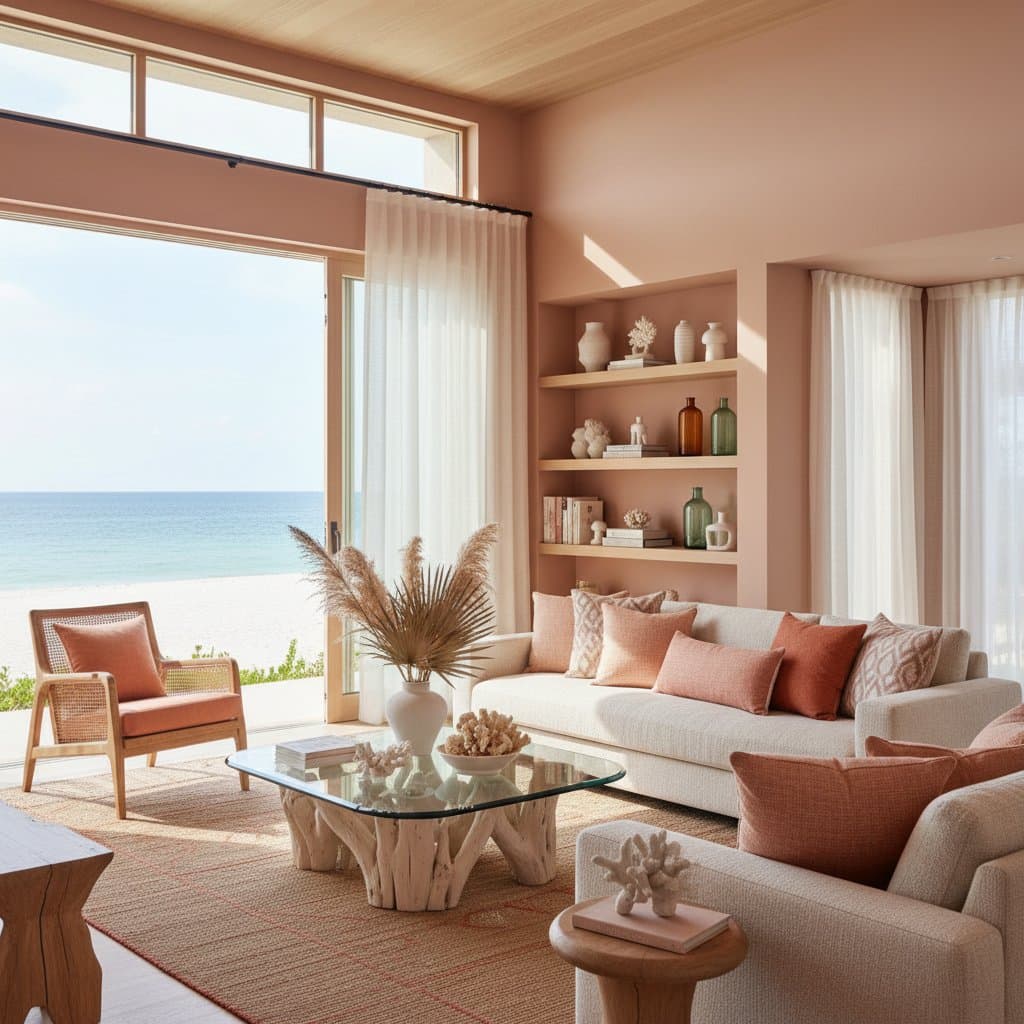
Coral Hues Reviving Beach House Interiors in 2026
Coastal homes capture sunlight, sand, and serenity, yet a fresh design movement introduces warmth and vitality to beach house interiors. Coral hues, drawn from undersea reefs and sunset glows, reshape coastal color schemes. This shift moves past cool blues and crisp whites, introducing depth, warmth, and character while preserving the inherent tranquility of coastal aesthetics.
For those refreshing a beach house interior, coral tones provide an inspiring equilibrium of refinement and whimsy. This guide examines coral's influence on coastal residences, suggests optimal applications, identifies complementary shades, and outlines methods to craft enduring designs that resonate with modernity and oceanic ties.
Why Coral Emerges as a Coastal Staple
Coral occupies a position between orange, pink, and peach within the color spectrum. It summons tropical energy alongside gentle seaside peace. Distinct from stark pink or intense orange, coral appears organic in sunlight and aligns with textures in coastal elements like driftwood, seagrass, linen, and shells.
Designers employ coral to introduce warmth into interiors dominated by neutrals. It connects minimalist white arrangements with demands for individuality. Coral serves as a focal color or understated highlight, based on its deployment. Such flexibility suits contemporary beach houses and classic cottages alike.
Emotional Resonance
Coral tones foster instant comfort and positivity. They channel the radiance of a coastal sunset into domestic settings. In communal areas, coral promotes social interaction and ease. In sleeping quarters, it imparts gentleness and repose. For culinary and dining zones, coral sparks dialogue and enhances sensory appeal without intensity.
Adaptability Across Design Aesthetics
Coral integrates seamlessly with diverse styles. It harmonizes with bohemian coastal arrangements, sleek minimalism, or timeless Cape Cod motifs. When combined with organic components such as rattan, bamboo, or natural stone, coral conveys stability and perpetuity. Paired with metallic accents, it projects a current and polished vibe.
Optimal Coral Shades for Beach Residences
Coral manifests in diverse intensities, from faint blushes to profound reef-evoking reds. Selection hinges on illumination levels, spatial dimensions, and individual preferences. The following table contrasts favored coral variants for coastal interiors.
| Coral Shade | Description | Best Used In | Ideal Pairings |
|---|---|---|---|
| Soft Blush Coral | Gentle pink infused with orange | Bedrooms, bathrooms | Ivory, sand, muted aqua |
| Sunset Coral | Warm, equilibrated mid-tone | Living rooms, kitchens | White, seafoam, brass |
| Reef Coral | Vibrant with red undertones | Accent walls, art pieces | Teal, gray, driftwood |
| Peach Coral | Light and ethereal, faintly yellow | Entryways, ceiling details | Cream, sage, woven textures |
| Deep Coral | Rich and assertive for impactful areas | Dining rooms, statement furniture | Navy, beige, gold |
Each variant narrates a unique aspect. Soft blush corals amplify ambient light, whereas deep corals impart form and assurance. The essence lies in achieving equilibrium that enhances coastal environs rather than rivaling them.
Strategic Integration of Coral in Indoor Spaces
Effective incorporation of coral demands deliberate positioning. The aim centers on generating warmth while upholding the tranquil essence of beach dwellings.
Accent Walls and Ceilings
A coral accent wall revitalizes a neutral expanse. Position it behind seating, bed headboards, or display shelves. For an innovative element, apply a subdued coral coating to the ceiling, allowing subtle interplay with daylight.
Furniture and Upholstery
Renewing seating or lounges with coral textiles introduces dimension and opulence. Fabrics like linen, cotton, or velvet in coral variants deliver ease and sophistication. Combine coral-upholstered pieces with neutral surroundings and natural adornments for cohesion.
Accessories and Artwork
For minimal investment, coral items such as cushions, vessels, or mounted illustrations invigorate a space promptly. Select coral accents to lend purpose and curation to pale or neutral rooms.
Kitchens and Dining Areas
Coral cabinet fronts or tile backsplashes energize kitchen settings. When restricted to base units and offset by white overheads, coral conveys polish and cheer. In dining spaces, coral-toned textiles or suspended fixtures cultivate an hospitable mood.
Harmonizing Coral with Coastal Neutrals
Effective coastal composition relies on equilibrium. Coral excels alongside cool and terrestrial neutrals.
- White and cream maintain brightness and expansiveness.
- Sandy beige echoes beachside earth tones.
- Soft blue or aqua reinforces oceanic bonds.
- Gray or charcoal anchors coral with contemporary edge.
- Natural wood infuses warmth and tactility into coral schemes.
These combinations yield a multifaceted appearance that soothes and animates.
Strategies for Enduring Coral Applications
Design trends shift, yet coral endures through judicious use. Refrain from saturating environments. Position coral as the connector between subdued and vivid palettes. To ensure lasting appeal:
- Employ coral primarily as an accent over a prevailing hue.
- Select materials that mature elegantly, including linen, rattan, or salvaged wood.
- Leverage natural illumination to temper coral shades across daily cycles.
- Rotate accessories periodically to renew aesthetics sans structural changes.
DIY Approaches Versus Professional Expertise
Applying coral to walls or enhancing decor proves fulfilling for personal endeavors. Nevertheless, for extensive alterations like cabinet restoration or bespoke upholstery, professional involvement guarantees accuracy and resilience.
DIY Advantages:
- Reduced expenses for minor modifications
- Autonomy in creative decisions
- Swift implementation for renewals
Professional Advantages:
- Immaculate results on intricate surfaces
- Availability of premium designer resources
- Specialized guidance on hue coordination and illumination
Most residents benefit from hybrid methods: personal efforts for highlights and accents, expert assistance for structural or substantial painting tasks.
Pitfalls to Sidestep in Coral Implementation
Even an appealing hue like coral risks diminishing if mishandled. Steer clear of these errors:
- Excessive coral deployment that dominates the area
- Combining multiple vivid colors absent a neutral foundation
- Overlooking ambient light, which shifts coral's appearance significantly
- Bypassing trial samples, resulting in incongruent shades post-application
- Opting for unsuitable sheens, like excessive gloss in laid-back coastal contexts
Applying test swatches across varied surfaces prior to commitment averts expensive discrepancies.
Frequently Addressed Queries on Coral Interiors
What Positions Coral as Suited for Coastal Homes?
Coral reflects authentic seaside elements such as shells and dusk skies. It aligns with sandy neutrals and marine blues, forging unified and appealing surroundings.
Does Coral Suit Compact Spaces?
Indeed. Gentle or peach-inflected corals illuminate confined areas without density. When allied with white edging, they expand the perception of size and luminosity in smaller domains.
Embracing Coral: Infusing Coastal Warmth
Coral hues elevate beach house living by merging vibrancy with serenity. Through thoughtful integration, these tones craft spaces that honor oceanic roots while embracing contemporary allure. Homeowners discover renewed joy in sunlit interiors that evolve gracefully with the tides.