
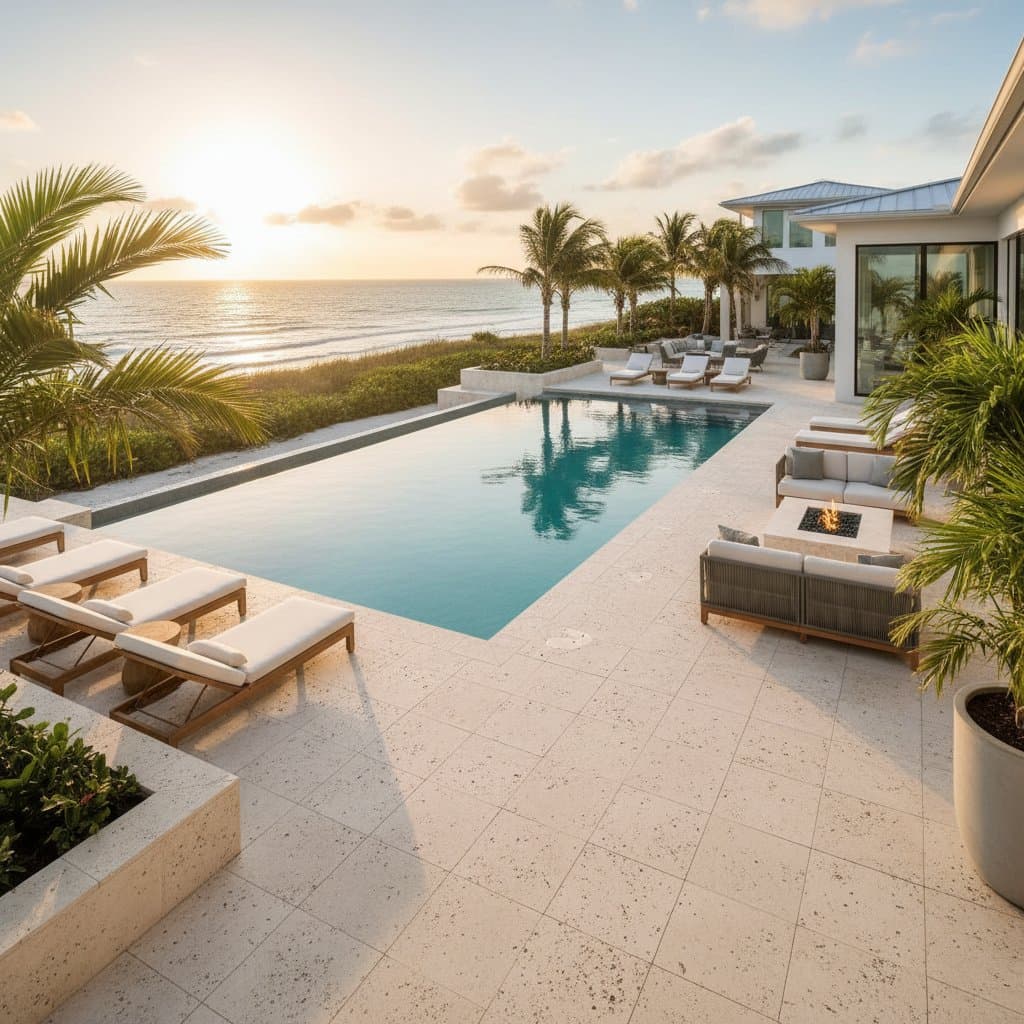
Coral Stone Pool Decks Stay Cool in Florida Heat
Florida's intense sunlight and high humidity demand outdoor materials that withstand the elements while providing comfort. Coral stone emerges as an ideal choice for pool decks in this environment. This natural limestone, quarried from coastal regions, offers a unique texture and color that complements tropical landscapes.
Homeowners appreciate coral stone for its ability to remain cooler than traditional concrete or pavers under direct sun. The material's porous structure allows heat to dissipate quickly, ensuring bare feet stay comfortable during summer afternoons. In addition, its rugged surface provides excellent traction, reducing the risk of slips around wet pool areas.
Understanding Coral Stone as a Pool Deck Material
Coral stone forms from ancient marine deposits, resulting in a durable limestone with fossil-like patterns. Available in hues of beige, tan, and gray, it blends seamlessly with Florida's natural surroundings. Unlike synthetic options, this stone ages gracefully, developing a patina that enhances its appeal over time.
The material's density makes it resistant to cracking under temperature fluctuations common in subtropical climates. It also repels salt spray from nearby oceans, preventing erosion that affects lesser materials. For pool decks, thicknesses typically range from one to two inches, installed over a stable base for longevity.
Professionals recommend sourcing coral stone from reputable suppliers to ensure quality and consistency. Variations in color and texture add character, but uniform slabs prevent uneven wear. This attention to detail ensures the deck serves as a functional and aesthetic centerpiece for outdoor living.
Key Benefits for Florida's Coastal Conditions
One primary advantage lies in coral stone's thermal properties. While dark pavers can reach scorching temperatures, coral stone absorbs less heat due to its light color and composition. Studies show surface temperatures remain up to 20 degrees Fahrenheit lower than concrete in peak sun, based on material testing in similar climates.
Slip resistance stands out as another critical feature. The stone's natural pitting and ridges grip footwear and bare skin effectively, even when wet. This quality meets safety standards for pool surroundings, where accidents pose significant risks.
Durability against moisture and salt defines its suitability for Florida homes. The stone resists absorption of pool chemicals and seawater, maintaining integrity for decades. Homeowners report decks lasting 25 years or more with minimal intervention, far outpacing wood or basic tile alternatives.
Environmental benefits include its eco-friendly profile. As a natural product, coral stone requires no manufacturing processes that emit high levels of carbon. It supports sustainable landscaping by allowing water permeability, which aids in groundwater recharge during heavy rains.
Installation Process and Cost Considerations
Installing a coral stone pool deck begins with site preparation. Contractors excavate the area to a depth of four to six inches, then compact a gravel base for stability. A layer of sand or mortar follows to level the surface before laying the stones.
Workers cut and fit pieces tightly, using polymeric sand to fill joints and prevent shifting. The process typically takes three to five days for a standard 500-square-foot deck, depending on complexity. Sealing the stone afterward protects against stains and enhances color vibrancy.
Costs vary based on factors like stone quality, labor rates, and deck size. Expect to pay between 12 and 25 dollars per square foot, including materials and installation. High-end options with custom cuts or intricate patterns may reach 30 dollars per square foot.
Budget-conscious homeowners can save by opting for irregular shapes over uniform tiles. Professional quotes often include warranties of five to ten years, providing peace of mind. Financing options through contractors make this upgrade accessible for many.
- Assess the site for drainage and levelness.
- Select stone thickness suitable for foot traffic.
- Hire certified installers familiar with local codes.
- Plan for sealing every two years to maintain appearance.
Design Ideas to Enhance Outdoor Spaces
Incorporate coral stone into broader landscape designs for maximum impact. Pair it with native plants like sea grapes or palms to create a seamless coastal vibe. Curved edges around the pool soften the look, inviting relaxation.
Mix textures by bordering the deck with glass tiles or wood accents for contrast. Built-in seating or fire pits integrated into the stone add functionality without cluttering the space. Lighting fixtures embedded in the material illuminate evenings safely.
Consider patterns such as herringbone or random ashlar for visual interest. These layouts distribute weight evenly and enhance flow from patio to pool. Designers suggest keeping open areas for lounging while defining pathways with subtle borders.
For smaller yards, focus on modular sections that expand as needed. This approach allows phased installation, aligning with renovation timelines. Always prioritize shade elements like pergolas to extend usability year-round.
Maintenance Tips for Longevity
Routine care keeps coral stone looking pristine with little effort. Sweep debris regularly to avoid grit buildup that could scratch the surface. Hose down the deck weekly to rinse away chlorine residue or pollen.
Apply a penetrating sealer annually to shield against UV rays and stains. Choose products designed for natural stone, avoiding harsh chemicals that might etch the material. For deeper cleans, use a mild soap solution and soft brush.
Address weeds in joints promptly by pulling them out and re-sanding as needed. In hurricane-prone areas, inspect for loose pieces after storms and secure them immediately. These steps ensure the deck remains safe and attractive through seasons.
Professional inspections every few years detect issues early, such as settling or efflorescence. Most maintenance costs under 500 dollars yearly, a fraction of replacement expenses. This investment preserves both beauty and value.
Elevating Tropical Living with Coral Stone
Choosing coral stone for a pool deck transforms ordinary backyards into luxurious retreats. The material's cool touch, enduring strength, and elegant finish align perfectly with Florida's lifestyle demands. Homeowners gain not only practical benefits but also a timeless enhancement to property appeal.
Real estate experts note that such upgrades can increase home values by 5 to 10 percent in coastal markets. The low ongoing costs and high satisfaction rates make it a worthwhile choice. Embrace coral stone to enjoy summers comfortably and stylishly.