
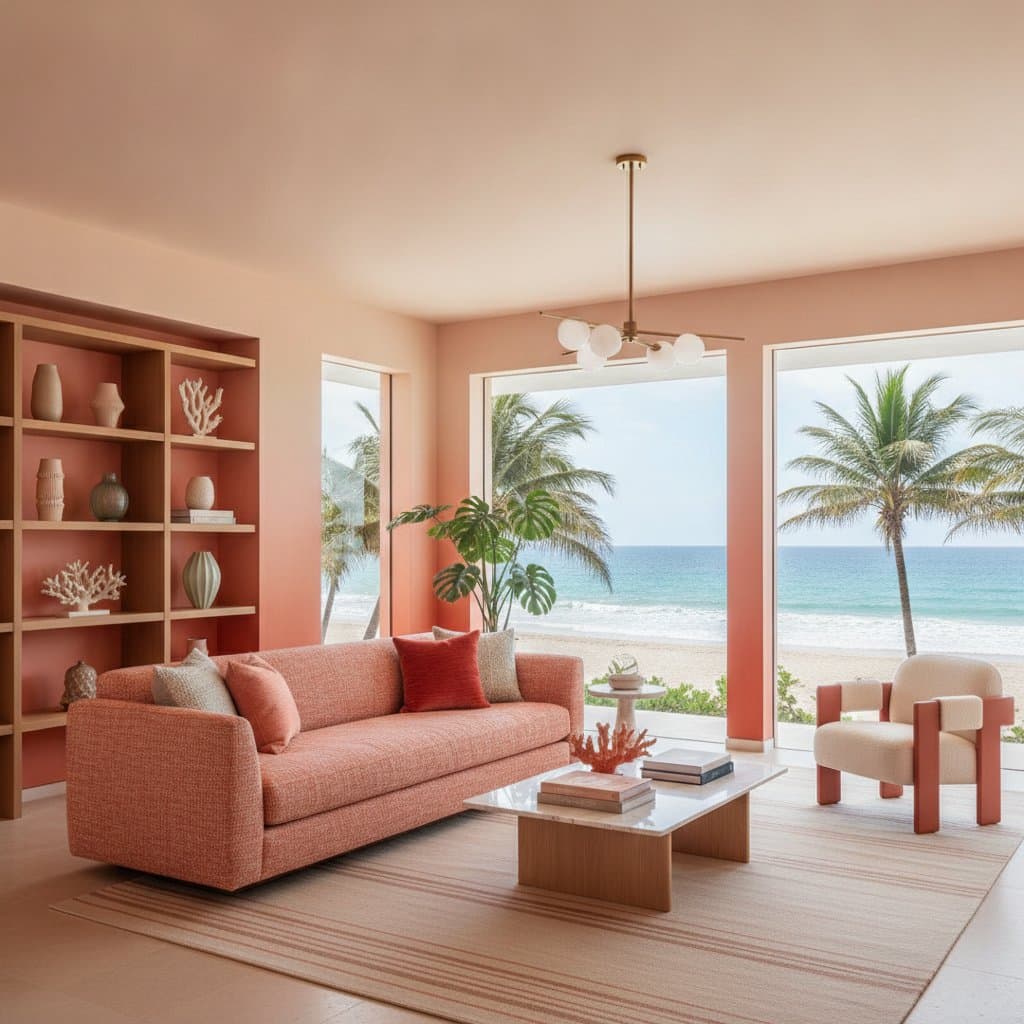
2026's Hottest Beach Home Color Trend: Coral Palettes
Beach homes reflect the easy rhythm of coastal living. Color trends shape their character in distinct ways. For the upcoming design season, coral palettes are taking center stage. Homeowners embrace this versatile hue for its warmth, ocean connection, and ability to refresh interiors as well as exteriors.
Coral spans a spectrum from soft peach pink to deep orangey reds. Each tone recalls sunlight, shells, and the gentle vibrance of coastal life. If you plan to refresh your beach home, coral inspired design delivers a modern, inviting, and timeless result. This guide explains the trend, shows effective applications, and outlines budget friendly approaches.
Why Coral Leads Beach Home Design
Coral balances warmth from red with calm from pink and brightness from orange. The resulting tone energizes spaces while remaining welcoming. This quality suits the relaxed luxury of coastal living. Designers favor coral because it pairs readily with neutrals such as white, beige, and driftwood gray. It also complements bolder tropical shades like turquoise or emerald.
Beach homeowners select coral for three primary reasons. First, the color feels organic and echoes sea life, sunsets, and sandy shores. Second, warm tones lift energy and mood in open, light filled spaces. Third, coral works indoors and outdoors on siding, shutters, accent walls, and fabrics.
The Psychology Behind Coral
Color psychology influences home design choices. Coral conveys optimism and creativity. In a living room it encourages conversation. In a bedroom it promotes comfort and joy. Used in moderation, coral produces a lively yet soothing effect that supports the renewal beach homes often represent.
Designers group coral shades into three main families.
| Coral Type | Tone Description | Best Use | Emotional Effect |
|---|---|---|---|
| Soft Coral | Light pink orange, airy and subtle | Bedrooms, bathrooms | Calming, romantic |
| True Coral | Balanced pink red with warmth | Living rooms, kitchens | Cheerful, social |
| Deep Coral | Bold reddish orange | Exterior accents, statement walls | Confident, dynamic |
Layering these tones adds depth and dimension throughout a home.
Strategic Placement for Coral in Beach Homes
Coral offers flexibility, yet placement determines success. Strategic use preserves harmony and avoids overstimulation.
Exterior Paint and Trim
A coral front door or set of shutters raises curb appeal immediately. For full exteriors, pair coral siding with crisp white trim and pale blue accents. Lighter shades such as peach or salmon perform well in sun drenched coastal areas because they fade gracefully.
Living Rooms
Coral walls or accent furniture bring life to living spaces. Combine coral with light rattan furniture, woven baskets, and cream upholstery to achieve a natural coastal atmosphere.
Kitchens
Coral cabinetry or backsplash tiles introduce a modern note to traditional coastal kitchens. Pair these elements with brass or matte black hardware for contrast.
Bedrooms
Muted coral tones on bedding or wall art create a tranquil retreat. Complement them with whitewashed wood or seafoam green accessories.
Outdoor Spaces
Coral cushions, planters, or umbrellas form inviting outdoor lounges. The color contrasts attractively with ocean views or sandy landscapes.
Material and Finish Options
Finish selection affects how coral appears under varying light. Glossy finishes heighten warmth, while matte textures produce a relaxed, beach worn appearance.
| Material | Coral Finish Option | Maintenance Level | Cost Range (per sq. ft.) |
|---|---|---|---|
| Paint | Matte or satin coral walls | Low | 2 to 6 |
| Tile | Glazed coral ceramic backsplash | Medium | 8 to 20 |
| Fabric | Coral linen or cotton upholstery | Medium | 15 to 40 |
| Wood Stain | Coral tinted wash on driftwood | Low | 3 to 10 |
Prices differ by region, quality, and labor. Request at least three quotes before beginning any project.
Budget Ranges for Coral Projects
Project costs depend on size and scope.
| Project Type | Typical Budget Range | Description |
|---|---|---|
| Accent Redesign | 300 to 1,500 | Wall paint, pillows, and minor decor |
| Room Refresh | 2,000 to 6,000 | Paint, furniture accents, and lighting |
| Full Interior Upgrade | 10,000 to 25,000 | Multiple rooms, new materials, and coordinated decor |
| Exterior Repaint | 4,000 to 8,000 | Siding, shutters, and trim |
Labor typically accounts for roughly 60 percent of total cost when repainting an entire home.
Elements That Affect Total Cost
Several factors influence a coral redesign budget. These include home or room size, material quality, local labor availability, surface preparation needs, color combination complexity, primer or coat requirements, and any furniture replacements. Careful planning and clear contractor communication help maintain budget control.
Cost Saving Approaches
Professional coastal results remain achievable without excess spending. Begin with accent walls to test coral before committing to larger surfaces. Handle straightforward painting tasks yourself to reduce labor expenses. Stretch paint budgets by using coral selectively alongside whites and beiges. Refinish existing furniture with coral paint or fabric rather than purchasing new pieces. Always order samples to prevent costly mismatches.
DIY Compared With Professional Help
Each approach carries advantages.
| Task | DIY Feasibility | Professional Advantage |
|---|---|---|
| Accent Wall Painting | High | Saves money when time and skill exist |
| Custom Cabinetry Finishing | Low | Ensures smooth finishes and durability |
| Exterior Painting | Moderate | Manages ladders, prep work, and weatherproof coatings |
| Decor Coordination | High | Allows personal flair and creative freedom |
Professionals deliver precision and lasting quality, especially on large or prominent areas.
Mistakes That Undermine Results
Overuse of coral overwhelms spaces. Balance the color with white, sand, or gray. Coral shifts tone under different lighting conditions, so test samples in both natural and artificial light. Skip primer only at the risk of weak color depth. Warm corals clash with cool based neutrals, therefore match undertones carefully. Sun exposure fades coral paints, so select UV resistant finishes for extended performance.
Answers to Common Coral Design Questions
Coral can make small spaces feel cozy. When balanced with light neutrals, however, it preserves an open and airy feel. Lighter coral shades reflect more light in compact rooms.
White, sand, aqua, sage, and driftwood gray rank among the strongest pairing choices. These neutrals ground the palette while allowing coral to stand out.
Minimalist settings accommodate coral as a single accent against crisp white backgrounds. The color adds warmth without introducing clutter.
High quality exterior finishes last seven to ten years depending on exposure and maintenance. Weatherproof coatings and annual surface inspections extend this lifespan.
Fresh, balanced coastal palettes attract more buyers. Tasteful coral use signals energy and care, which supports perceived value.
Applying Coral to Coastal Spaces
Select one coral family that matches the room function and desired mood. Test samples on site, then layer supporting neutrals and textures. Maintain consistent undertones across materials. Schedule regular maintenance checks to preserve vibrance. These steps produce a cohesive, enduring coastal environment.