
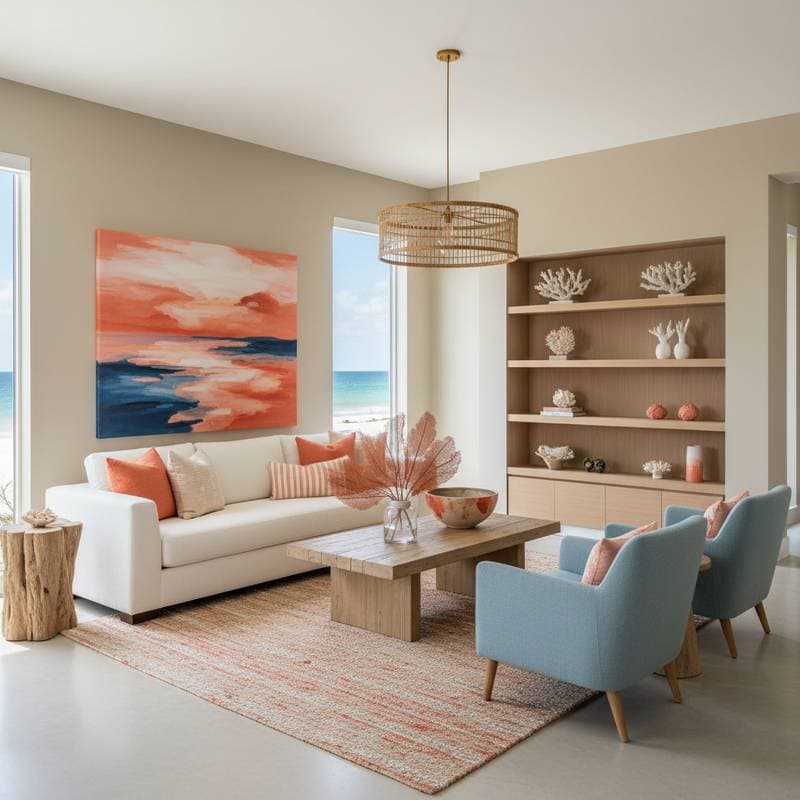
How Coral Colors Are Revolutionizing Beach Home Interiors
Soft pink-orange shades known as coral are reshaping coastal living spaces across regions like La Jolla, Pacific Beach, and Coronado. Once limited to accents, these tones now anchor entire rooms in beach homes, fulfilling a yearning for warm, nature-evoking designs that merge seaside essence with modern ease. Homeowners select coral to infuse light, vitality, and coziness into sun-drenched environments.
A palette centered on coral fosters a deeper bond with ocean vistas and evening skies. Applied to walls, upholstery, or accessories, it delivers adaptability and character. This piece examines the surge in coral's appeal, effective application methods, and ideal pairings for coastal settings.
Ideal Applications for Coral in Beach Homes
Coral adapts seamlessly to various intensities, serving as a focal point or understated element. Balance remains essential; pair it with neutrals or cooler shades to achieve equilibrium.
Living Areas
In living spaces, apply coral to a single feature wall, scatter it across cushions, or weave it into floor coverings. Combine with crisp white moldings and reclaimed wood pieces for an airy seaside ambiance. Subtle coral fabrics on seating or window treatments illuminate the area while preserving restraint.
Kitchen and Dining Zones
Introduce coral via a tiled backsplash or cabinet base to warm neutral kitchens. It contrasts playfully against pale cabinetry and solid surfaces. In dining areas, coral-finished seating or wall hangings invigorate the setting without straying from coastal restraint.
Sleeping Quarters
Coral suits bedrooms by promoting serenity with subtle uplift. Incorporate it through linens, lighting fixtures, or framed pieces to evoke freshness and welcome. Blended with neutral beiges or pale greens, it softens into a soothing retreat.
Exterior and Patio Areas
Accent front entries, outdoor seating, or container gardens with coral to establish an upbeat welcome. It complements pale or earth-toned facades, echoing the glow of coastal dusk.
Pairing Coral with Colors and Textures
Selecting appropriate companions ensures design unity. Coral's dual warm-cool nature aligns with diverse schemes.
| Element Type | Suggested Matches | Benefits |
|---|---|---|
| Neutrals | White, cream, beige | Promote lightness and stability |
| Cool Shades | Turquoise, navy, soft silver | Provide contrast and dimension |
| Organic Materials | Wicker, cane, cotton | Amplify seaside and earthy qualities |
| Metallic Details | Polished copper, soft nickel | Introduce refined elegance |
Coral-painted surfaces alongside bright trim and fibrous elements yield enduring seaside aesthetics. In contemporary setups, it aligns with sleek dark hardware or polished stone.
Strategies for Incorporating Coral Thoughtfully
Excess coral risks overpowering a room; moderation through scale and integration proves key.
Initiate with Accessories
Test the shade using removable items such as cushions, mats, or prints. This approach allows assessment of its influence prior to larger investments.
Anchor with Neutral Bases
Temper coral's intensity by surrounding it with muted grays, pristine whites, or warm sands. Such foundations highlight coral while sustaining serene vibes.
Consider Illumination Effects
Coral shifts appearance under different lighting; evaluate swatches throughout the day. In bright exposures, it radiates intensity; in dimmer zones, it adopts a gentler blush.
Layer with Varied Surfaces
Combine coral elements with fibrous weaves, flexible woods, or breathable fabrics. These additions build dimension and avert monotony.
The Appeal of Coral in Coastal Design
Seaside aesthetics rely on illumination, tactility, and marine-derived palettes. Coral excels by spanning delicate pastels and vivid statements, capturing sunset glow while suiting ventilated layouts.
Adaptable Across Styles
It navigates effortlessly among sleek shorefront residences, eclectic bungalows, and classic seaside abodes. Coral enhances both faded whites and rich timbers.
Infusing Vitality and Character
Unlike dominant blue-white schemes, coral injects uniqueness and liveliness. Designers favor it for elevating ambiance, particularly in low-light orientations facing away from the sun.
Building an Effective Coral Scheme
- Employ coral sparingly in expansive areas to prevent visual overload.
- Integrate it alongside untreated timber for grounded warmth and authenticity.
- Incorporate azure or verdant hints to offset coral's heat with refreshing coolness.
- Opt for velvety or powdered coatings to mimic gentle seaside patinas.
- Incorporate ample open areas to allow coral elements to stand out clearly.
Common Questions on Coral in Beach Homes
| Inquiry | Response |
|---|---|
| Does coral overwhelm compact rooms? | On the contrary, pale variants expand perceived space and enhance illumination. |
| Which shades complement coral most effectively? | Pristine white, soft beige, mint green, and pale slate create seamless harmony. |
| Is coral suitable for sleek aesthetics? | Absolutely; it warms streamlined forms and subdued surfaces without clutter. |
| Paint or accessories first for coral? | Commence with portable decor such as textiles or frames, then progress to fixed elements if suitable. |
| How does coral hold up to coastal sun? | Select durable, light-fast options in paints and materials to preserve its luster over time. |
Elevate Your Coastal Space with Coral Accents
This emerging palette signals a move toward nurturing, nature-linked interiors that capture seaside splendor. Coral channels the allure of twilight horizons into daily surroundings, revitalizing beach homes with vitality and poise.
Experiment with modest introductions, observing shifts in mood and flow. A single coral vessel amid table settings or a highlighted wall capturing sea panoramas unlocks boundless potential. Embrace coral to usher in an era of luminous, distinctive, and inherently coastal refinement.