
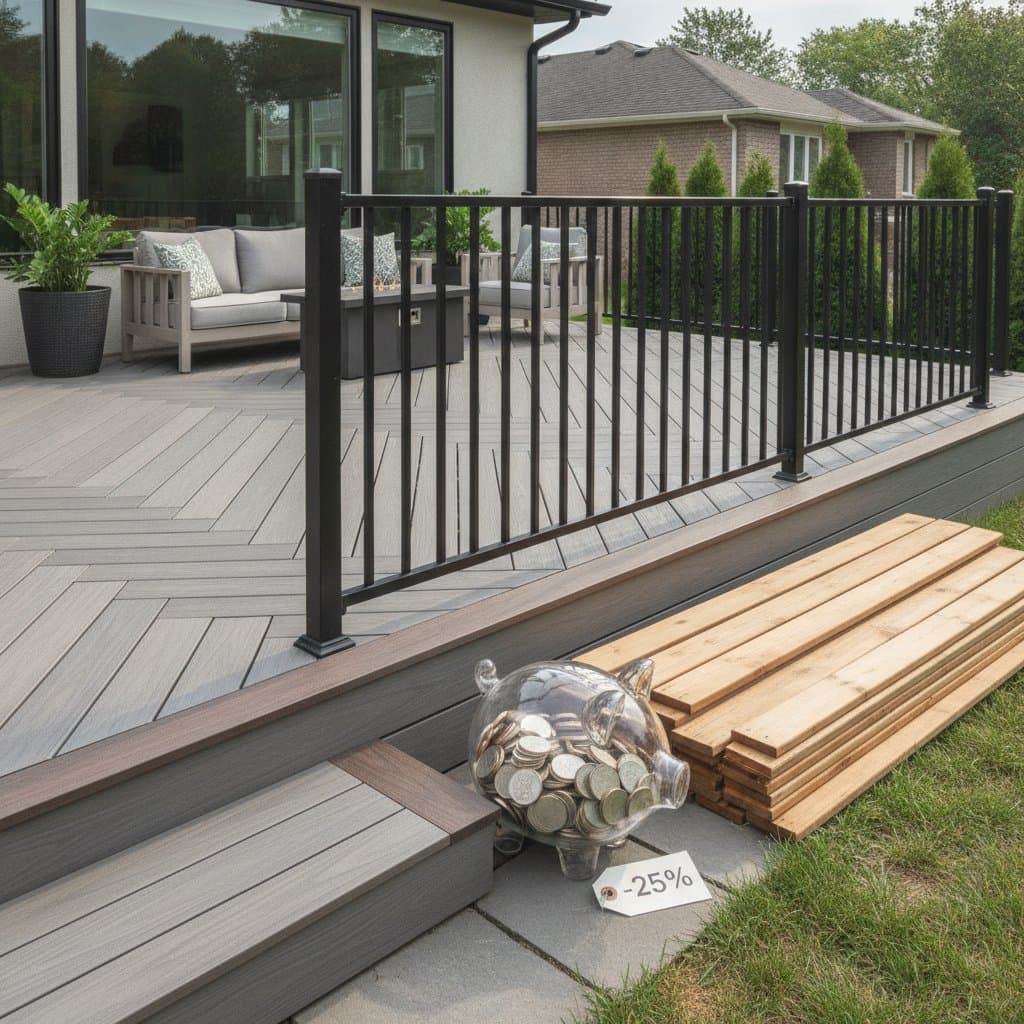
Save on Composite Decks as Prices Drop 25% vs Wood
Building a deck transforms outdoor living areas, yet expenses often limit options. Composite decking costs have fallen by roughly 25 percent relative to traditional wood. Homeowners now access the appearance of natural wood with reduced upkeep and extended service life while remaining within budget.
This guide outlines the reasons behind the price reduction, material comparisons, and steps to apply current savings toward a deck project.
Understanding the Composite Decking Price Drop
Composite decking combines recycled plastic with wood fibers. Once viewed as a premium choice priced above natural wood, it has become more accessible through manufacturing improvements and expanded market competition.
Why Prices Are Falling
Multiple elements drive the reduction:
- Improved manufacturing methods that limit waste and lower production expenses
- Greater supply resulting from additional brands entering the market
- Reduced material transportation costs through regional production sites
- Consumer preference for durable, low-maintenance products
These developments foster competition that benefits homeowners planning new or replacement decks.
How This Affects Your Remodeling Budget
Composite decking now costs about 25 percent less than many wood alternatives. Homeowners can reduce total spending or allocate the same funds toward a larger or upgraded design. A basic composite deck typically ranges from 25 to 45 dollars per square foot installed, whereas wood decks commonly fall between 30 and 55 dollars per square foot. Regional differences, labor rates, and design complexity influence final figures, so obtain multiple estimates before proceeding.
Comparing Composite and Wood Decking Options
Selection between composite and wood rests on priorities for maintenance, appearance, and lasting value.
Durability and Maintenance
Composite decking withstands moisture, rot, and insect damage. It avoids splintering or warping and requires no staining or sealing. Wood decking, particularly pressure-treated pine or cedar, demands routine cleaning, sealing, and staining to avoid deterioration. Maintenance savings over time can recover the initial outlay for composite materials.
Appearance and Texture
Current composite boards replicate natural grain and color variation. Brands provide numerous shades ranging from light ash to deep mahogany. Wood offers genuine texture yet may fade or crack with sun exposure. Composite surfaces retain color and finish for years with little intervention.
Environmental Impact
Composite decking incorporates recycled materials, which decreases waste and limits deforestation. Many homeowners value this sustainable aspect, particularly since the boards themselves can be recycled at the conclusion of their service life.
How to Plan a Cost-Effective Composite Deck Project
Careful preparation helps secure strong results within available resources when replacing an existing deck or constructing a new one.
1. Set a Realistic Budget
Measure the area to calculate required materials. Account for framing, fasteners, railings, and labor. Add a modest reserve for adjustments that arise during construction.
2. Compare Brands and Warranty Terms
Examine warranties that address fading, staining, and structural performance, frequently spanning 25 to 50 years. Choose established manufacturers with documented performance in local climate conditions.
3. Hire a Qualified Contractor
Select licensed professionals experienced in composite installation. Request references and examine completed project examples to confirm workmanship quality.
4. Optimize Design Choices
Pick board colors and textures that align with the home exterior. Incorporate elements such as integrated seating or lighting to increase function without disproportionate added expense.
Frequently Asked Questions
What is the lifespan of composite decking?
Composite decking generally endures 25 to 30 years or longer with minimal care, exceeding the service life of most wood decks that require replacement after roughly half that duration.
Does composite decking get hotter than wood?
Composite surfaces may warm under direct sunlight. Newer formulations incorporate heat-reducing technology that maintains comfortable temperatures for foot traffic.
Can composite decking be painted or stained?
Most composite boards should not receive paint or stain because the surface resists color absorption. Select the desired color prior to installation.
How do I clean composite decking?
Apply a mild soap-and-water solution with a soft-bristle brush. Avoid high-pressure washing settings that could damage the surface.
Is composite decking slippery when wet?
Quality composite boards feature textured, slip-resistant finishes that provide better traction than many sealed wood surfaces.
What is the best time to build a composite deck?
Construction proceeds in any season when conditions remain dry and temperatures stay moderate. Contractors sometimes extend improved rates during slower periods, so inquire about scheduling options.
Next Steps for Your Deck Project
Current pricing positions composite decking as a practical choice for durable outdoor improvements. Research materials thoroughly, evaluate contractor proposals, and collaborate with a capable professional to deliver a deck that maintains appearance and performance for decades.