
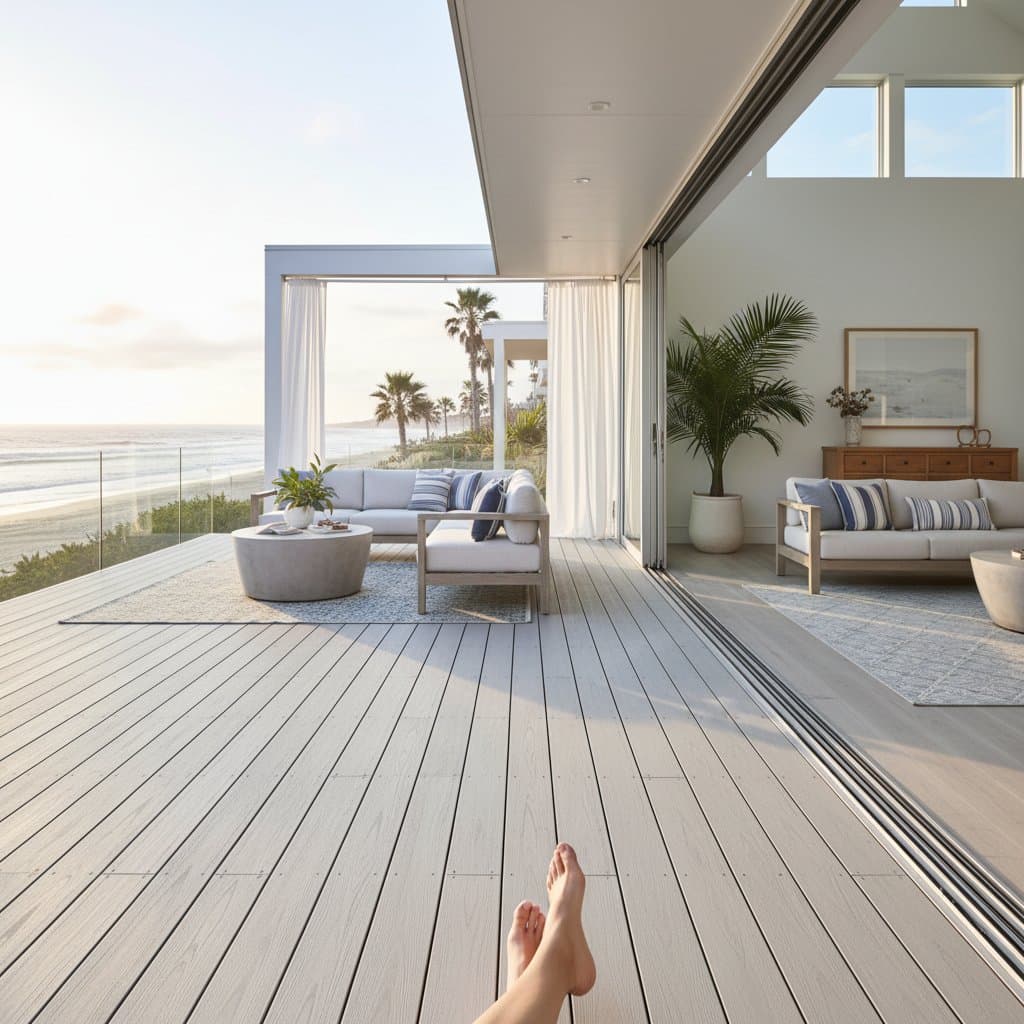
Composite Decking Stays Cool for Beach Homes
Living near the coast appeals to many homeowners, yet the relentless sun and salty air challenge outdoor spaces. Traditional wood decks often fade, splinter, and heat up uncomfortably. Composite decking provides an appealing, low-maintenance alternative, with recent heat-resistant innovations ideal for beach homes. This guide details why composite decking remains cool, its performance in coastal settings, and essential considerations for your seaside property.
Why Composite Decking Suits Coastal Homes
Composite decking combines recycled wood fibers and plastic to form a surface resistant to moisture, fading, and warping. Unlike natural wood, it absorbs less water and requires no regular sealing. In ocean-adjacent locations, this durability and stability prove invaluable.
Coastal Heat and Sun Challenges
Beach properties endure prolonged sunlight and elevated temperatures. Standard decking, particularly darker woods or outdated composites, heats to levels that demand footwear. South- or west-facing decks amplify this issue with extended direct exposure.
Contemporary manufacturers address these concerns through cooling technologies that enhance sunlight reflection and minimize heat uptake. Such features enable barefoot use during peak summer heat.
Science of Cooler Composite Decking
Innovative surface treatments keep composite decking cooler. Light-reflective pigments and heat-dispersing additives reduce energy absorption. Lighter colors further aid by reflecting sunlight more effectively than darker variants.
Board density and texture also affect heat retention. Less dense cores or matte finishes maintain lower temperatures compared to solid, glossy options. Brands increasingly provide heat performance ratings for informed selection.
Setting a Budget for Your Coastal Deck
Assess costs before selecting composite decking. Initial expenses exceed those of wood, yet savings in maintenance and longevity justify the investment.
Primary Cost Influences
- Material Quality: Advanced cooling and fade-resistant boards command higher prices than basic types.
- Color and Texture: Lighter, cooler shades may incur a modest premium while enhancing comfort and aesthetics.
- Installation Details: Multi-level designs, integrated seating, or custom railings elevate labor expenses.
- Regional Factors: Coastal zones often feature elevated labor rates and unique permitting needs.
Expect national averages of $30 to $60 per square foot for installation, varying by brand and complexity. Consult local suppliers for precise, current quotes.
Weighing Cost Against Comfort
Prioritize quality for sustained satisfaction. Opting for heat-resistant composites enhances usability and may eliminate needs for additional shading or coverings.
Choosing Suitable Composite Decking for Beach Environments
Performance varies among composite products in coastal climates. Prioritize moisture resistance, heat management, and warranty terms for beach home applications.
Prioritizing Moisture and Salt Resistance
Salt-laden air corrodes fasteners and erodes surfaces gradually. Select encapsulated boards, fully coated to block moisture entry. Pair with stainless steel or coated screws to prevent rust.
Assessing Heat-Resistant Features
Review manufacturer data on sunlight performance. Seek products highlighting cooling technology or low surface temperatures. Colors like sandy beige, driftwood gray, and soft taupe excel in heat reflection.
Reviewing Warranties and Upkeep
Robust warranties indicate reliability. Premium composites guarantee fade and stain protection for 25 years or more. Confirm explicit coverage for coastal conditions. Upkeep typically involves mild soap and water washing.
Installation Strategies for Cooler Surfaces
Optimal installation maximizes material benefits. Construction choices directly impact underfoot temperature.
Deck Orientation Optimization
Align decks to capture breezes and limit afternoon sun. North-facing positions generally remain cooler. For fixed orientations, incorporate pergolas, umbrellas, or shade elements.
Promoting Air Circulation
Airflow beneath boards accelerates heat dissipation. Maintain proper board spacing and substructure ventilation. Avoid direct placement over concrete, which retains heat and moisture.
Selecting Light Tones and Complementary Elements
Light colors repel sunlight, while dark ones retain it. Match deck hues with pale furniture, railings, or pavers to minimize ambient warmth.
Implementing Hidden Fasteners
Concealed systems limit exposed metal, which heats quickly. They yield smoother, more comfortable surfaces for bare feet.
Maintaining Composite Decks in Coastal Areas
Low-maintenance defines composite decking, though periodic attention preserves its coastal resilience.
Standard Cleaning Practices
Rinse surfaces with mild soap and water to clear salt and sand buildup. Steer clear of harsh chemicals or high-pressure tools that harm coatings. Employ soft-bristle brushes for inter-board debris.
Stain and Fade Prevention
UV inhibitors in quality composites curb fading. Address spills from sunscreen or beverages immediately. Follow manufacturer guidelines for removals to sustain color integrity over years.
Monitoring for Environmental Wear
Inspect fasteners and corrosion regularly, focusing on oceanward edges. Swap rusted components for stainless steel. Check railings, stairs, and joists for moisture effects.
Frequently Asked Questions
How does composite decking perform against wood in coastal heat?
Composite decking maintains lower temperatures than dark-stained wood by reflecting sunlight and resisting moisture uptake. It avoids splintering or cracking under heat stress. Light colors and heat-specific designs boost comfort further.
Does composite decking fade in intense coastal sun?
Premium versions incorporate UV blockers to limit fading. Minor color shifts may occur, but stability surpasses wood or inferior composites. Confirm fade warranties for assurance.
Is composite decking slippery when wet near beaches?
Textured surfaces on modern composites enhance grip. Wet conditions pose slip risks universally, yet tested materials ensure safety. Deeper grains or matte finishes suit poolside or oceanfront use.
How hot does composite decking become in direct sun?
Temperatures vary by color, exposure, and ventilation. Cooling-enhanced boards run several degrees cooler than alternatives. Sub-deck airflow mitigates accumulation.
Does saltwater impact composite decking?
Composites resist saltwater far better than wood, preventing warp or rot. Periodic fresh water rinses remove residue. Use corrosion-proof hardware for the environment.
Can homeowners install composite decking independently?
DIY-friendly systems exist, but coastal projects demand professional handling for framing, permits, and codes. Adhere strictly to instructions, including expansion spacing, if proceeding solo.
What colors best keep decks cool?
Opt for light options like whitewashed gray, sand, or pale tan to reflect heat effectively. These align with coastal styles. Reserve dark browns or charcoals for non-priority comfort areas.
Maximizing Coastal Deck Enjoyment
Heat-resistant composite decking elevates outdoor living by supporting barefoot strolls, sunny relaxation, and guest gatherings free from maintenance worries. It boosts property value and harmonizes with shoreline aesthetics.
Select coastal-suited materials, ensure airflow and shade integration, and adhere to care protocols. Thoughtful choices yield a deck that endures beautifully and comfortably for decades.