
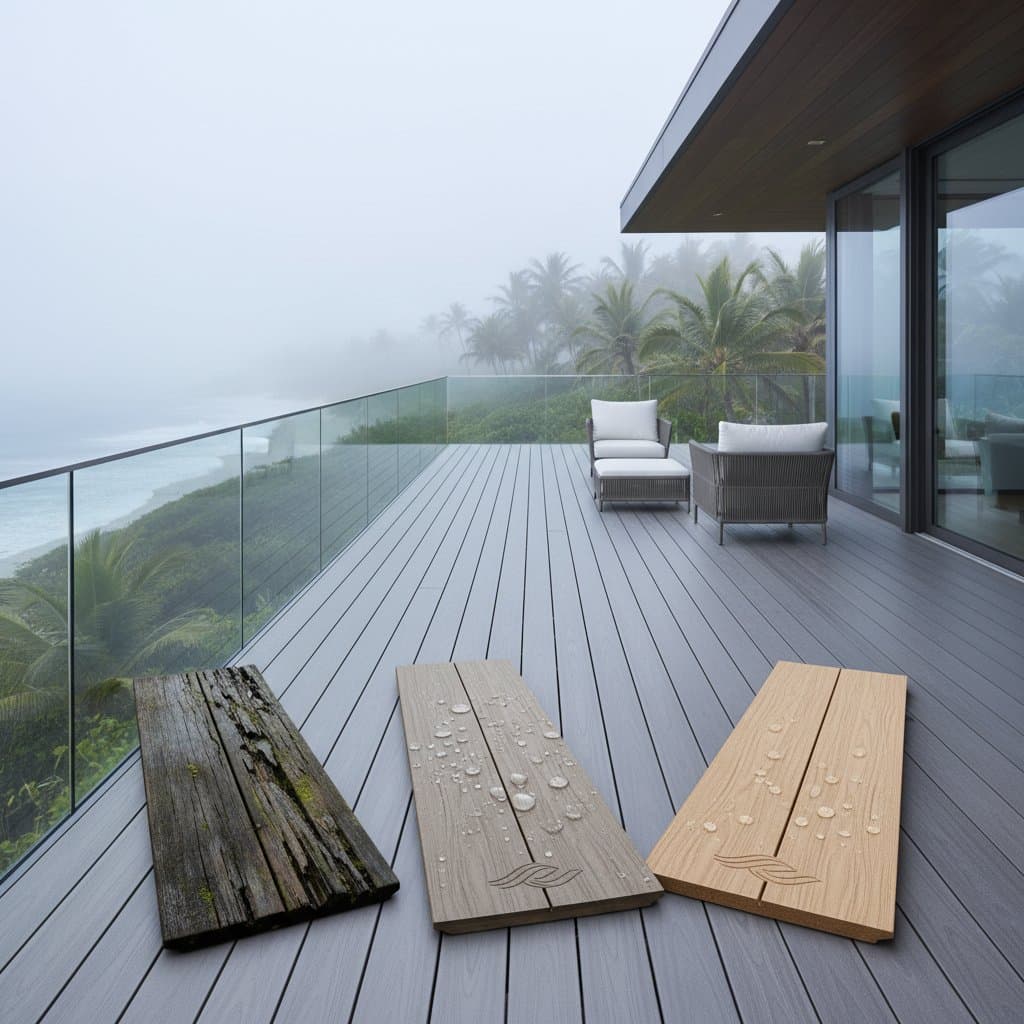
Why Composite Decking Endures Three Times Longer in Humid Conditions
Homeowners in coastal areas understand the challenges that high humidity poses to outdoor spaces. Traditional wood decks readily take in moisture, leading to swelling, cracking, and eventual decay. Composite decking, crafted from a mixture of recycled wood fibers and plastic polymers, counters these problems effectively. It withstands humid conditions up to three times longer than wood, offering extended use in places like San Diego with far less upkeep.
A standard wood deck typically serves for 10 to 15 years under constant moisture exposure. In contrast, composite decking routinely lasts 25 to 30 years or beyond. This superior performance turns it into a prudent choice for long-term outdoor living near the ocean.
Cost Comparison and Longevity
Composite decking requires a greater initial outlay than wood options, yet it provides substantial savings over its lifespan. The following table compares common costs and durability for decking materials in humid settings.
| Decking Material | Average Cost per Sq. Ft. | Average Lifespan in Humidity | Maintenance Required |
|---|---|---|---|
| Pressure-treated wood | $15 - $25 | 10 - 15 years | Annual sealing, staining, or painting |
| Cedar or redwood | $25 - $35 | 12 - 18 years | Regular pressure washing and sealing |
| Composite decking | $35 - $60 | 25 - 30 years | Occasional cleaning only |
Initial expenses for composite materials run 30 to 50 percent higher than wood. However, the absence of ongoing treatments offsets this difference. Across 20 years, owners often achieve a reduced overall expense through avoided repairs and refinishing.
Factors That Enhance Composite Deck Durability
Specific design choices and installation practices can prolong the service life of composite decking in coastal humidity.
Proper Ventilation
Effective airflow under the deck surface averts moisture buildup and stabilizes temperatures. Installers must provide sufficient gaps between boards, typically 1/8 to 1/4 inch, and elevate the structure at least 12 to 18 inches above the ground using joists or blocks.
Hidden Fastening Systems
Clips or specialized screws concealed beneath the boards minimize surface penetrations. These methods prevent water pooling in drill holes, which accelerates deterioration. Beyond extending durability, they create a seamless, professional appearance without visible fasteners.
UV-Resistant Coatings
Many composite products incorporate built-in UV stabilizers to shield against intense sunlight. These additives block ultraviolet rays that cause discoloration and material weakening. Select boards with proven fade-resistant formulas for optimal performance in sunny, humid regions.
Routine Cleaning
Composite decking demands little care, but periodic washing preserves its condition. Use a solution of mild soap diluted in water, applied with a soft-bristle brush or hose. Steer clear of abrasive cleaners or bleach, which may erode protective layers.
Image placeholder: Homeowner cleaning composite deck with gentle soap and soft brush.
Budgeting and Planning Tips
To maximize the benefits of a composite deck installation, follow these practical steps during the planning phase.
- Establish a comprehensive budget that accounts for materials, structural framing, railings, lighting, and labor costs.
- Select reputable brands such as Trex or TimberTech, which provide 25-year warranties and advanced moisture barriers.
- Engage contractors experienced in composite installations to handle precise spacing, alignment, and secure fastening.
- Incorporate drainage features, including a 1/8-inch slope per foot away from the house and integrated channels for runoff.
- Allocate 10 to 15 percent of the total budget as a reserve for unforeseen issues like site preparation adjustments.
Quality components paired with expert workmanship guarantee sustained strength and visual appeal.
FAQs About Composite Decking and Humidity
| Question | Answer |
|---|---|
| Does composite decking absorb water? | No. Its capped polymer construction repels water and maintains stable dimensions. |
| Can composite decking mold or mildew? | Internal growth is impossible due to the material composition, but clean surface residue regularly to prevent superficial buildup. |
| Is composite decking slippery when wet? | Textured or grooved profiles on most products ensure secure footing, even after rain or dew. |
| How long does composite decking actually last? | Proper installation and care yield 25 to 30 years or more in humid areas. |
| Does humidity affect color fading? | UV protections limit changes, preserving rich tones for 15 to 20 years or longer. |
| Can I pressure wash composite decking? | Yes, use low pressure under 1500 PSI with a wide-angle nozzle to protect the finish. |
Building Lasting Outdoor Spaces
Outdoor decks serve as vital extensions of living areas, designed for relaxation rather than repair demands. Composite decking stands up to humid challenges, preventing rot and maintaining integrity over time. Coastal residents gain reliable platforms for evening gatherings, family barbecues, and quiet mornings.
Opt for composite materials to secure an enduring investment. Their resistance to moisture and environmental stresses ensures the deck remains functional and attractive through changing seasons. With thoughtful selection and maintenance, this addition enhances home comfort and property worth for generations.