
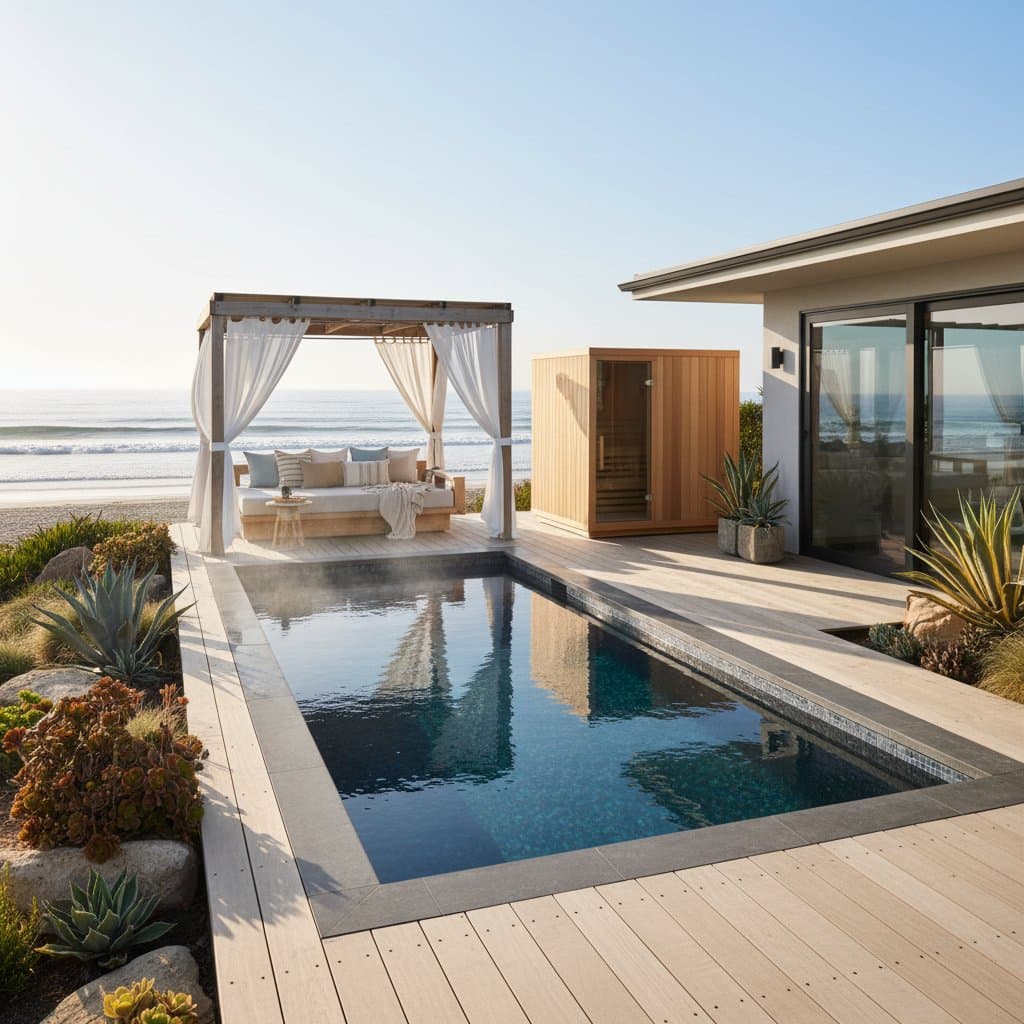
Introduction to Cold Plunge Pools in Coastal Settings
Cold plunge pools have surged in popularity among coastal residents seeking enhanced wellness routines. These compact hydrotherapy features expose users to chilly water, typically between 45 and 55 degrees Fahrenheit, to promote recovery and vitality. In ocean-adjacent homes, they blend seamlessly with the natural surroundings, offering a private alternative to public beaches or gyms.
Homeowners in areas like San Diego appreciate how these pools harness the invigorating coastal climate. Installation varies from simple above-ground units to custom in-ground designs, each tailored to amplify relaxation and health. As interest grows, understanding the essentials ensures a worthwhile addition to your property.
Key Considerations Before Installation
Before committing to a cold plunge pool, evaluate several practical factors to align the project with your lifestyle and local regulations.
- Permits and Regulations: Municipalities often mandate plumbing and electrical permits for in-ground setups. Contact your local building department early to confirm requirements and avoid delays.
- Site Selection: Choose a level, accessible spot with partial shade to maintain water temperature naturally. Proximity to existing utilities minimizes excavation costs.
- Budget Planning: Initial expenses range from $3,000 for basic portable models to $25,000 or more for custom installations. Factor in ongoing costs like energy for chillers and water treatment supplies.
- Finishes and Features: Enhancements such as LED lighting, automated temperature controls, or built-in steps typically add $500 to $2,000 per feature. Prioritize based on your usage frequency and aesthetic preferences.
Addressing these elements upfront prevents surprises and ensures a smooth process.
Comparing Materials for Cold Plunge Pools
Selecting the right material balances cost, longevity, and style, particularly in salty, humid coastal air. Each option suits different budgets and design visions.
| Material | Cost | Durability | Maintenance | Aesthetic Appeal |
|---|---|---|---|---|
| Fiberglass | Moderate ($5,000–$10,000) | Good | Low | Smooth, modern look |
| Concrete | High ($15,000+) | Excellent | Medium | Fully customizable shapes |
| Stainless Steel | High ($12,000–$20,000) | Excellent | Very Low | Sleek, luxury finish |
| Tile | High ($10,000–$18,000) | Excellent | Medium | Spa-like, textured appearance |
| Wood-Clad Barrel | Low to Moderate ($3,000–$8,000) | Fair | High | Rustic, natural vibe |
Concrete and stainless steel stand out for their resilience against corrosion in coastal environments. Fiberglass provides a budget-friendly choice with straightforward installation, ideal for those prioritizing ease over customization.
Strategies to Save on Your Cold Plunge Project
Building a cold plunge does not require breaking the bank. Implement these targeted approaches to control expenses without sacrificing quality.
- Opt for Prefabricated Units: Factory-assembled tubs arrive ready for minimal on-site assembly, cutting labor by up to 50 percent.
- Streamline the Design: Forego intricate custom tiling or expansive decking; focus on essential functionality to trim finishing expenses.
- Leverage Existing Infrastructure: Position the pool near current water and power sources to reduce trenching and wiring needs.
- Rely on Passive Cooling: In temperate coastal zones, strategic shading with overhangs or foliage can obviate the need for mechanical chillers, saving on equipment.
- Handle Basic Landscaping In-House: Tasks like laying gravel paths or applying sealant to simple decks can be completed personally, avoiding contractor fees.
These steps can lower total costs by 20 to 40 percent while maintaining a professional outcome.
DIY Installation Versus Professional Services
Deciding between self-installation and expert help hinges on your skills, time, and risk tolerance. Both paths offer merits, but the choice impacts safety and durability.
| Aspect | DIY Approach | Professional Installation |
|---|---|---|
| Upfront Cost | Lower, typically $3,000–$7,000 | Higher, typically $10,000–$25,000 |
| Time Requirement | Several weekends | 1 to 2 weeks |
| Expertise Needed | Plumbing, electrical, waterproofing | Managed by licensed trades |
| Risk Level | High if mistakes occur (e.g., leaks) | Low due to warranties and oversight |
| Long-Term Value | Dependent on build quality | Higher resale and reliability |
DIY suits portable or above-ground models that assemble like hot tubs, requiring basic tools. For in-ground versions, professionals handle complex waterproofing and electrical work, mitigating hazards like flooding or shocks. Most coastal homeowners benefit from expert involvement to ensure compliance and longevity.
Health and Wellness Advantages
Cold plunge therapy delivers tangible physiological and psychological gains, perfectly suited to the demands of beachside activities like surfing or hiking.
- Improved Circulation: The cold prompts vasoconstriction, followed by vasodilation upon rewarming, which enhances blood flow and oxygen delivery.
- Faster Recovery: Post-exercise immersion reduces muscle soreness and inflammation, allowing quicker return to activities.
- Enhanced Mood: Exposure elevates norepinephrine, fostering alertness and reducing anxiety for a natural mood lift.
- Better Sleep: Evening sessions help synchronize your body's internal clock, promoting restorative rest.
- Stronger Immunity: Regular practice strengthens white blood cell activity, building resilience against seasonal illnesses.
Incorporate plunges two to three times weekly, starting with 30-second dips, to reap these rewards safely. Consult a physician if you have underlying health conditions.
Seamlessly Integrating into Coastal Home Design
Coastal properties provide an ideal canvas for cold plunges, merging therapy with the environment for holistic appeal.
- Oceanview Placement: Orient the pool toward the horizon to enjoy therapeutic sessions with sea breezes and scenic vistas.
- Natural Material Choices: Incorporate weather-resistant teak for surrounds, stone edging, and drought-tolerant plants to echo the shoreline.
- Contrast Therapy Setup: Combine with a nearby sauna for hot-cold cycles, amplifying detoxification and circulation benefits.
- Eco-Friendly Systems: Select solar-powered chillers and closed-loop filtration to minimize environmental impact and utility bills.
Such integrations not only boost functionality but also elevate your home's curb appeal and market value.
Pitfalls to Sidestep During Setup
Even seasoned projects encounter hurdles. Learn from common oversights to safeguard your investment.
- Neglecting Permits: Overlook local codes at your peril; fines or forced removals can escalate expenses.
- Inadequate Drainage: Ensure sloped surfaces direct water away to protect structures and greenery from erosion.
- Insufficient Insulation: Line the pool with foam boards to stabilize temperatures and cut energy use by 30 percent.
- Safety Oversights: Install grab rails, non-slip flooring, and locked covers to prevent accidents, particularly in households with kids or elders.
- Maintenance Underestimation: Schedule bi-weekly pH checks and filter cleanings; neglect leads to algae and equipment failure.
Proactive planning averts these issues, preserving both performance and peace of mind.
Frequently Asked Questions
Do Permits Apply to Cold Plunge Pools?
Yes, for in-ground models with plumbing or electrical ties. Always consult your local authority to outline necessary approvals.
What Is the Installation Timeline?
Prefabs install in days, while bespoke in-ground projects span one to two weeks, influenced by soil type and custom elements.
What Temperature Delivers Optimal Benefits?
Aim for 45 to 55 degrees Fahrenheit. This range maximizes therapy without undue strain; use a digital thermometer for precision.
How Frequently Should Water Be Refreshed?
Filtered setups need changes every two to four weeks with moderate use. Unfiltered portables demand weekly refreshes to maintain hygiene.
Is Seawater Viable for Plunges?
No, due to corrosion risks on metals and pumps. Stick to treated freshwater for longevity and ease of care.
Which Features Boost Resale Value?
Strategic location, premium materials like stainless steel, and ambient lighting create a luxurious, desirable amenity.
Can Plunges Operate Year-Round?
Absolutely. Insulated designs with heaters for milder dips ensure usability through all seasons, adapting to coastal weather shifts.
Routine Maintenance for Peak Performance
Sustaining your cold plunge involves consistent care to uphold water clarity and system efficiency.
Test pH levels weekly, adjusting with natural balancers to keep readings between 7.2 and 7.8. Clean filters monthly and inspect seals for wear, especially after storms. Winterize by draining and covering if usage pauses, preventing freeze damage. These habits extend equipment life and ensure safe, enjoyable sessions.
Embracing Daily Wellness with Your Coastal Plunge
A well-crafted cold plunge becomes a cornerstone of coastal vitality, fostering resilience amid sun-soaked days. Regular use sharpens focus, eases recovery, and deepens appreciation for your surroundings. As you immerse, you invest in sustained health and harmony with the sea.