
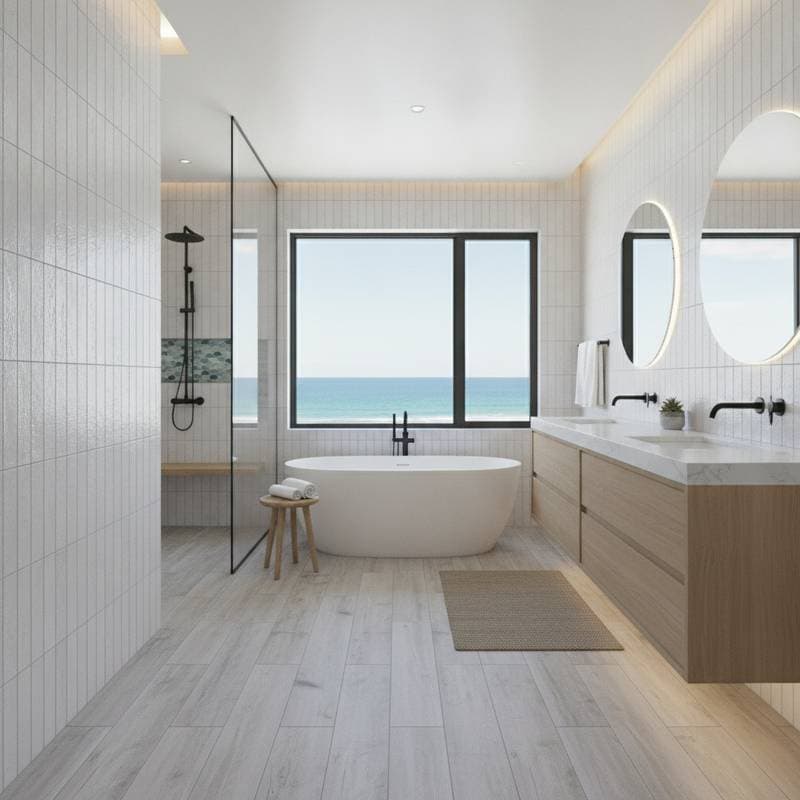
What Coastal Bathrooms Really Cost to Remodel in 2026
A bathroom remodel near the coast presents distinct possibilities alongside specific challenges. Homeowners often seek light-filled spaces that incorporate sea-inspired materials and luxury finishes capable of withstanding moisture and salt air. Costs for such projects vary based on design selections, location specifics, and material quality.
This guide details actual expenses for coastal bathroom remodels. It identifies primary cost drivers and outlines effective budget management approaches. Readers gain practical steps for planning projects suited to beach cottages or waterfront homes.
Cost Categories for Coastal Projects
Coastal bathroom remodels typically align with three tiers. These include cosmetic upgrades, mid-range renovations, and luxury transformations. Each tier demands distinct materials, labor inputs, and advance planning.
Cosmetic Updates
A light refresh involves repainting walls, updating lighting, replacing hardware, or refinishing cabinets.
- Average cost range: 8000 to 15000 dollars.
- Typical timeframe: several weeks.
- Best suited for homeowners satisfied with the current layout.
Mid-Range Renovations
This category covers new tilework, upgraded fixtures, and moderate layout adjustments.
- Average cost range: 18000 to 35000 dollars.
- Best suited for projects that add coastal durability and modern design without full customization.
Luxury or Custom Remodels
High-end work features premium materials, custom cabinetry, expanded layouts, and elements such as steam showers or freestanding tubs.
- Average cost range: 40000 to 75000 dollars or higher.
- Best suited for creating spa-like retreats or enhancing resale value.
Prices differ by region, contractor rates, and material selections. Coastal sites often incur elevated labor and shipping expenses due to environmental conditions and building code rules.
Primary Influences on Coastal Bathroom Expenses
Moisture-Resistant Materials
Coastal air carries salt and humidity that harm unprotected surfaces. Materials must resist corrosion and mold growth.
Recommended options include porcelain or ceramic tile rather than natural stone, marine-grade paint and finishes, stainless steel or brass hardware, and composite or PVC cabinetry. These selections raise initial costs yet lower long-term maintenance needs.
Layout and Plumbing Changes
Moving plumbing lines, drains, or electrical outlets adds substantial expense. Retaining the existing layout helps contain costs. Strategic reconfiguration proves worthwhile when the space feels cramped or lacks ventilation.
Labor and Contractor Expertise
Coastal work requires professionals skilled in high-moisture construction methods. Proper waterproofing, ventilation, and material installation depend on this expertise. Labor typically represents 40 to 60 percent of the total budget.
Finishes and Fixtures
Fixtures must endure humidity without tarnishing. Satin or brushed finishes reveal fewer water spots than polished metals.
Popular coastal selections include brushed nickel faucets, matte black or oil-rubbed bronze hardware, and quartz or solid-surface countertops.
Permits and Code Compliance
Many coastal cities enforce strict building codes against flooding, corrosion, and environmental harm. Contact the local building office before demolition. Permit fees range from 500 to 2000 dollars based on project scope.
Steps to Create a Realistic Budget
Define Priorities First
Identify top goals such as a luxury shower, durable flooring, or energy-efficient lighting. Separate must-have items from optional additions.
Collect Multiple Quotes
Obtain at least three detailed bids from licensed contractors. Each bid should itemize materials, labor, timeline, and cleanup fees for direct comparison.
Account for Hidden Costs
Projects often reveal plumbing leaks, structural issues, or outdated wiring. Reserve 10 to 20 percent of the budget for contingencies.
Select Quality Materials
Lower-cost options may seem appealing yet fail quickly in coastal conditions. Investment in moisture-resistant products reduces replacement frequency.
Plan Ongoing Maintenance
High humidity demands reliable ventilation and routine upkeep. Include allowances for sealant reapplication, grout repair, or exhaust fan improvements.
Selecting a Qualified Contractor
Verify Credentials
Confirm that the contractor maintains a valid license and sufficient insurance. This coverage protects against liability from accidents or property damage.
Conduct Interviews
Inquire about completed coastal bathroom projects. Experience with local conditions supports effective prevention of moisture damage and corrosion.
Secure a Written Contract
The agreement must detail materials, labor costs, payment schedule, and start and completion dates. Verbal arrangements provide insufficient protection.
Identify Warning Signs
Bids significantly below others often indicate inferior materials or rushed execution. Reputable contractors supply transparent pricing and consistent communication.
Design Approaches for Lasting Appeal
Color and Texture Selections
Soft blues, sandy neutrals, and crisp whites reflect natural light and evoke a beach atmosphere. Dark colors tend to make smaller spaces feel confined.
Flooring Recommendations
Non-slip, water-resistant options such as porcelain tile or luxury vinyl plank replicate natural textures with greater durability.
Lighting Requirements
Fixtures rated for damp or wet locations are necessary. Combine ambient, task, and accent layers to achieve both function and style.
Storage Solutions
Moisture-resistant cabinetry, floating vanities, and open shelving maintain organization while preventing humidity buildup.
Common Questions About Coastal Remodels
Cost for Small Bathrooms
Small bathroom projects typically range from 10000 to 25000 dollars depending on materials and labor. Preserving the original layout helps limit expenses.
Best Performing Materials
Porcelain tile, quartz countertops, stainless steel fixtures, and PVC cabinetry withstand humid, salty conditions with minimal upkeep.
DIY Opportunities
Painting, hardware replacement, or decor updates can reduce costs. Assign plumbing, electrical, and waterproofing tasks to professionals to prevent errors.
Project Duration
Most remodels require four to eight weeks based on size, complexity, and permit processing. Custom orders or structural modifications extend timelines.
Cost Differences from Inland Projects
Coastal work often exceeds inland costs by 10 to 25 percent due to corrosion-resistant materials, specialized labor, and shoreline delivery challenges.
Mold Prevention Methods
Install a high-quality ventilation fan, seal grout lines, apply moisture-resistant paint, and sustain airflow after showers.
Impact on Home Value
Well-executed coastal bathrooms enhance resale appeal in beach communities where buyers seek durable, light-filled spaces.
Planning Your Coastal Retreat
A coastal bathroom remodel represents a substantial commitment. Careful planning combined with appropriate material choices delivers enduring comfort and added value. Emphasis on durability, ventilation, and timeless design supports performance in seaside environments. Collaboration with qualified contractors and realistic expectations produce a retreat built for sustained use.