
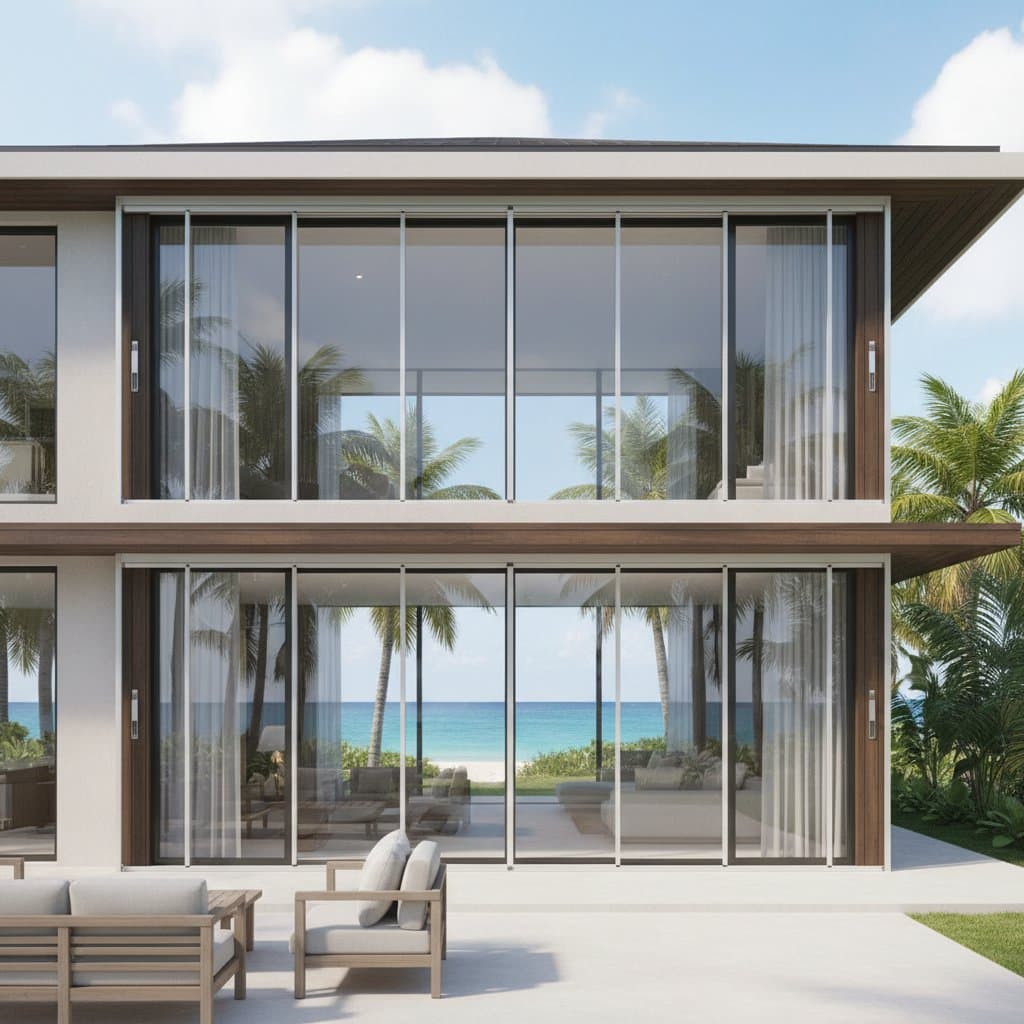
Clear Panels Poised to Supersede Traditional Hurricane Shutters by 2026
Envision a coastal residence as storm clouds gather on the horizon. Rather than hastily securing cumbersome metal shutters, homeowners slide transparent panels into position effortlessly. These panels permit views of the ocean, allow natural light to permeate interiors, and fortify the structure against high winds. This vision propels the adoption of clear hurricane panels, a innovation anticipated to eclipse standard shutters in widespread use shortly.
These impact-resistant, see-through barriers unite durability with aesthetic appeal. They furnish equivalent safeguarding to aluminum or steel alternatives, yet they avoid obstructing sightlines or dimming living spaces. Residents in hurricane-prone areas increasingly adopt them, and industry analysts forecast their emergence as the preferred method for weatherproofing. Installation expenses for an entire residence typically span from $2,500 to $9,000, influenced by property dimensions and panel specifications.
Clear storm panels deliver comprehensive hurricane resistance, abundant illumination, and enhanced exterior charm within a single framework. Their longevity, reusability, and alignment with contemporary design position them as an essential enhancement for seaside dwellings.
Factors Influencing Costs of Clear Hurricane Panels
A complete installation of clear hurricane panels for a residence generally costs between $2,500 and $9,000. The median expenditure hovers at approximately $5,800 for a standard single-family house. Several elements determine the final amount.
-
Material Selection
Polycarbonate options command prices of $12 to $20 per square foot, whereas acrylic variants fall between $10 and $16 per square foot. Polycarbonate excels in impact endurance and ultraviolet shielding, justifying its premium pricing. -
Property Dimensions and Openings
Greater numbers of windows elevate expenses. Expansive picture windows or sliding doors necessitate bespoke measurements, which increase overall outlays. -
Attachment Mechanisms
Fixed tracks or detachable fixtures affect both labor duration and visual integration. Fixed tracks involve higher upfront investments but streamline subsequent deployments. -
Workforce and Regulatory Requirements
Labor charges average $45 to $75 hourly, varying by locale and site challenges. Certain coastal jurisdictions mandate certifications for wind resistance or official inspections. -
Personalization and Visual Enhancements
Options such as tinting or ultraviolet filtration incur modest surcharges, aiding in temperature regulation and glare reduction within bright environments.
Comparing DIY and Professional Installation Approaches
Clear hurricane panels suit a moderately skilled do-it-yourself endeavor for individuals proficient in precise measurements, drilling, and tool operation. The following outlines the distinctions.
Do-It-Yourself Installation
- Complexity Level: Moderate
- Duration: Two to three days for an entire property
- Required Abilities: Exact gauging, firm fastening, and effective sealing
- Financial Benefits: Potential reductions of up to 30 percent in labor fees
Professional Installation
- Complexity Level for Owner: Minimal
- Duration: One to two days based on property scale
- Required Abilities: Expertise from certified specialists familiar with wind standards
- Financial Aspects: Elevated initial costs offset by guarantees and regulatory adherence
In regions susceptible to intense winds or for elevated windows, engaging experts proves prudent. Such professionals verify compliance with regional construction norms and secure optimal anchoring for superior performance.
Strategies to Reduce Installation Expenses
-
Evaluate Materials in Advance
Acrylic selections frequently prove more economical per square foot and suffice for areas with moderate threats. -
Ensure Precise Measurements
Procuring tailored panels in volume with accurate specifications prevents expensive revisions. -
Adopt Phased Implementation
Prioritize safeguarding the most exposed windows, then extend coverage according to financial capacity. -
Repurpose Existing Fixtures
When upgrading from legacy shutters, existing tracks or anchors may adapt for reuse. -
Leverage Off-Peak Opportunities
Scheduling during non-storm periods often yields reduced labor charges and prompt availability.
Frequently Asked Questions
How do clear hurricane panels measure up in strength against metal shutters?
Clear panels endure comparable wind forces and projectile impacts to aluminum models. Polycarbonate iterations frequently surpass metal in enduring cyclic pressures, as they bend without deforming.
Is a permit necessary for installation?
In the majority of coastal districts, permits are required. Local regulations demand documentation of wind-load capabilities.
Do these panels discolor or cloud with age?
Premium polycarbonate incorporates ultraviolet blockers to minimize yellowing. Acrylic tends toward fading under prolonged solar exposure.
Is year-round installation advisable?
Permanent tracks facilitate rapid setup prior to tempests, with panels stored securely otherwise. Continuous use is feasible but not universally optimal.
Do they justify the expense relative to conventional shutters?
Affirmative, particularly for those prioritizing illumination, panoramas, and sleek design. Their resilience and recyclability frequently recoup the preliminary outlay.
Advancing Your Home's Weather Resilience
For properties dependent on ponderous metal barriers or makeshift plywood, clear hurricane panels represent a significant advancement. They preserve scenic vistas, alleviate preparation anxieties, and elevate property worth.
Commence by evaluating priority windows for fortification, followed by soliciting estimates from qualified contractors. The assurance of a secure yet luminous sanctuary amid turbulent weather renders this investment compelling.