
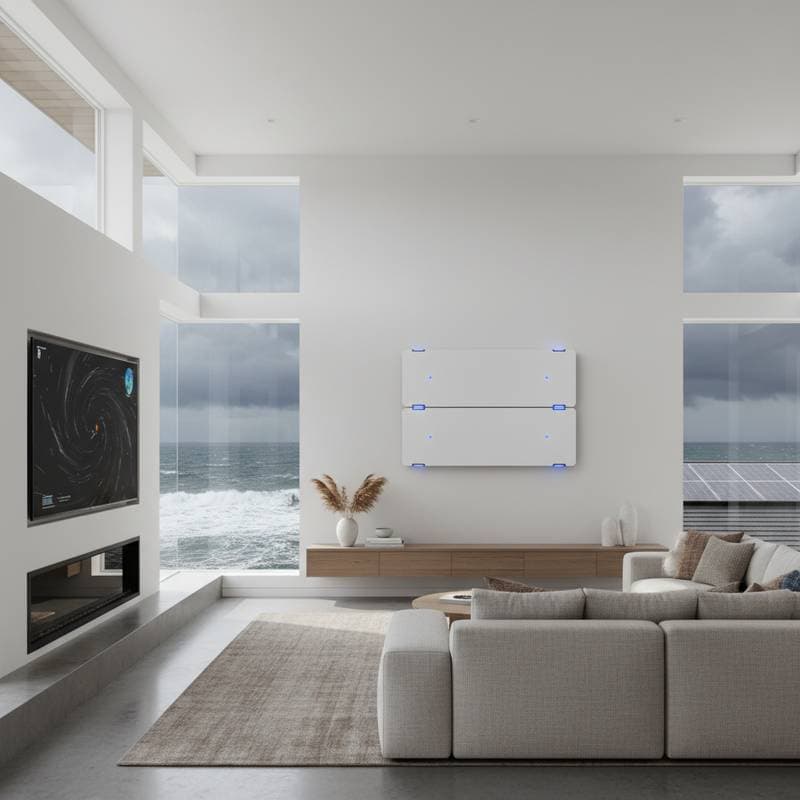
Coastal Homes Gain Storm Power with Battery Walls
Coastal living offers fresh air, ocean views, and a profound sense of peace. However, it also involves unpredictable weather, salt-laden air, and frequent power outages during storms. For homeowners, maintaining essential systems during severe weather presents significant challenges. Home battery walls address these issues by providing reliable energy storage that sustains power when the grid fails.
This guide details the operation of battery wall systems, their particular value for coastal properties, and practical steps for safe installation. Readers will gain insights to enhance home resilience and energy security in storm-prone areas.
Understanding Home Battery Wall Systems
Battery walls consist of compact, wall-mounted energy storage units that capture electricity for future use. These units draw power from the electrical grid, solar panels, or both sources. During grid failures, the stored energy automatically supplies the home, ensuring that critical devices such as refrigerators, heating, ventilation, and air conditioning systems, and lighting remain functional.
How Battery Walls Work
- Energy Collection: The battery charges from solar panels or the grid during periods of low demand.
- Energy Storage: Electricity accumulates in lithium-ion or comparable battery cells within a sealed, weather-resistant enclosure.
- Energy Distribution: Upon demand, the system converts stored energy into usable household electricity.
These systems activate instantaneously during outages, delivering a seamless transition without interrupting appliances or causing light fluctuations.
Key Benefits for Coastal Homes
Coastal areas experience regular power disruptions from storms, high winds, and salt-induced corrosion on infrastructure. Battery walls counteract these risks through:
- Reliable backup power during interruptions.
- Safeguards for sensitive electronics from voltage spikes.
- Decreased reliance on vulnerable grid systems near shorelines.
- Substantial energy cost reductions when integrated with solar panels.
Such features position battery systems as a worthwhile investment for coastal residents.
Building Energy Resilience in Storm-Prone Areas
Why Backup Power Matters
Storms in coastal zones can cause outages lasting hours to days. Without alternatives, essential items like refrigerators, medical equipment, and sump pumps cease operation, resulting in food loss, flooding, and hardship. A battery wall sustains these functions until restoration occurs.
Comparing Battery Walls to Generators
Conventional generators depend on fuels such as gasoline or propane, which prove difficult to store securely or obtain amid crises. Battery walls function silently, demand little maintenance, and recharge via solar or grid sources.
Comparison Highlights:
- Noise: Battery walls produce no sound, whereas generators generate considerable noise.
- Maintenance: Battery systems require infrequent attention.
- Fuel Supply: Battery walls retain stored energy, eliminating the need for refueling.
- Environmental Impact: Battery systems emit no pollutants while in use.
Coastal homeowners prioritizing tranquility and ecological considerations find battery walls a superior, hassle-free option.
Planning and Budgeting for Installation
Estimating Costs
Costs for home battery wall systems fluctuate based on capacity, manufacturer, and solar integration. Entry-level setups for essential loads typically range from $10,000 to $15,000, while comprehensive systems with solar components may exceed $25,000. Factor in installation fees, which often add 10 to 20 percent to the total. Consult multiple providers for precise quotes tailored to specific needs.
Incentives and Rebates
Certain locales provide tax credits or rebates for energy storage installations, particularly those linked to renewables. Contact local energy authorities or utility companies to identify applicable programs, such as federal incentives that cover up to 30 percent of costs.
Assessing Your Energy Needs
Prior to proceeding, evaluate the household's critical power demands. Identify must-have circuits for outages, including:
- Refrigeration units.
- Heating or cooling systems.
- Interior and exterior lighting.
- Internet routers and communication tools.
- Medical or mobility aids.
Contractors utilize this data to recommend an optimal system size. Avoid oversizing, which inflates expenses, or undersizing, which compromises reliability.
Choosing the Right Battery Wall System
Evaluate Battery Capacity and Chemistry
Capacity dictates outage duration support. Aim for storage sufficient for one to two days of essential operations in average households. Lithium-ion batteries prevail due to their superior efficiency and durability, often lasting over 10 years with proper care.
Consider Weather Resistance
Salt-rich coastal air accelerates corrosion. Select units certified for outdoor or marine conditions, featuring protective coatings and IP-rated enclosures. Position installations in shaded, ventilated spots away from direct spray to maximize longevity.
Integrate with Solar Power
Combining battery walls with solar arrays enables ongoing recharging independent of the grid. Solar input during daylight sustains battery levels, potentially extending power availability through prolonged blackouts.
Finding and Vetting a Qualified Installer
Check Licenses and Insurance
Verify that installers possess valid electrical and contracting licenses from state authorities. Request documentation of liability and workers' compensation insurance to shield against potential installation mishaps.
Request Multiple Quotes
Obtain estimates from at least three certified professionals to compare pricing, timelines, and inclusions. Inquire about warranties, post-installation support, and compatibility with existing home systems during consultations.
Review Contracts Carefully
Examine agreements for detailed scopes of work, payment schedules, and contingency plans for delays. Ensure clauses address permits, inspections, and performance guarantees. Consult an advisor if terms appear unclear.
Maintaining Your Battery Wall System
Routine upkeep ensures safety and performance. Most units demand little intervention, yet perform:
- Cleaning of surrounding areas to maintain dryness and debris-free conditions.
- Annual or biannual inspections for corrosion, secure connections, and software updates.
Schedule professional servicing every three to five years, depending on manufacturer guidelines, to preserve warranty coverage.
Frequently Asked Questions
How long can a battery wall power my coastal home during an outage?
Most configurations support essential appliances for one to two days on a full charge. Duration varies with system capacity and consumption patterns.
Can a battery wall replace a generator entirely?
For numerous residences, it serves as a complete substitute, delivering automatic, fuel-free backup. Larger properties with high demands might require hybrid configurations for full coverage.
Is it safe to install a battery wall near salt air?
Affirmative, provided the model resists corrosion and installation follows professional standards. Protected mounting locations mitigate salt exposure risks.
How do I know what size battery system I need?
Installers analyze usage history and prioritize circuits for outage protection. Sizing aligns with daily needs and desired autonomy levels.
What happens if the battery runs out during a storm?
Upon depletion without solar recharging, the system deactivates until grid recovery. Solar integration offers indefinite extension via renewable input.
Are battery walls noisy?
Negative; they function without audible output. This silence suits serene coastal settings, unlike exhaust-emitting generators.
Do battery walls increase home value?
Energy resilience features attract sustainability-focused buyers. Market analyses indicate potential value uplifts of 3 to 5 percent in coastal regions.
Securing Coastal Comfort Through Energy Independence
Installing a home battery wall redefines storm preparedness for coastal dwellers. Essential systems operate uninterrupted, preserving safety and convenience. With informed selection, expert installation, and diligent maintenance, homeowners achieve enduring energy autonomy amid unpredictable weather.