
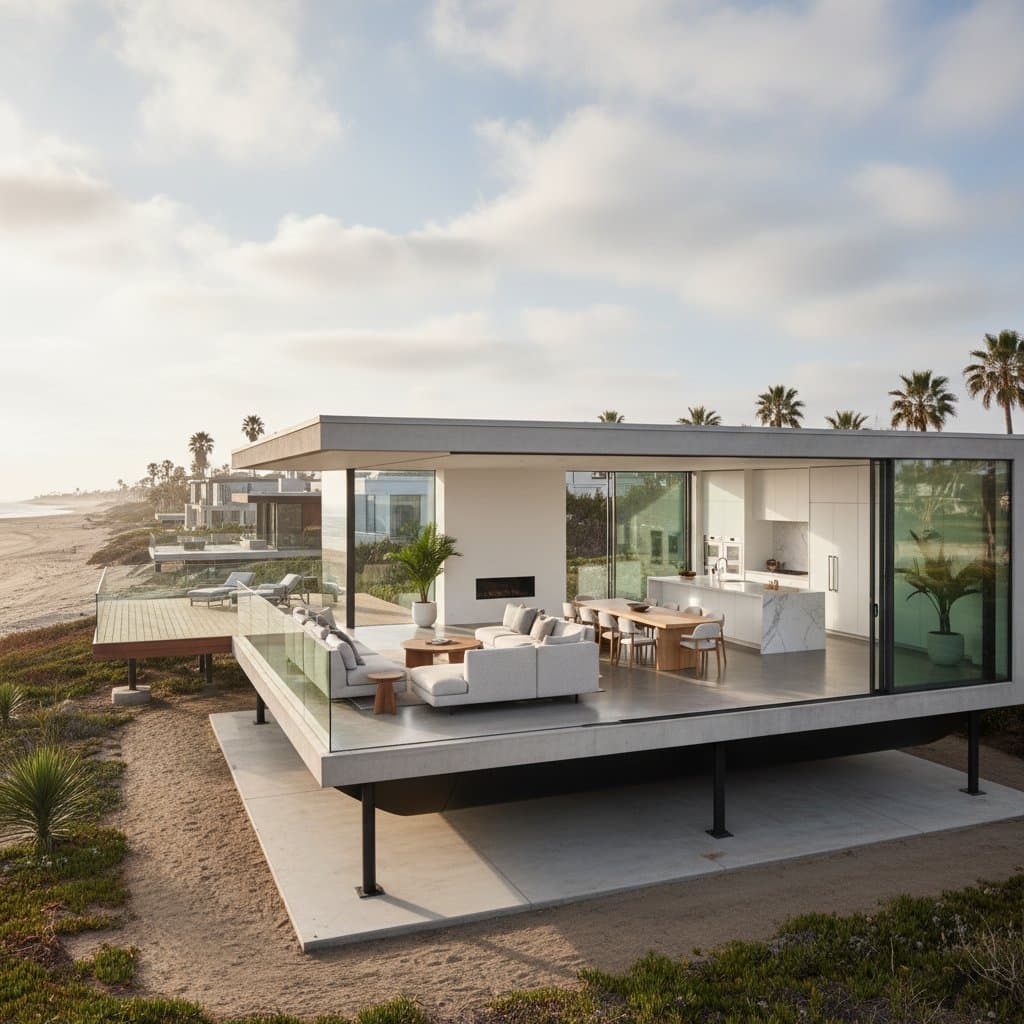
Key Advantage: Amphibious foundations enable homes to remain at ground level during normal conditions, preserving easy access and visual appeal, while providing elevation during floods without the need for conventional raising methods.
Image: Diagram illustrating the lifting mechanism of an amphibious foundation for a coastal residence during flooding.
Costs and Value Comparison
The expense of constructing or adapting amphibious foundations fluctuates based on factors such as soil stability, property dimensions, and regional codes. The following table compares costs with other flood mitigation strategies.
| Flood Protection Method | Average Cost Range | Maintenance Level | Typical ROI |
|---|---|---|---|
| Permanent Elevation | $80,000 - $200,000 | Low | 60% |
| Flood Barriers and Seals | $20,000 - $50,000 | Moderate | 40% |
| Amphibious Foundation | $100,000 - $250,000 | Low | 70-85% |
Amphibious foundations involve a higher initial outlay, but they generate superior long-term value through minimized flood losses, decreased insurance premiums, and elevated market prices for protected properties.
Image: Coastal residence elevated via amphibious foundation amid rising tides.
Factors Influencing Implementation Costs
Multiple elements determine the overall expense of installing an amphibious foundation. Understanding these helps homeowners anticipate and manage budgets effectively.
Home Size and Weight
Structures with greater square footage or mass demand robust flotation platforms and additional support columns, which elevate material requirements and installation labor by up to 25 percent.
Soil and Site Preparation
Properties on loose or shifting ground often require extra stabilization measures, such as pilings or grading, which can increase preparation expenses by 15 to 30 percent.
Permitting and Engineering Requirements
Tailored structural plans and approvals from coastal authorities typically add $10,000 to $25,000, varying with local enforcement of environmental and safety standards.
Utility Adaptations
Flexible piping for water and electricity, engineered to accommodate vertical movement, ensures operational integrity and safety, comprising 5 to 10 percent of the project total.
Material Selections
Opting for durable, rust-resistant alloys and waterproof composites extends system longevity, though such choices raise upfront costs by approximately 10 percent.
Image: Construction crew installing the flotation base for an amphibious foundation at a seaside site.
Core Benefits of Amphibious Foundations
Property owners increasingly select amphibious designs for their blend of security, convenience, and endurance against water threats.
- Enhanced Flood Resistance: The home rises with incoming water, avoiding submersion and associated interior harm.
- Insurance Premium Reductions: Providers frequently apply discounts for verified low-risk features, cutting annual expenses by 20 to 40 percent.
- Maintained Visual Harmony: Daily living occurs at standard elevation, blending seamlessly with surrounding landscapes.
- Environmental Efficiency: These setups use less concrete and earth-moving than fixed barriers, supporting greener construction practices.
- Versatile Application: Suitable for fresh constructions or modifications in flood-prone areas near oceans or waterways.
This technology merges advanced engineering with everyday usability, fostering secure habitation in vulnerable regions.
Strategies for Planning and Budget Management
Prospective adopters of amphibious foundations benefit from methodical preparation to balance protection with fiscal prudence.
Implementation Steps
- Conduct Site Evaluation: Engage a geotechnical engineer to analyze terrain stability and historical water levels.
- Seek Design Expertise: Collaborate with specialists in buoyant architecture to customize plans for your property.
- Establish Financial Reserves: Allocate 10 to 20 percent above estimates for potential surprises in ground conditions or approvals.
- Initiate Permitting Process: Consult municipal offices promptly to verify adherence to zoning and resilience mandates.
- Vet Construction Partners: Select firms with proven track records in adaptive, water-resistant building projects.
Tactics for Expense Reduction
- Pursue prefabricated components that streamline assembly and cut on-site time.
- Source flotation elements from regional suppliers to lower transportation fees.
- Integrate resilience upgrades with solar panels or insulation improvements to qualify for incentives and boost overall efficiency.
Image: Architect discussing amphibious foundation blueprints with coastal property owners.
Investment Returns and Future Prospects
Amphibious foundations yield strong financial outcomes via hazard mitigation and operational efficiencies. Industry analysts project that equipped homes command 15 to 20 percent premiums in resale markets over unprotected counterparts.
Returns on investment generally fall between 70 and 85 percent, influenced by local flood occurrences and policy discounts. Ongoing advantages include slashed repair needs and stable utility performance, compounding savings over decades.
Frequently Asked Questions
What durability can homeowners expect from an amphibious foundation?
Systems endure 50 years or longer under regular upkeep, comparable to conventional slab bases.
Is retrofitting feasible for established residences?
Affirmative. Adaptations demand foundational strengthening and incur 10 to 20 percent higher costs than ground-up builds.
How do these foundations perform in severe weather?
Properly designed units maintain equilibrium through secure moorings and directional guides that resist lateral forces.
What upkeep do amphibious foundations necessitate?
Annual checks of flotation components and support structures suffice to guarantee reliable function.
Do regulations permit amphibious foundations everywhere along the coast?
Availability depends on area-specific rules. Verify floodplain designations and building codes prior to proceeding.
Securing San Diego's Shoreline Homes
Persistent sea level rise demands proactive measures for coastal dwellers, and amphibious foundations deliver a forward-thinking response. They integrate structural ingenuity with site-specific flexibility, empowering residents to protect investments amid evolving climates. In San Diego, where vibrant shorelines encounter frequent inundation risks, this approach sustains community vitality.
Through diligent assessment, expert collaboration, and strategic funding, property owners secure not only structural integrity but enduring tranquility. Those embracing amphibious innovation position themselves to thrive against future water challenges, upholding the allure of bayside existence.