
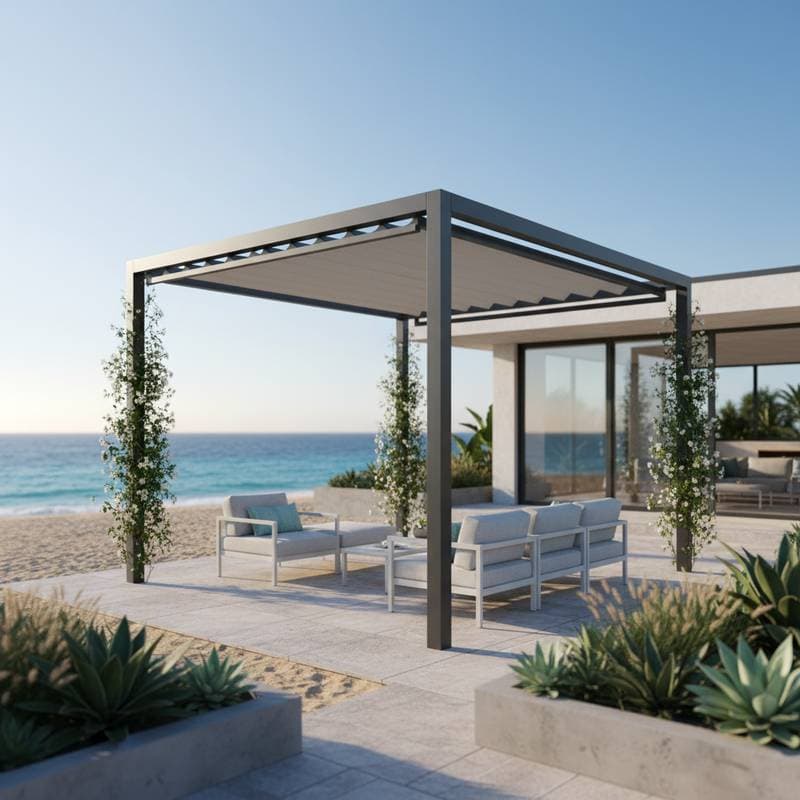
Aluminum Pergolas: 80% Less Maintenance Than Wood in 2025
Outdoor living spaces serve as vital extensions of the home, particularly in coastal regions with favorable climates for year-round enjoyment. When planning to add a pergola to a patio or garden, the choice of material determines long-term costs and effort. Aluminum pergolas emerge as a leading option due to their contemporary aesthetic, robust construction, and minimal upkeep demands. These structures demand approximately 80% less maintenance than traditional wood alternatives, which translates to substantial savings in time and resources over their service life.
This guide covers essential details for prospective buyers, including typical expenses, customization possibilities, enduring benefits, and setup factors. Readers gain a comprehensive perspective to decide if an aluminum pergola suits their property.
Average Cost of an Aluminum Pergola
The average cost for an aluminum pergola falls between $4,500 and $9,500, influenced by dimensions, style, and enhancements such as adjustable louvers or embedded illumination. Compact units start at about $3,000, whereas bespoke large-scale projects surpass $12,000.
Wood pergolas, by contrast, range from $2,500 to $8,000 initially, yet these economies diminish rapidly through elevated ongoing care and reduced durability. Within a standard 10-year span, wood installations often incur $2,000 or greater in refinishing, sealing, or repairs, whereas aluminum requires merely periodic rinsing.
| Pergola Type | Average Cost | Maintenance Cost (10 Years) | Lifespan | Maintenance Frequency |
|---|---|---|---|---|
| Aluminum | $4,500 - $9,500 | $200 - $400 | 25+ years | Once or twice a year cleaning |
| Wood | $2,500 - $8,000 | $1,500 - $2,500 | 10-15 years | Annual staining or sealing |
Cost by Design and Size
Project expenses vary based on scale, intricacy, and additions. Consider these representative ranges:
- Small freestanding pergola (8x8 ft): $3,000 - $4,500
- Medium attached pergola (10x12 ft): $4,500 - $7,000
- Large custom design (12x16 ft or more): $7,000 - $12,000
- Motorized louvered pergola: $9,000 - $14,000
Automated louver mechanisms enable remote adjustment of roof panels for optimal light and shadow control. Despite the higher initial outlay, such features enhance usability and environmental adaptability.
Cost by Material Type
Aluminum variants differ in grade and coating, impacting price and resilience.
| Material Type | Description | Price Range per Square Foot | Durability | Maintenance |
|---|---|---|---|---|
| Standard Aluminum | Powder-coated with basic finish | $35 - $45 | High | Minimal |
| Extruded Aluminum | Thick, structural-grade for heavy-duty designs | $45 - $60 | Very High | Minimal |
| Aluminum with Woodgrain Finish | Mimics wood appearance with textured coating | $50 - $70 | High | Minimal |
The woodgrain option, though pricier, provides a timber-like visual without associated care burdens. Homeowners in coastal California favor this for its resistance to saline air and humidity, which accelerate wood degradation.
Labor Costs
Installation labor constitutes 30% to 40% of overall expenses. For a basic aluminum pergola, professional services range from $1,500 to $3,500, contingent on terrain and specifications.
Elaborate setups incorporating fans, lights, or automation elevate these figures. Aluminum's reduced weight facilitates quicker assembly compared to wood, thereby curtailing labor duration.
Factors That Influence the Total Cost
Multiple elements shape the final budget:
- Pergola dimensions and elevation
- Freestanding versus wall-attached configuration
- Aluminum alloy and surface treatment
- Automated versus static louver arrangements
- Incorporated illumination or wiring
- Base preparation, such as concrete foundations
- Regional permitting and review charges
- Site access and locale
Why Aluminum Pergolas Require 80% Less Maintenance
Aluminum excels in resisting decay, distortion, and pest infestation, core weaknesses of wood. It eliminates the need for paints or sealants and endures solar radiation without fracturing.
Protective powder coatings shield against discoloration and rust, thriving in moist or marine settings. Maintenance entails:
- Hose rinsing annually or biannually
- Soap application for accumulated grime
- Lubricant for operable components in automated versions
Wood counterparts demand yearly treatments to avert breakdown, imposing both temporal and financial strains.
How to Save Money on an Aluminum Pergola
Premium selections like aluminum permit cost management through deliberate choices:
- Select prefabricated dimensions over bespoke tailoring
- Opt for stationary roofs in lieu of powered adjustments
- Integrate lighting post-installation rather than during
- Schedule work during slower seasons for better rates
- Solicit bids from several regional specialists
Such approaches yield 10% to 20% reductions while upholding standards.
DIY vs. Hiring a Professional
Self-assembly appeals for its immediacy, with kits marketed as user-friendly. However, achieving secure footings and level alignment demands skill beyond novice levels.
DIY Pros:
- Eliminated labor fees
- Self-paced timeline
- Personal accomplishment
DIY Cons:
- Necessitates specialized tools and expertise
- Potential for flawed setup or regulatory breaches
- Voided guarantees from errors
Professionals ensure compliance and longevity, often justifying the investment.
Common Mistakes to Avoid
- Neglecting municipal approval processes
- Selecting uncoated or inferior alloys
- Disregarding water runoff in affixed models
- Failing to plan electrical integrations upfront
- Overlooking installer credentials and coverage
Frequently Asked Questions About Aluminum Pergolas
Do aluminum pergolas get hot in the sun?
Aluminum absorbs warmth, yet advanced coatings deflect rays efficiently. Pale hues maintain lower temperatures, suiting sunny exposures.
Can an aluminum pergola withstand coastal weather?
Aluminum repels oxidation and erosion, ideal for damp or briny atmospheres. It surpasses wood in such demanding locales.
How long does an aluminum pergola last?
Quality units endure 25 years or beyond with basic care. Coatings preserve vibrancy, and frames retain integrity far longer than wood.
Do I need a permit to install a pergola?
Local codes often mandate approvals for affixed or sizable standalone units. Consult building authorities prior to commencement.
Can I add lighting or fans to an aluminum pergola?
Compatible designs accommodate recessed lights, ventilation, or screens. Engage certified electricians for safe additions.
What adds the most value to an aluminum pergola?
Automation, illumination, and climate controls elevate utility and property appeal, converting spaces into versatile extensions.
Maximizing Your Outdoor Investment
An aluminum pergola transcends mere shelter, embodying enduring quality and simplicity. Its reduced upkeep, extended service, and versatile forms position it as a prudent enhancement for discerning homeowners seeking elegance and efficiency.