
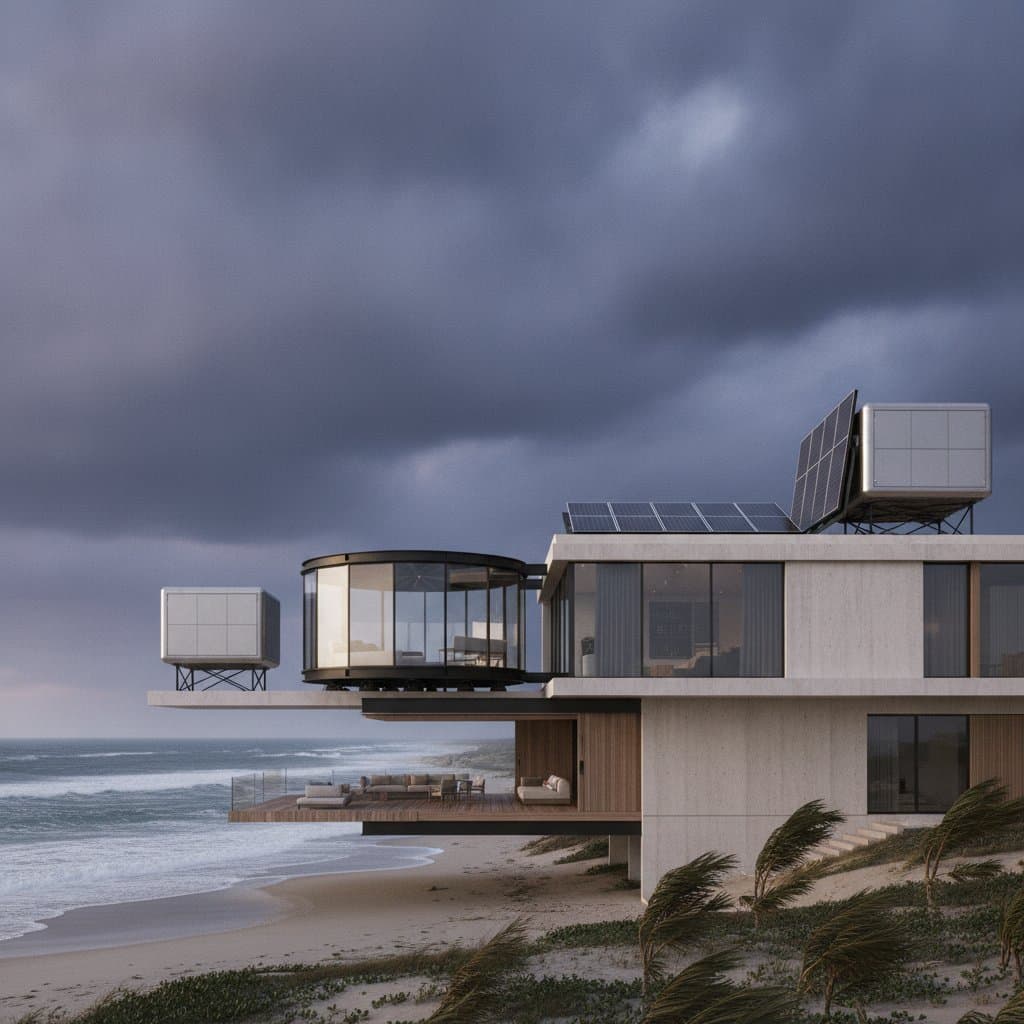
9 Pop-Up Modular Additions for Storm-Ready Coastal Homes
Living by the coast brings beauty and fresh air along with specific risks. High winds, salt exposure, and storms can turn conventional additions into liabilities. Pop-up modular additions solve this by expanding living space in calm conditions and retracting or detaching ahead of severe weather.
These structures combine flexibility with protection. Homeowners gain usable square footage that can be secured quickly when conditions change. The following nine options illustrate practical ways to add space while meeting coastal resilience standards.
Functional Additions That Adapt to Weather
1. Retractable Coastal Sunrooms
A retractable sunroom uses aluminum frames and impact-rated panels that slide into a wall cavity or stack against the house. Open the system for morning light and ocean views. Close and lock it when forecasts indicate high winds.
Select marine-grade hardware and sealed bearings to resist corrosion. Typical installed costs range from 12000 to 25000 dollars. The finished space functions as a protected seating area year round.
2. Pop-Up Guest Pods
Modular guest pods arrive as self-contained units with folding walls or lift-up roofs. Anchor points and quick-disconnect utilities allow the pod to be secured or removed before a storm. These units suit lots where permanent footprints are restricted.
Choose models certified for coastal wind zones. The pods supply extra sleeping quarters or workspace without triggering full building permits in many jurisdictions.
3. Expandable Deck Enclosures
Motorized canopies and side panels extend for shade and retract into protective housings. Wind sensors trigger automatic closure when gusts exceed preset thresholds. The system shields furniture and keeps the deck usable during light rain.
Budget 8000 to 18000 dollars depending on automation level. Regular lubrication of tracks maintains smooth operation in salty air.
Design Ideas for Coastal Comfort and Safety
4. Modular Rooftop Retreats
Lightweight rooftop modules add a private lounge with fold-down walls and retractable awnings. Structural engineers verify roof load capacity before installation. Materials meet wind-load ratings and tie directly into the existing roof framing.
Installed prices fall between 20000 and 40000 dollars. The addition increases usable living area while preserving ground-level open space.
5. Collapsible Coastal Kitchens
Outdoor kitchens incorporate folding counters, sliding stainless panels, and marine-grade storage. Utilities connect through sealed quick-release fittings. Close the unit to protect appliances from salt spray and wind-driven rain.
Include a sloped drain pan to route water away after storms. Construction costs vary with appliance packages but remain lower than permanent masonry builds.
6. Floating Modular Rooms
Buoyant rooms rest on pontoons and detach from the main structure during extreme events. They function as offices or guest quarters that rise with water levels rather than resist them. Local permits and mooring engineering are required.
This approach reduces flood exposure while creating a direct connection to the water. Professional installation and annual inspections are mandatory.
7. Storm-Ready Garage Additions
Reinforced garage modules lock into storm configuration with insulated composite panels. In normal use the panels retract for ventilation. Steel framing and ground anchors meet regional wind codes.
Insulation reduces interior temperature swings and limits condensation on stored tools. These units protect vehicles and serve as secondary shelter space.
Smart Technology and Energy Features
8. Solar-Powered Pop-Up Rooms
Integrated photovoltaic panels charge battery banks that run lights, fans, and communication devices during outages. The modules operate independently of the grid. Pair the system with a small generator for extended backup.
Home offices and studios benefit most from uninterrupted power. Maintenance consists of periodic panel cleaning and battery health checks.
9. Modular Safe Rooms with Retractable Features
Safe-room cores use steel or reinforced concrete panels that assemble rapidly. Retractable exterior sections serve as everyday living space until needed. Certified designs satisfy FEMA and local wind-borne debris standards.
Costs range from 10000 to 30000 dollars. Annual function tests confirm that all locking mechanisms operate correctly.
Planning Advice for Coastal Modular Additions
- Review current coastal building codes for wind speed and flood elevation requirements.
- Specify corrosion-resistant metals and composites throughout the assembly.
- Engage an architect familiar with modular coastal systems for anchoring details.
- Confirm insurance coverage for both the addition and its retractable components.
- Schedule quarterly tests of all motorized and locking systems before hurricane season.
Selecting the Right System for Your Property
Match addition type to lot constraints, budget, and primary use. Sunrooms and deck enclosures suit most single-family homes. Floating rooms and rooftop modules require specialized engineering. Safe rooms and garage additions provide the highest storm protection ratings.
Professional installation ensures code compliance and preserves warranty coverage. With proper material selection and routine maintenance, these modular systems deliver expanded living space and measurable risk reduction for years.