
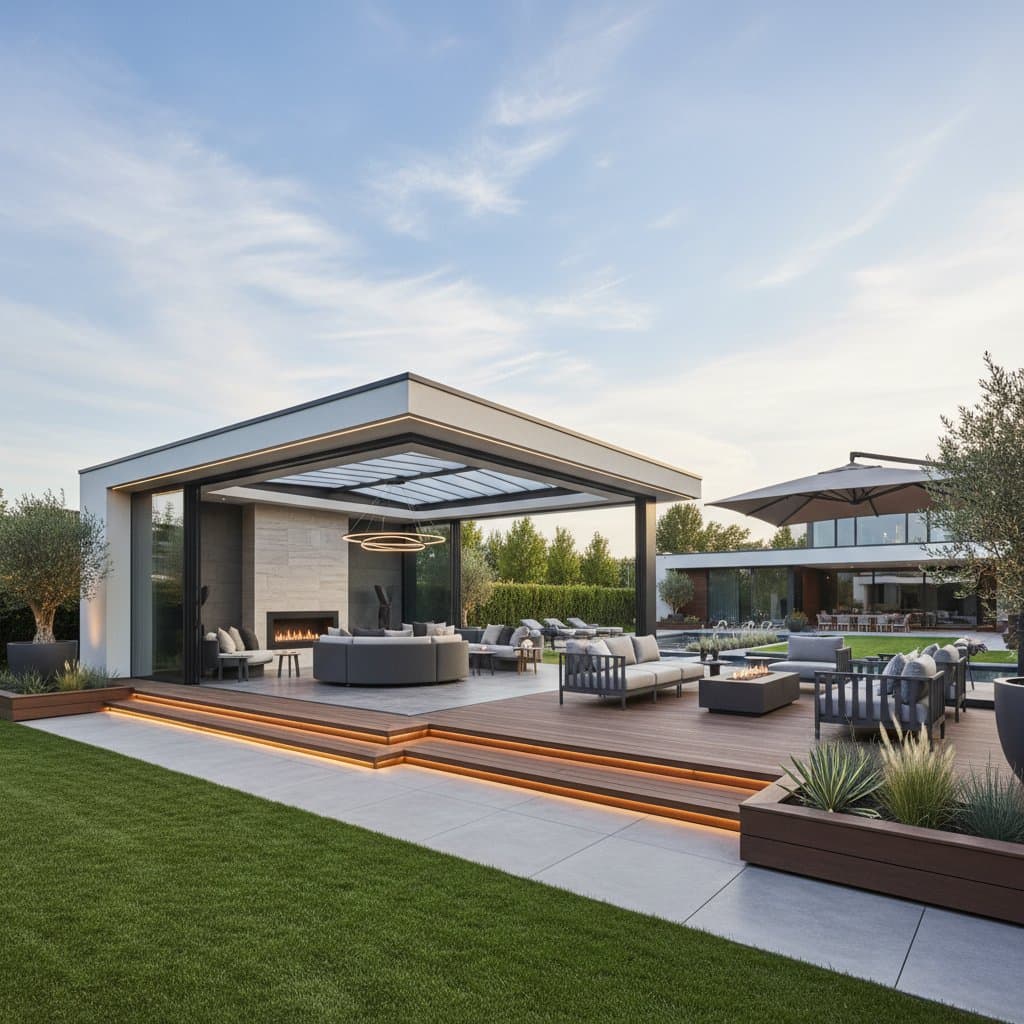
7 Expandable Outdoor Rooms for Year-Round Living
Picture a backyard that shifts effortlessly with the seasons. On crisp autumn nights, it encloses for warmth; on balmy summer days, it opens wide for fresh air. Expandable outdoor rooms deliver this adaptability, allowing homeowners to extend living spaces beyond traditional boundaries while maintaining comfort and style.
Homeowners often seek ways to integrate indoor convenience with outdoor appeal. The key challenge involves designing areas that transition smoothly between enclosed protection and open ventilation. Modern expandable outdoor rooms address this through innovative elements like retractable barriers and adjustable coverings. These features provide precise control over environmental factors such as sunlight, breeze, and privacy. Explore seven practical ideas below to elevate your home into a versatile, all-season sanctuary.
Essential Functional Features
1. Retractable Glass Walls
Retractable glass walls enable a fluid connection between indoor rooms and patios. Slide them shut during inclement weather to shield against rain and drafts, or retract them fully to foster an uninterrupted indoor-outdoor experience. Select panels with low-emissivity coatings to minimize heat loss in cooler months.
Pro Tip: Opt for double-pane glass constructions, which enhance thermal insulation and dampen external noise effectively. Position the tracks on durable, weatherproof bases to ensure smooth operation over time.### 5. Convertible Furniture
Convertible furniture maximizes utility in dynamic outdoor settings. Select benches that unfold into tables or sectionals with integrated storage compartments to streamline space usage. These pieces adapt to solo relaxation or group entertaining without cluttering the area.
Pro Tip: Prioritize UV-resistant fabrics and rust-proof metals to withstand prolonged exposure. Cushions with quick-dry foam maintain hygiene and comfort after rain.
6. Outdoor Heating and Cooling Systems
Outdoor heating and cooling systems extend usability across temperature extremes. Install radiant infrared heaters for targeted warmth on patios, or ceiling-mounted fans to circulate air during humid evenings. Misting units deliver a cooling fog on hot days, mimicking a gentle breeze.
Infrared models heat objects directly rather than air, achieving efficiency in open spaces. Pair fans with reversible blades to push warm air downward in winter.
[Image: Covered patio with ceiling fans and heaters]
Incorporating Smart Additions
7. Integrated Lighting Solutions
Integrated lighting solutions illuminate expandable rooms with precision and mood-setting versatility. Dimmable LED strips outline pathways and highlight features, while motion-sensor solar lights ensure safe navigation after dusk. Automate them through smart hubs to sync with daily routines or weather patterns.
Pro Tip: Employ warm white tones around 2700K for inviting evening gatherings. Layer lighting with overhead fixtures for general illumination and accent spots for architectural details.
[Image: Outdoor room with ambient LED lighting]
Strategic Planning for Success
Approach the design of expandable outdoor rooms with a focus on integration and scalability. Evaluate how features like walls and roofs complement one another to optimize airflow and views. Begin with core elements such as a modular base, then incorporate add-ons like heating or lighting as your vision evolves.
Consult local climate data to select materials that endure regional conditions, from coastal humidity to inland dryness. Budget allocation should prioritize high-impact items first, allowing phased expansions that align with financial planning. Professional assessments can identify site-specific challenges, such as soil stability or utility access.
Frequently Asked Questions
How much do expandable outdoor rooms cost?
Costs range from $2,000 for entry-level modular decks to $20,000 or more for automated retractable systems. Factors include size, materials, and installation complexity; energy-efficient options may qualify for rebates.
Can I build an expandable outdoor room myself?
Basic modular components suit DIY projects with standard tools and instructional guides. Advanced installations, like motorized roofs, benefit from contractor expertise to ensure safety and code compliance.
What materials last longest outdoors?
Aluminum alloys, composite polymers, and tempered glass excel in durability, resisting fading, warping, and corrosion. Avoid untreated wood, which deteriorates quickly under moisture.
Do expandable roofs need maintenance?
Annual inspections involve cleaning slats and lubricating mechanisms with silicone-based products. Prompt repairs to seals prevent leaks and extend operational life.
Maximizing Year-Round Enjoyment
Expandable outdoor rooms transform static backyards into living extensions of the home. These designs harmonize adaptability with enduring style, inviting daily use regardless of forecast. Invest in them to foster memorable moments, from quiet mornings to lively soirées, all while enhancing property value and personal well-being.