
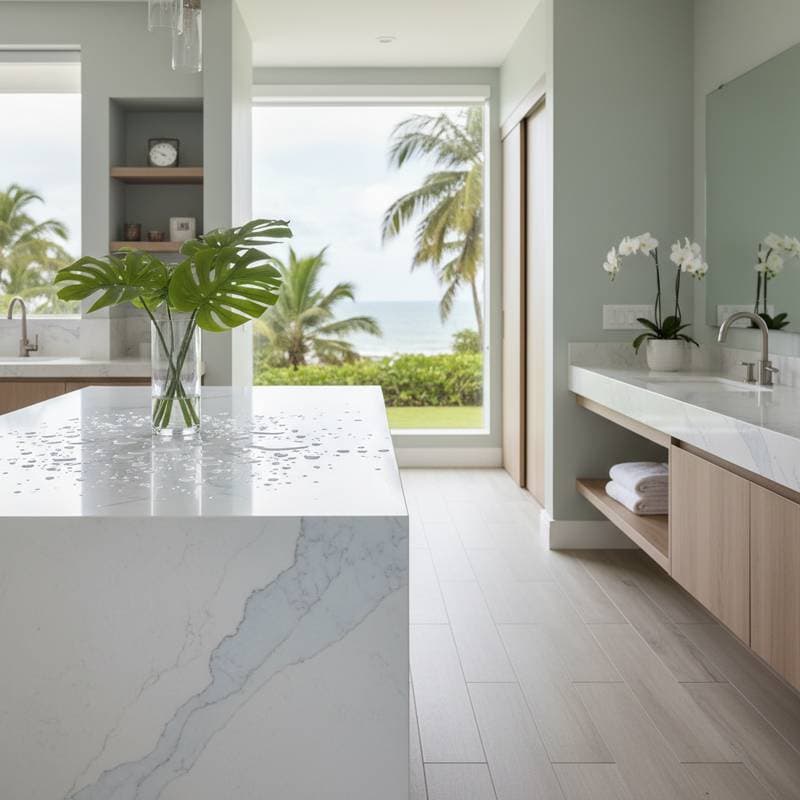
Why Quartz Outperforms Granite in Humid Environments
Homeowners in coastal or humid areas face a common issue: materials that degrade under persistent moisture exposure. Countertops bear the brunt of this challenge, as humidity erodes surfaces over time. When planning a kitchen or bathroom update in such climates, select materials that withstand these conditions. This article details how quartz countertops surpass granite in moisture resistance and safeguard your remodel for the long term.
Understanding Quartz and Granite Composition
Quartz and granite both provide aesthetic appeal and strength, yet their makeup influences performance. Granite forms naturally from compressed minerals, resulting in slabs with inherent variations. Quartz, by contrast, consists of crushed natural quartz crystals bound by resins during manufacturing. This engineered process yields a uniform, nonporous surface that inherently blocks moisture, proving essential in high-humidity settings.
Moisture Impact on Granite
Granite contains tiny pores that permit water penetration. These pores pose minimal risk in arid regions. In moist environments, however, water seeps in and causes issues such as:
- Discoloration due to dissolved minerals or salts
- Bacterial proliferation within unsealed crevices
- Deterioration of protective sealants, necessitating reapplication every one to two years
Consistent humidity accelerates these problems, leading to etched surfaces or persistent stains despite diligent care.
Quartz Superiority in Humidity Management
The nonporous nature of quartz prevents any water absorption, eliminating the need for sealants. Resins form a barrier that repels liquids entirely, suiting high-moisture areas like kitchens and bathrooms. Consequently, quartz surfaces remain glossy, vibrant, and sanitary through basic cleaning routines.
Essential Advantages of Quartz in Moist Climates
1. Unmatched Moisture Resistance
Quartz repels water effectively, shielding against everyday humidity threats. Spills evaporate without residue, and steam from cooking poses no threat. In damp remodels, this feature averts:
- Mold or mildew accumulation
- Permanent marks from pooled liquids
- Structural damage from repeated wet-dry cycles
2. Simplified Maintenance Routine
Unlike granite, which demands periodic sealing to block pores, quartz requires none. Wipe surfaces daily with a soft cloth dampened in mild soap solution. This approach proves invaluable in humid zones, where extra moisture complicates traditional upkeep.
3. Uniform and Enduring Aesthetics
Natural granite slabs differ in pattern and color, complicating seamless installations. Quartz production ensures predictable veining and tones across large areas. Under constant humidity, where stone may dull or shift hues, quartz preserves its intended vibrancy without fading.
4. Enhanced Durability Profile
Quartz ranks high on the Mohs hardness scale, second only to diamond among countertop options. The quartz-resin blend withstands impacts, abrasions, and moderate heat. In wet climates, this resilience prevents faster wear seen in porous alternatives.
5. Superior Hygiene Standards
Moist conditions foster bacterial growth in porous materials. Quartz denies harboring sites for contaminants, as its smooth expanse repels both water and microbes. This quality supports safer food handling in kitchens and cleaner bathroom environments.
Selecting Quartz for Seaside Renovations
Oceanfront properties endure salt-laden air and elevated humidity year-round. Quartz endures these elements without corroding or pitting. Install it in indoor kitchens, outdoor counters, or wet bars for reliable performance. No specialized cleaners suffice; standard methods keep it pristine.
Versatile Design Options
Quartz mimics the elegance of marble or granite through diverse patterns and sheens. Achieve contemporary minimalism with matte finishes or classic warmth via subtle grains. This adaptability lets remodelers blend natural-inspired looks with low-effort maintenance.
Frequently Asked Questions
Why Choose Quartz for Coastal Homes?
Quartz repels moisture and salt infiltration, ideal for ocean-adjacent properties where environmental factors degrade other surfaces.
Does Quartz Require Sealing Like Granite?
Quartz remains nonporous throughout its life, eliminating sealing needs. Granite, however, needs regular applications to mitigate absorption risks.
Can Quartz Endure Heat Alongside Humidity?
Quartz handles humidity without issue and tolerates everyday heat. Place trivets under hot cookware to prevent potential resin effects from extreme temperatures.
Is Quartz Priced Higher Than Granite?
Initial costs for quartz may exceed granite slightly, based on style and installer. Over time, savings from no maintenance and extended durability offset this difference.
How Do You Clean Quartz in Humid Settings?
Mix mild dish soap with warm water and apply using a soft cloth or sponge. Rinse thoroughly and dry to avoid water spots. Steer clear of acidic cleaners or scrubbers that might dull the finish.
Will Quartz Discolor with Prolonged Exposure?
Quartz formulation resists fading from sunlight, humidity, or spills. Its stable pigments ensure colors stay true for decades with proper care.
Invest in Quartz for Enduring Coastal Appeal
Opting for quartz in your humid remodel delivers peace of mind through superior protection and ease. This choice enhances daily functionality while preserving visual allure against environmental stresses. Consult local experts to integrate quartz seamlessly into your space, ensuring a remodel that thrives amid coastal challenges.