
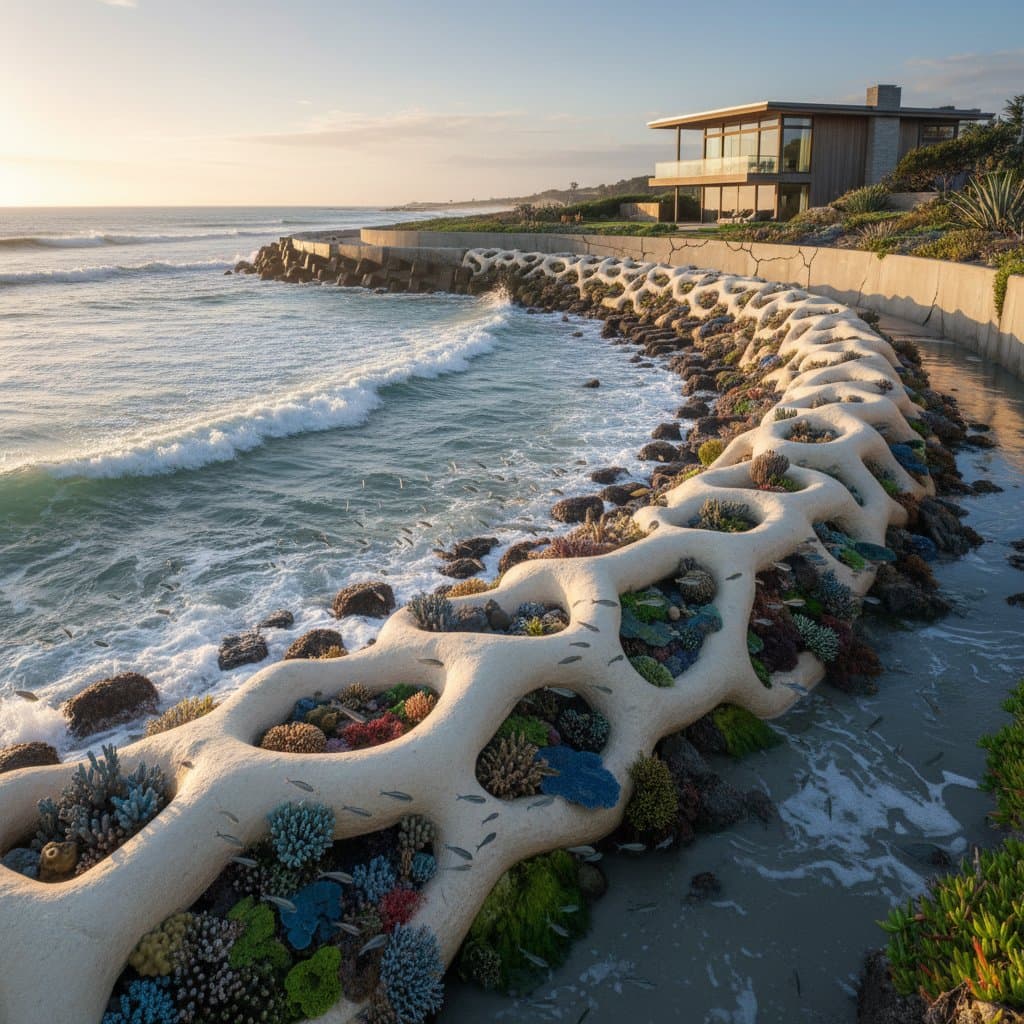
Why Biorock Seawalls Save Coastal Yards from Erosion
Coastal homeowners confront relentless erosion from rising tides, storm surges, and shifting shorelines. These forces erode soil, destroy landscaping, and endanger home foundations. Concrete or rock seawalls provide temporary protection, yet they deteriorate and disrupt marine habitats. Biorock seawalls offer an innovative alternative that fortifies shorelines and revitalizes ecosystems. This guide details biorock technology, installation costs, and reasons it serves as a superior long-term choice for yard protection.
What Is a Biorock Seawall?
A biorock seawall emerges from a low-voltage electrical process that crystallizes seawater minerals onto a metal frame. These minerals create a limestone-like coating denser than concrete, forming a self-repairing barrier that gains strength over time. The structure endures water exposure without weakening.
Biorock seawalls differ from conventional designs by integrating with the environment rather than repelling waves. They promote coral attachment, oyster settlement, and algal growth, forming a living reef that dampens wave energy before it impacts the shore. This blend of biological and structural durability proves ideal for erosion-prone zones.
Average Cost of a Biorock Seawall
Biorock seawall costs average $400 to $1,000 per linear foot, influenced by site specifics, electrical integration, and ecological aims. Residential setups begin at $25,000, while expansive projects surpass $150,000.
Concrete seawalls range from $300 to $800 per linear foot, positioning biorock as a higher initial expense. Factors such as reduced maintenance, extended durability, and habitat enhancement often yield greater value over decades.
| Seawall Type | Average Cost per Linear Foot | Lifespan | Environmental Impact |
|---|---|---|---|
| Concrete | $300 - $800 | 25 - 40 years | High habitat disruption |
| Riprap Rock | $200 - $600 | 20 - 50 years | Moderate habitat loss |
| Biorock | $400 - $1,000 | 50+ years | Promotes marine growth |
Cost Breakdown by Project Size
For small residential projects up to 50 linear feet, budgets span $20,000 to $50,000. These cover metal frame placement, power supply, and initial mineral accretion. Such scale suits private waterfronts or compact bayside lots.
Mid-range efforts from 50 to 200 linear feet cost $50,000 to $150,000. Installations feature tailored contours and renewable power sources like solar or tidal systems for the low-voltage current.
Large community projects exceeding 200 linear feet range from $150,000 to $500,000, factoring in water depth, wave exposure, and permits. These often merge erosion defense with reef restoration initiatives.
Material and System Costs
Biorock relies on durable materials and electrical elements for cost-effective longevity.
| Component | Description | Approximate Cost per Foot |
|---|---|---|
| Metal Frame (rebar or titanium mesh) | Base for mineral deposition | $50 - $150 |
| Power System (solar, tidal, or grid) | Delivers low-voltage electricity | $25 - $100 |
| Mineral Accretion Layer | Develops from seawater minerals | Included in process |
| Anchoring and Foundation | Secures in seabed sediment | $75 - $200 |
| Installation Labor | Marine specialist work | $100 - $300 |
The accretion layer builds organically, directing funds toward framework and power. Post-setup, the system operates with minimal intervention, curbing ongoing expenses.
Labor Costs and Influencing Factors
Labor constitutes 30 to 45 percent of the budget, with rates from $75 to $150 per hour based on expertise and gear. Specialists handle electrical integration, while permits and assessments extend labor demands.
Key variables include water depth and wave force, which demand robust framing; site access, elevating transport fees; power selection, where renewables increase startup but cut utility bills; design intricacy, adding for custom fits; regulatory hurdles like ecological evaluations; and upkeep routines for sustained performance. Homeowners benefit from evaluating these to refine estimates.
How Biorock Seawalls Prevent Erosion
Standard seawalls bounce waves seaward, scouring bases and adjacent shores. Biorock's textured surface absorbs and disperses energy, shielding the shoreline. Mineral deposits lock sediment in place against washout.
Marine colonization by corals, oysters, and barnacles adds calcium carbonate layers, enhancing resilience naturally. This progression fortifies the wall progressively, contrasting concrete's decline.
Environmental Advantages
Biorock seawalls safeguard property while mending ecosystems. They forge habitats for fish and invertebrates, filter water via attached organisms, sequester carbon through mineralization, and self-mend via accretion.
These attributes position biorock as a dual-purpose solution for human safety and natural recovery.
Strategies to Reduce Costs
- Collaborate with neighbors to share infrastructure and divide expenses.
- Opt for solar or tidal power to minimize energy outlays.
- Employ modular mesh for streamlined, lower-cost assembly.
- Phase construction, prioritizing high-risk areas first.
- Conduct routine checks to address issues before they escalate.
DIY vs. Professional Installation
Biorock demands professional marine and electrical skills, ruling out full DIY. Owners can manage basic upkeep like inspections and cleaning.
Suitable DIY Tasks
- Examine structure visually for integrity.
- Track power levels with simple tools.
- Clear debris or excess growth lightly.
Essential Professional Tasks
- Erect and anchor the frame securely.
- Configure and test electrical systems.
- Secure permits and perform assessments.
- Oversee ongoing monitoring.
Certified contractors ensure regulatory adherence and optimal durability.
Common Pitfalls to Sidestep
Overlook regulations at risk of penalties or demolition. Select only resistant metals to prevent corrosion. Bolster anchoring against storm shifts. Maintain electrical flow consistently for growth. Allow time for accretion; rushed expectations lead to errors.
Steering clear preserves investments and efficacy.
Frequently Asked Questions About Biorock Seawalls
Do I need a permit for a biorock seawall?
Coastal areas mandate permits for shoreline alterations, including environmental and engineering reviews. Contractors streamline this process.
How long does it take for a biorock seawall to form?
Initial buildup appears in weeks, with substantial thickness and biology in months. Strengthening persists with accumulation.
Does a biorock seawall need constant power?
Low-voltage supply sustains growth; lapses halt progress but spare the base. Reliability supports repair and ecology.
How long will a biorock seawall last?
Maintained units endure 50 years or beyond, outpacing rivals through self-repair.
Can biorock seawalls be installed anywhere?
Optimal in saline waters rich in minerals; freshwater adaptations prove necessary elsewhere.
What adds the most value to a coastal property?
Eco-integrated seawalls boost stability, biodiversity, and appeal, elevating worth and resilience.
Steps to Install Your Biorock Seawall
Biorock installation advances sustainable coastal care. It shields yards, trims upkeep, and aids marine health.
Evaluate site conditions, solicit bids from marine experts, and explore power and maintenance options. Align choices with protection and ecological priorities for enduring results.