
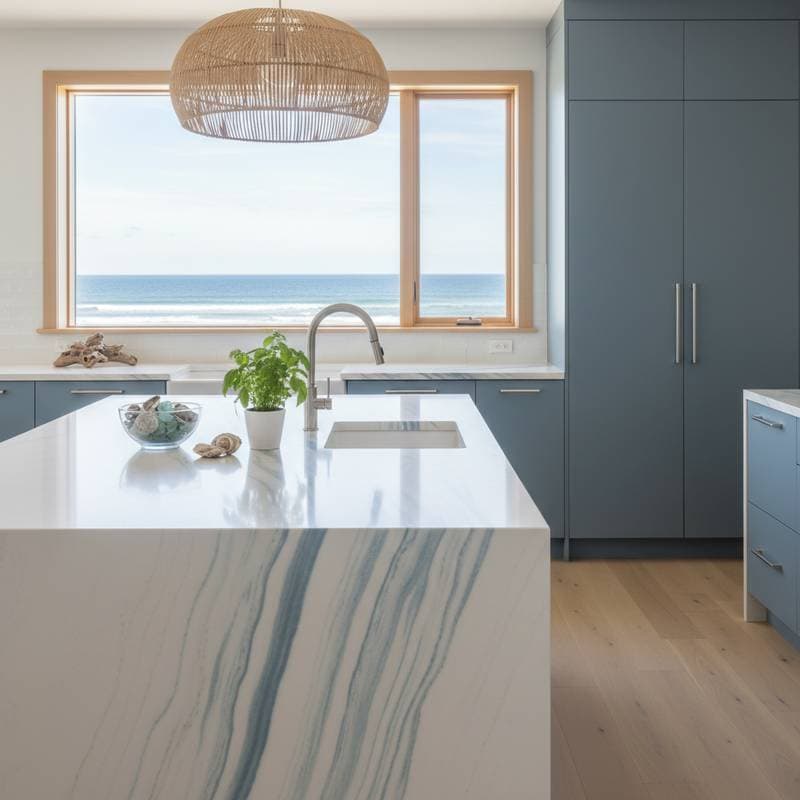
Why Quartz Beats Granite in Salty Coastal Air
Coastal living presents unique challenges for home materials. Salt-laden air, high humidity, and intense sunlight test the resilience of surfaces like countertops. In such environments, quartz emerges as a superior choice over granite, offering unmatched durability and ease of care. Homeowners in seaside areas benefit from quartz's ability to maintain beauty and functionality amid harsh conditions.
Coastal Environment Demands
Seaside locations expose homes to corrosive elements. Salt from ocean spray accelerates wear on porous stones, while humidity fosters mold growth. Ultraviolet rays fade colors and weaken structures over time. Selecting materials that resist these forces ensures long-term satisfaction and reduces repair needs.
Granite, a natural stone, absorbs moisture through tiny pores, making it vulnerable in coastal settings. Quartz, engineered from crushed stone and resin, forms a non-porous surface that repels water and salt. This fundamental difference positions quartz as the practical option for kitchens and bathrooms near the shore.
Durability Under Pressure
Quartz withstands the rigors of salty air without compromising integrity. Its uniform composition prevents cracking from thermal expansion caused by temperature fluctuations. Granite, prone to etching from acidic spills common in cooking, requires frequent protection that coastal moisture undermines.
In tests of environmental resistance, quartz shows minimal degradation after years of exposure. Bacteria find no harbor on its seamless surface, a critical advantage in humid climates. Families enjoy peace of mind knowing their surfaces remain hygienic and structurally sound.
Maintenance Simplified
Routine upkeep for quartz involves wiping with mild soap and water. No annual sealing protects against stains, unlike granite that demands professional treatments. Coastal homeowners save time and money by avoiding these labor-intensive processes.
Stains from food or seawater rinse away effortlessly on quartz. Granite's porosity traps particles, leading to discoloration if not addressed promptly. This low-maintenance quality aligns perfectly with the relaxed lifestyle of beachfront living.
Design Options for Seaside Homes
Quartz offers a spectrum of colors and patterns inspired by coastal themes. Veined whites mimic marble waves, while soft blues evoke ocean hues. Granite's natural variations limit predictability, often resulting in mismatched tones after fading.
Engineered precision allows quartz to replicate stone looks without inconsistencies. Pair it with nautical accents for a cohesive aesthetic. Designers recommend quartz slabs with subtle speckles to complement sandy floors and shell motifs.
Selecting and Installing Quartz
Begin by assessing your space's needs. Measure countertops accurately and consider edge profiles that enhance durability, such as eased edges for easy cleaning. Consult fabricators experienced in coastal installations to ensure proper support against humidity.
- Choose non-porous certified quartz from reputable brands.
- Opt for UV-resistant finishes to combat sun exposure.
- Integrate with ventilation systems to minimize moisture buildup.
Installation follows standard guidelines but includes sealing joints with silicone resistant to salt corrosion. Professional teams complete the work in days, minimizing disruption to your home.
Realizing Lasting Coastal Value
Investing in quartz delivers returns through extended lifespan and reduced upkeep costs. Home values rise with durable, attractive features that appeal to future buyers. Enjoy a space that reflects the serenity of the sea while standing firm against its challenges.
Transform your remodel into a resilient haven. Quartz not only outperforms granite but elevates everyday living by the coast. Embrace this material for surfaces that endure and inspire.